




"You'll need four-wheel-drive," Chad said. "For about 75 miles. Don't try to reach the lodge. Radio us from the turn-off."
Cold wind during the night had shoved the rain east. A weak sun chased lagging clouds. Grader operators were plying their lonely trade on the soft roads, logging overtime in the short window between mud and dust. I powered through soup in the swales and spun new ruts up the hills. Closing in on the turnoff late that afternoon, I flagged down another pickup. Chad Schearer, his wife, Marsha, and our host Val Popov were camo-clad. "Change clothes!" barked Chad. "We hunt until nine!" May days in the North are long.
From the turn-off I hitched a ride on a quad to the lodge—a large, stoutly built structure fronting an ice-flecked lake rimmed by dark conifers. After a dive into my duffel, I joined Tim, my guide, in a mud-encrusted side-by-side. Hailing from a southern Saskatchewan farm, where he's taken eye-popping whitetails, Tim works summers as guide and mechanic at Tower Lodge for its owners, Val and Vi Popov. In small boats he motors their clients to big walleye and northern pike in Dore Lake and helps hunters find deer and bears. Guests need a guide in this country. "Our hunting unit covers 240,000 acres," Tim said. "More than 360 square miles. Annually, we host 25 bear hunters. You won't meet anyone in the woods."
Hard on the throttle, Tim barreled down roads of diminishing size, mud and water exploding over the bonnet and arcing over the doors. In deepening murk, he yanked the machine onto a path slashed through thick second-growth. Shin-high puddles erupted as we bounded between hummocks, barking trees in tight turns. "There are lots of bears," he shouted above the yowling engine. "But baiting is the only sure way to see one. Bears get hooked on M&Ms."
We lurched to a stop under a crude but adequate platform nailed to a fir. I grabbed my pack and CVA muzzleloader. Tim poured a pail of M&Ms into a plastic barrel. Access was an opening big enough for a large paw or a very small bear. Tim finished with squirts of anise. Scent. At the lodge he would show me forklift-size boxes bulging with past-sell-date M&Ms. "We add granola and ripe beaver fat," he said. I'd find the M&Ms and granola as tasty as new. The beaver fat would remain unsampled.
An hour after Tim roared off, I heard a shuffle. Not the skittering of squirrels or the brush of wind. A yearling bear eased from the shadows. It stood and rocked the barrel, almost tipping it, then scooted out of the way. Repeating the routine yielded the same M&M-less result. Losing his patience but not his fear of the barrel, the bear clambered atop and thrust its head inside. Deeper and deeper he stretched until only his hind feet, splayed to prevent a plunge, remained visible. Failing to reach the candy, he tried again to tip the barrel. At last he succeeded and then spent the evening mostly inside the barrel, engorging himself.
The headlights of Tim's side-by-side pierced the forest. "Marsha got one!" he grinned. "Big boar. But not like the goliath she shot last year!"
Tower Lodge's hunters rendezvoused after 10 p.m. Michael McMichael of Accura Outdoors and PowerBelt bullets was testing a new boattail for muzzleloading rifles. So far, it had taken all four bears. Chris Hodgdon was there, too. A new TripleSeven powder, called FireStar, fueled our CVA rifles. Chad's son Wyatt and longtime pal Johnny, with Chris Olson from the NRA, completed the group. Not all were armed: Chad and Wyatt wielded video cameras and spinning rods, and Vi served a delicious supper.
The Popovs had emigrated from Bulgaria. Hard work, vision, and perseverance kept them afloat as they established a guiding business 210 miles above Saskatoon. Because the original lodge was on the shore opposite their best hunting area, they moved cabins across the ice and built a new lodge. Val cut a two-mile road through the forest to the gravel thoroughfare connecting points beyond Big River.
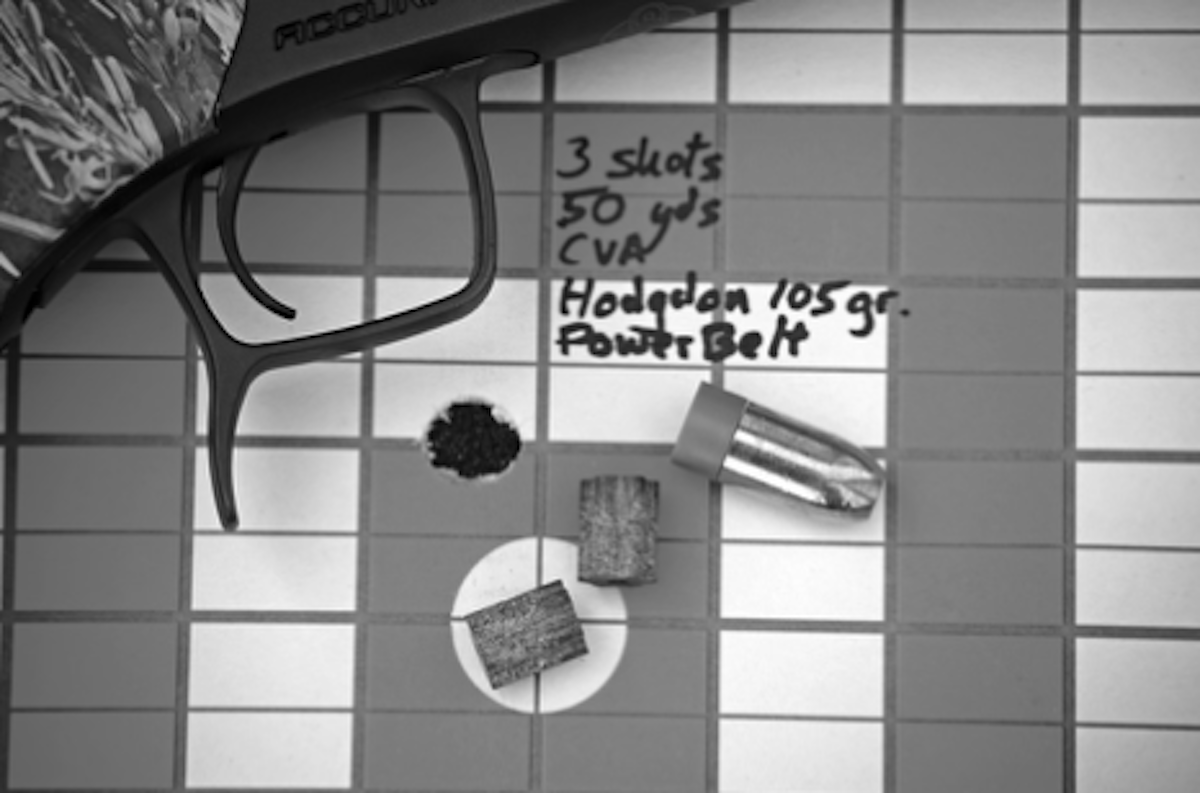
Dawn swabbed the skies pink at 4 a.m. I used the morning to fire Marsha's rifle. In the forest, 50 steps from the picnic table, I tacked a paper target to a plywood slab. Over sandbags, I steadied the reticle of the Konus 3-9X scope and squeezed the trigger. A hole appeared 1.5 inches from center. Sliding another bullet into the bore atop three more Hodgdon FireStar pellets, I capped the hinged-breech rifle with a 209 primer, thumbed the hammer, and fired again. The paper registered no change. Might the second PowerBelt have followed the first? I loaded and fired again. No change. Optimism has its limits. I walked forward to find on close inspection that all three bullets had indeed printed one hole. Not a cloverleaf, it was barely out of round! Hodgdon's FireStar pellets along with Accura's new boattail in the CVA's 1:28-twist Bergara barrel was clearly a deadly combo.
FireStar's Story
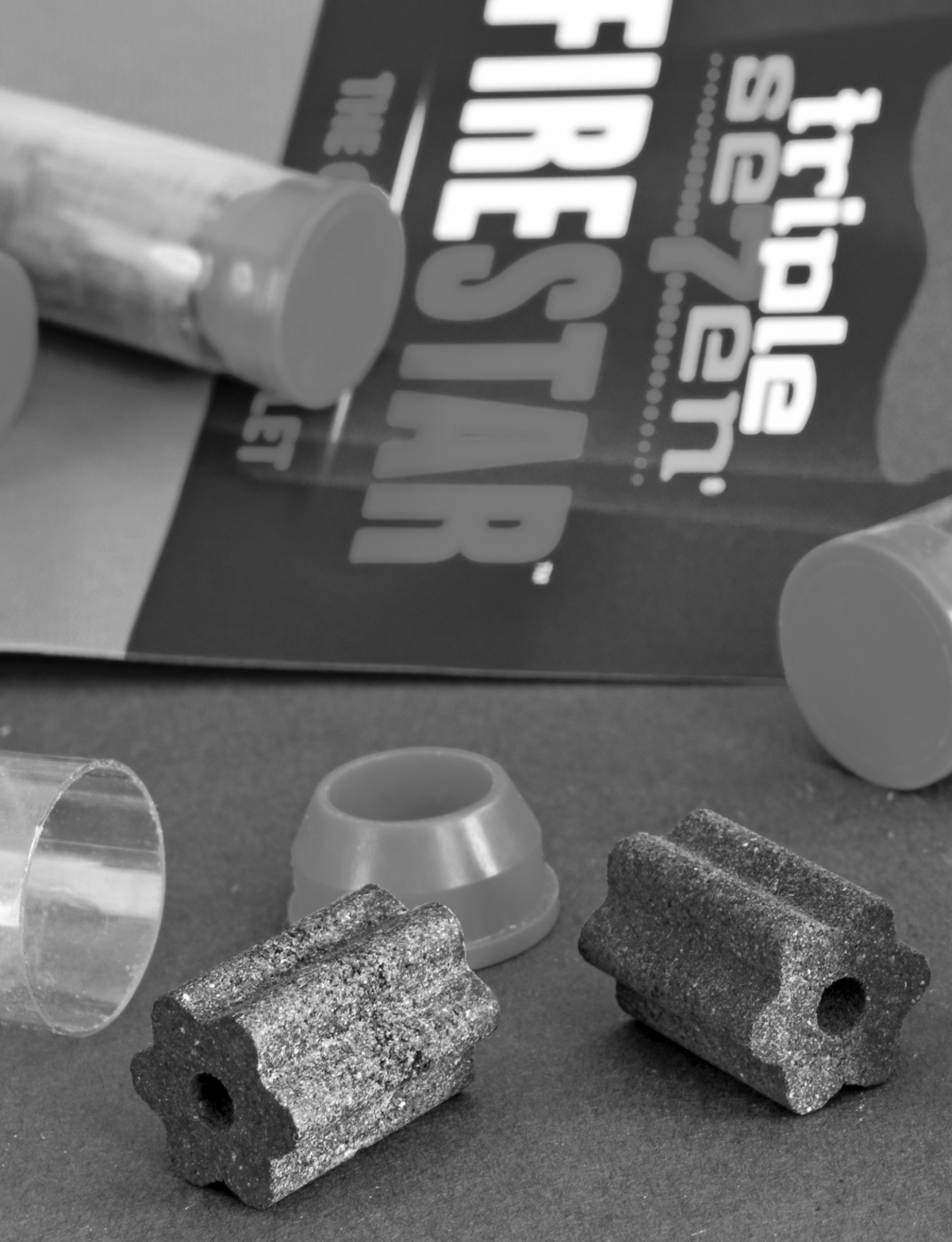
Keen to learn more about the powder that delivered such consistency, I asked Chris about it. He said the FireStar project, though introduced in January 2018, had deep roots. "The propellant formula is that of TripleSeven, but FireStar pellets have crenulated or grooved sides," he said. "They produce more efficient burn and slightly higher velocities, while leaving bores cleaner, so loading is easier for successive shots."
All that with one-hole accuracy!
Such propellant has been 40 years in coming. Equipped with stout, accurate replica rifles by Dixie and Lyman, Navy Arms, and Thompson/Center, deer hunters of the late 1960s and early '70s rediscovered black powder. Meanwhile, near Seattle, gifted, ambitious, young Dan Pawlak sought a black powder substitute that would match black powder in appearance and density, yield comparable velocities at modest pressures, and deliver the signature smoke and smell of black powder.
This fuel would be stable and easy to ship, providing shippers and shooters with respite from the regulations governing black powder. Pawlak's propellant would skirt black powder's "Class A, High Explosive" designation. A two-year effort with powder expert Mike Levenson resulted in a granular product that earned the label Pyrodex, for pyrotechnic deflagrating explosive.
Pawlak's work impressed Warren Center at Thompson/Center. He suggested R.E. Hodgdon join him in backing the entrepreneur. In January 1975, Hodgdon met Pawlak in his Issaquah mobile home, next to a well-equipped ballistics laboratory. Transducer pressure guns, oscilloscopes, and other sophisticated gear showed Pawlak was both serious and capable. A quick study of pressure curves and firing tests convinced Hodgdon that Pawlak was onto something.
By that time, Levenson had left the project. With support from Linn Emrich, Pawlak refined Pyrodex, increasing its potency, giving it cleaner burn, reducing pressure variation, and coaxing traditional smell and smoke from the formula. He changed the color from gray to black and began remodeling a former explosives facility, Excoa, on Taylor Mountain north of Issaquah, to produce Pyrodex.
Before government tests, Pawlak arranged his own. In detonator trials, an igniter was placed in one of 10 one-pound canisters in a case. To pass the test, the ignited can could not cause detonation in the others. Even smokeless powders had failed. But Pawlak added rigor, placing a detonator in each can! There was no sympathetic detonation. The Department of Transportation laboratory report stated that "Pyrodex is probably a little safer than conventional smokeless powder because the ignition temperature is considerably higher."
Pawlak scheduled the first shipments of Pyrodex for May 1976. Hodgdon would be the sole distributor, marketing Pyrodex as "the replica black powder." The National Muzzleloading Rifle Association approved it for use in NMLRA matches.
Then, on January 27, 1977, three tons of Pyrodex flashed off at the Issaquah plant. Pawlak and three technicians died.
In the aftermath, Pyrodex was again tested. Again, it was found to be less hazardous than smokeless propellants. The directors of Pyrodex Corporation met with Mrs. Pawlak and the board of Hodgdon Powder Co. to discuss the product's future. Though initial demand had been strong, the Issaquah disaster would affect shooters' perceptions. Still, Pawlak had been convinced Pyrodex not only would be profitable but also would bring more people into muzzleloading. He'd also believed it would make the sport safer. The attendees committed to building a Pyrodex mill on an abandoned B-29 base near Herington, Kansas, 130 miles from Hodgdon's distribution center. In May 1979, the plant began filling canisters. Retail outlets had Pyrodex early in 1980.
Pyrodex soon became available in three grades. RS, the equivalent to FFg black powder, excels as the main charge in muzzleloading rifles. P mimics FFFg in small-bore rifles and pistols. Pyrodex Select appeared in 1991 for sabot and heavy conical bullets.
In 1997 Hodgdon announced Pyrodex pellets, each a 50-grain (equivalent) pill delightfully easy to load. No measuring required! TripleSeven came next: Pyrodex without sulfur, Chris reminded me. "It's cleaner and more powerful." TripleSeven Magnum pellets followed. White Hots came next, under the IMR brand, now owned by Hodgdon. Their performance matches that of TripleSeven pellets with equivalent charges. "You'll like FireStar even better," Chris said.
So far, FireStar pellets are available only for .50-caliber bores.
Back to the Hunt
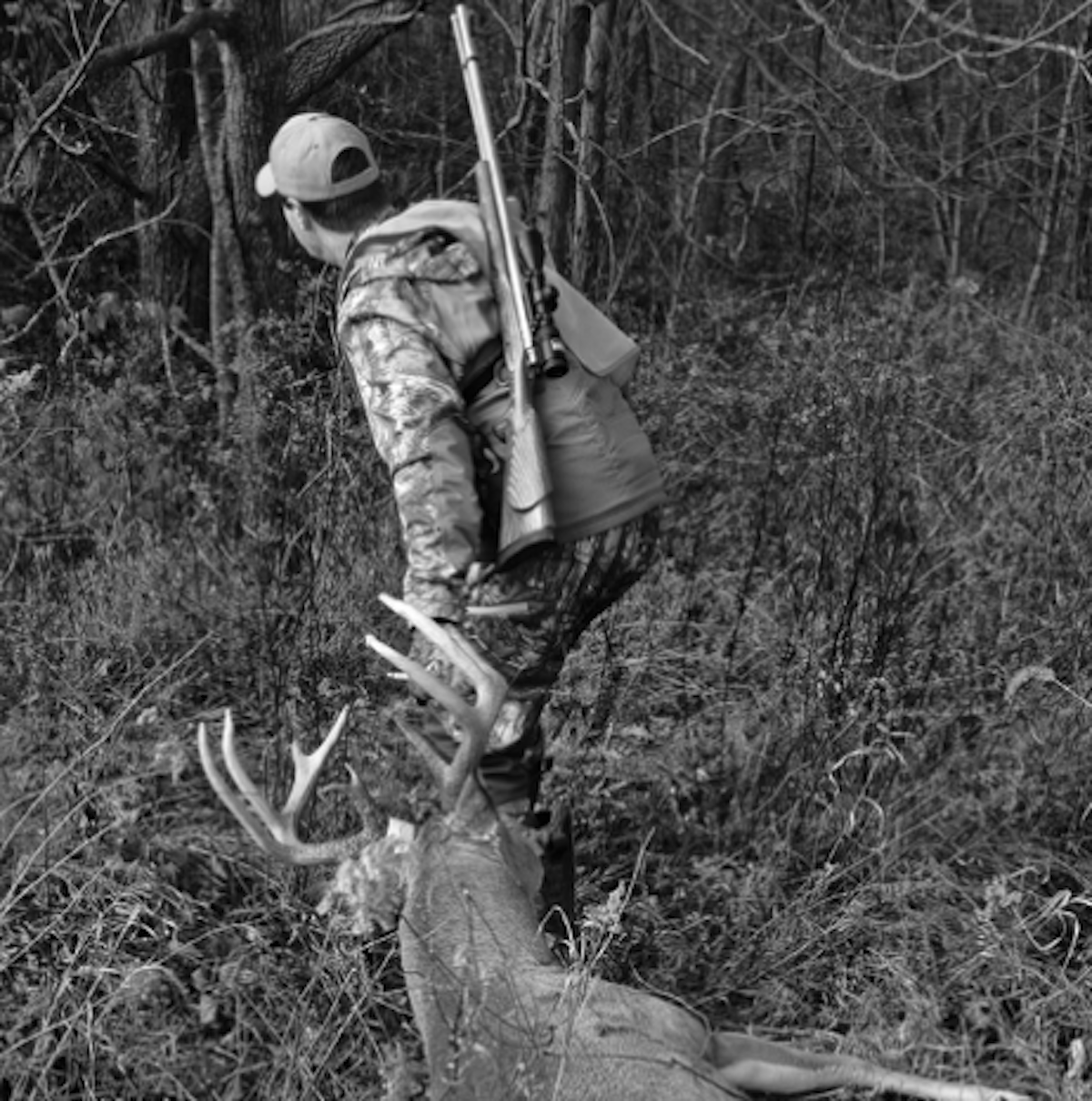
In midafternoon, Val and I herded a muddied quad out to the gravel, then sped north a couple of miles and entered the bush. A bog that all but swallowed our machine en route to the bait would later suck two others to a stop, giving them up only to winch and cable. While Val freshened the bait with M&Ms and anise, I found the bum-board on the tower stand allowed little more movement than the rear seat of a Super Cub. We'd walked in only a few yards, but Val assured me bears paid no mind to quad noise. He beat the barrel hard with a stick—dinner bell. Then he left.
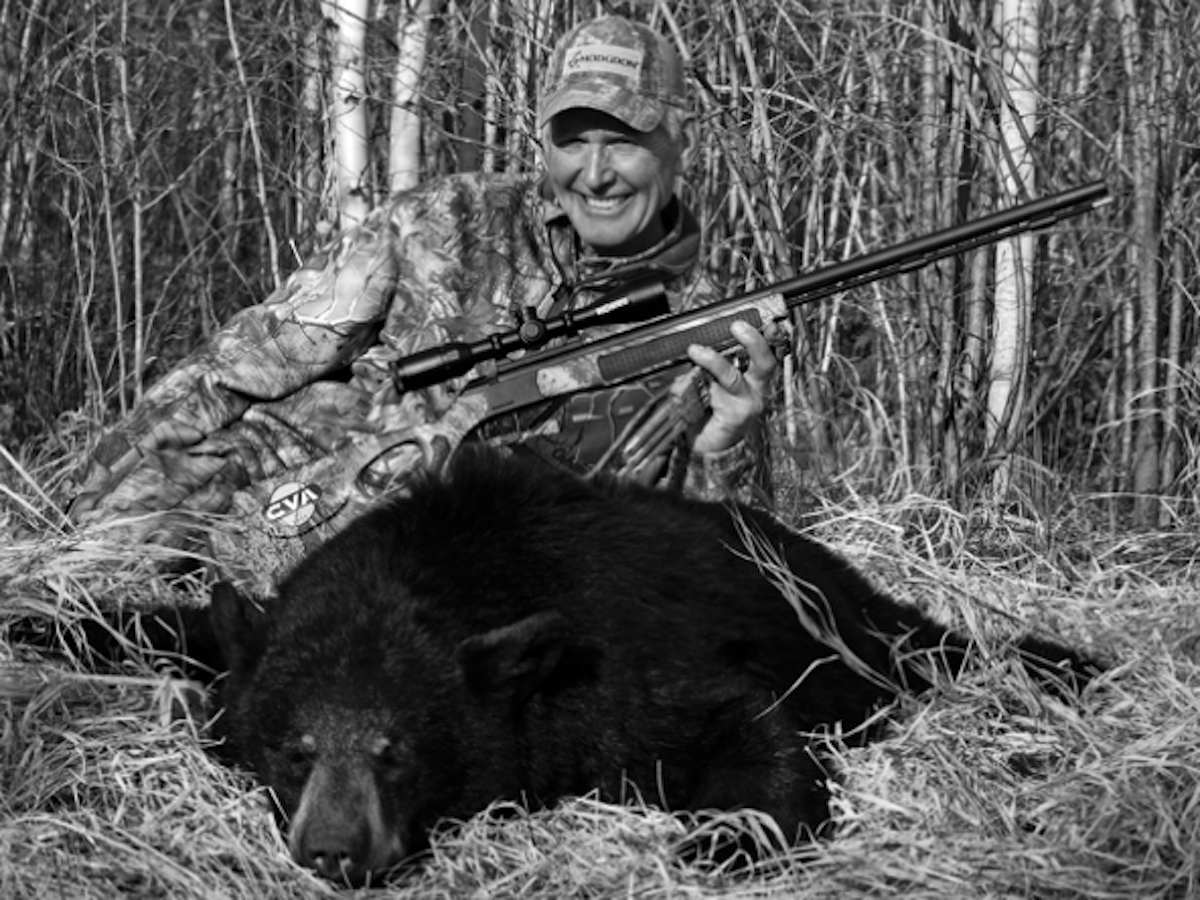
The five o'clock sun was still high when, as if conjured from shadow, the bear was suddenly there. I eased the rifle to cheek. The reticle steadied on a rib. Boom! Through the veil of white smoke I saw the animal drop, then struggle toward cover. The bullet had shattered a shoulder and torn the lungs. To hasten death, I reloaded and sent a second PowerBelt into the forward ribs.
A hunt hardly "tests" products carefully engineered for the field then put through rigorous trials. Still, it gives them the stamp of "having been there."
I gave thanks for this hunt and the place and the people and for the beautiful dark bear just fallen.
Chris had suggested I chat with Hodgdon Product Manager Ron Reiber about FireStar. When I returned home I rang him up. Ron's 41 years in the shooting industry includes 27 years at Hodgdon, where his expertise in propellants and ballistics helps customers better understand both.
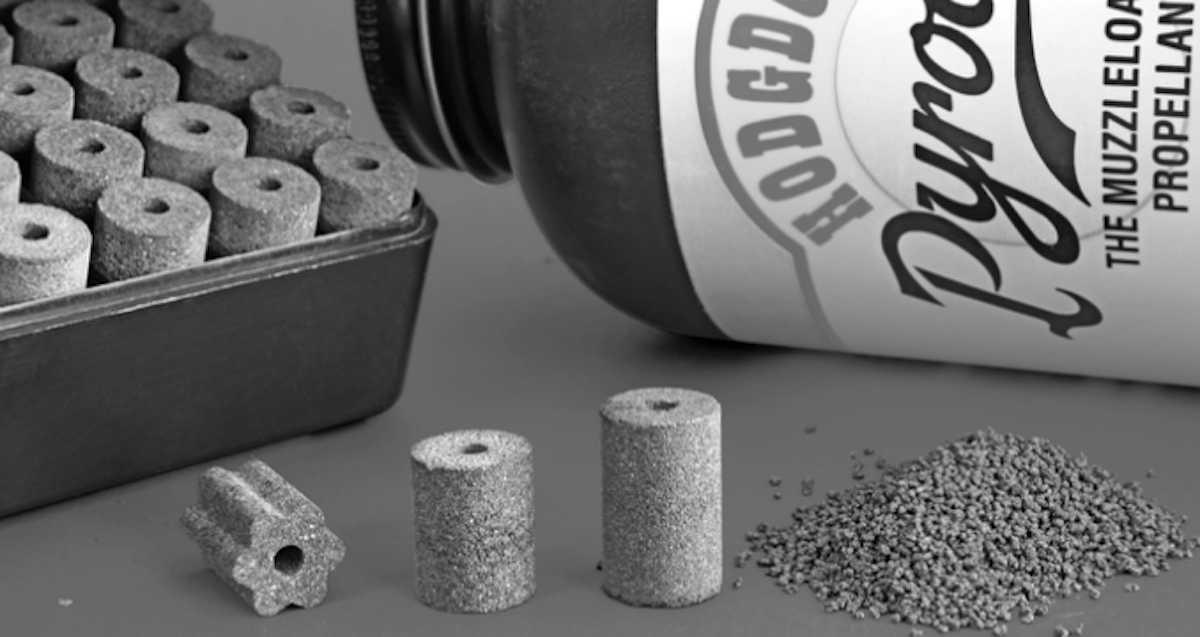
"Think of a TripleSeven pellet in new form," Ron said. "That's what FireStar is. Same formula. Same thin smoke. Because in cross-section a FireStar pellet is a thick-walled tube with deep longitudinal grooves forming a six-pointed star, it's lighter than a TripleSeven pellet of the same length. But you can go astray thinking in terms of charge weights for black powder substitutes. Loads for these propellants in granular form are volumetric. You don't weigh charges as you would for smokeless. In pelleted form too, substitutes deliver more thrust per grain, so pellets are listed in grain equivalents."
Pyrodex, the first black powder substitute marketed by Hodgdon, weighs roughly 70 percent as much as black powder. TripleSeven differs in composition from Pyrodex, so you'd expect a difference in length. A TripleSeven pellet is shorter than a Pyrodex pellet, but each is "50 grains equivalent" in thrust. To see the folly of comparing black powder substitutes by weight, you need only put the pellets on a scale. I did.
Five .50-caliber, 50-grain-equivalent Pyrodex pellets averaged 38.8 grains each. Five .50-caliber, 50-grain-equivalent TripleSeven pellets averaged 30.9 grains. A FireStar pellet is about the same length as a TripleSeven pellet but has less material due to its shape, and it delivers less thrust. "That's why Hodgdon specifies a three-pellet FireStar charge to match a two-pellet TripleSeven charge," Ron said. "A 100-grain equivalent. So if you wanted a FireStar charge to match a three-pellet load of Pyrodex or TripleSeven, you might use five FireStar pellets."
On my scale, five .50-caliber FireStar pellets average 24.8 grains each. Put a pencil to it, and you see 3x24.8 doesn't equal 2x30.9 for a 100-grain-equivalent charge. Ron might insist you purge thoughts of weight.
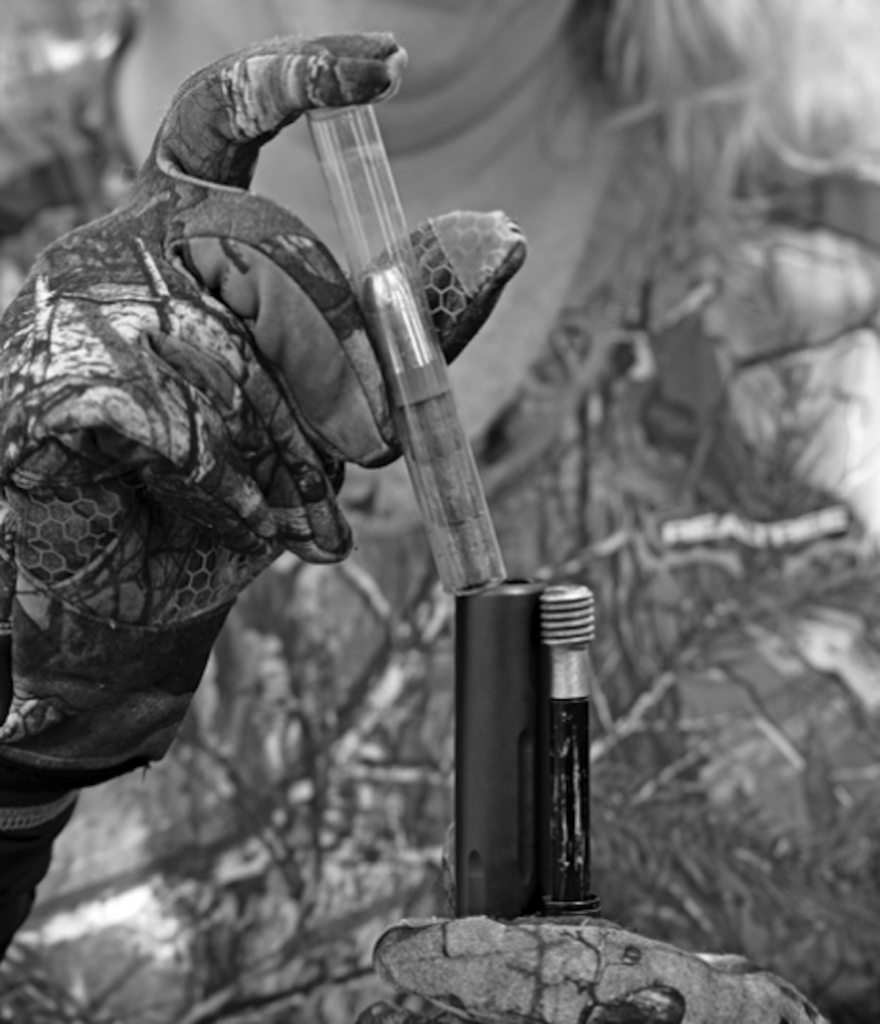
FireStar pellets currently sell in blister packs of 10 field-ready plastic tubes, each with six pellets. On the package a 100-grain-equivalent charge is given as a practical maximum, but Hodgdon lists three-, four-, and five-pellet loads. "FireStar has yielded slightly higher velocities than corresponding loads of Pyrodex and TripleSeven," Ron said. Five FireStar pellets have sent 175-grain Dead Center bullets at over 2,410 fps, 240-grain XTPs at nearly 2,350 fps, and 260-grain Scorpion PT Golds at over 2,140 fps. Hornady 300-grain SSTs have clocked 2,105 fps.
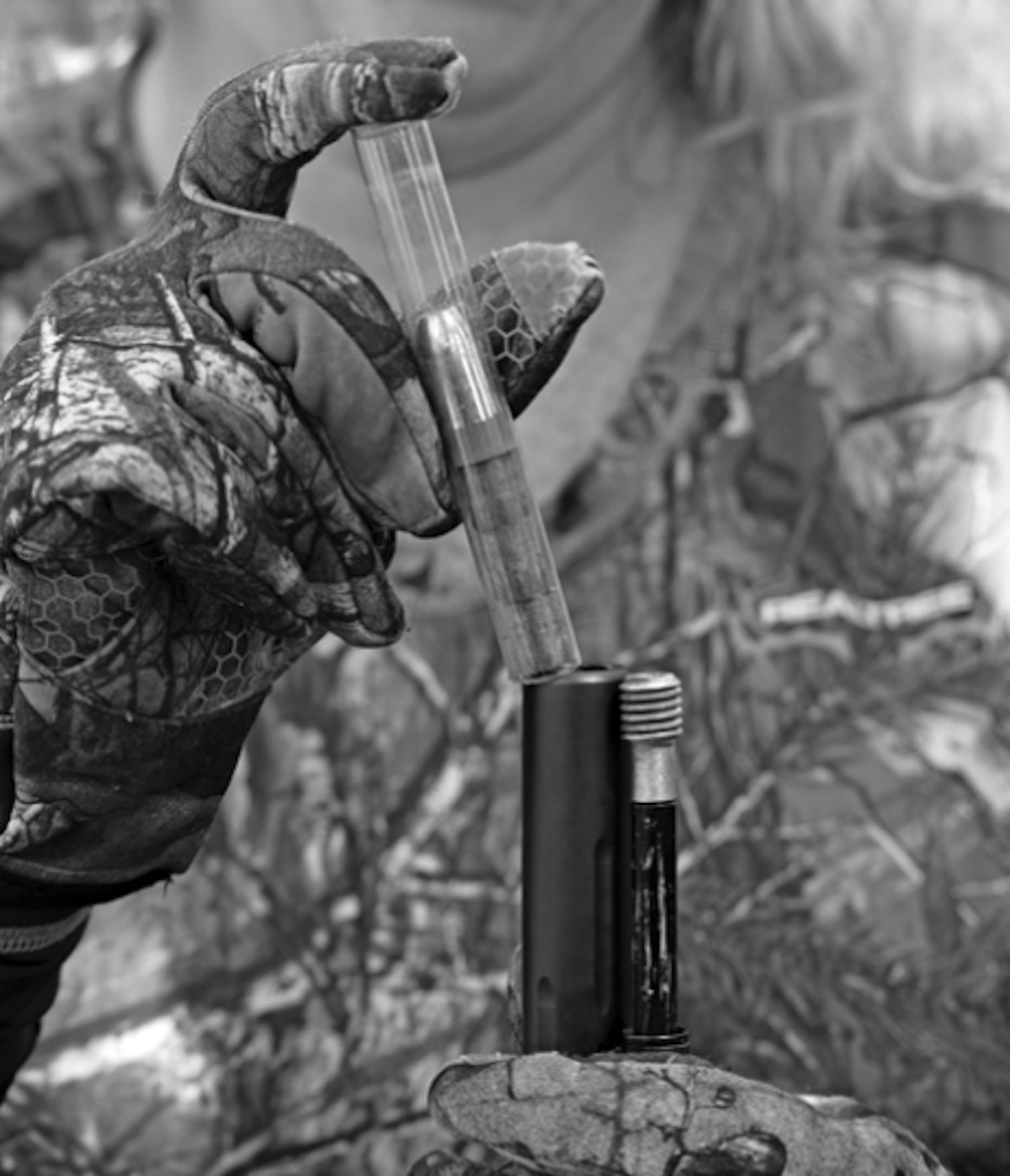
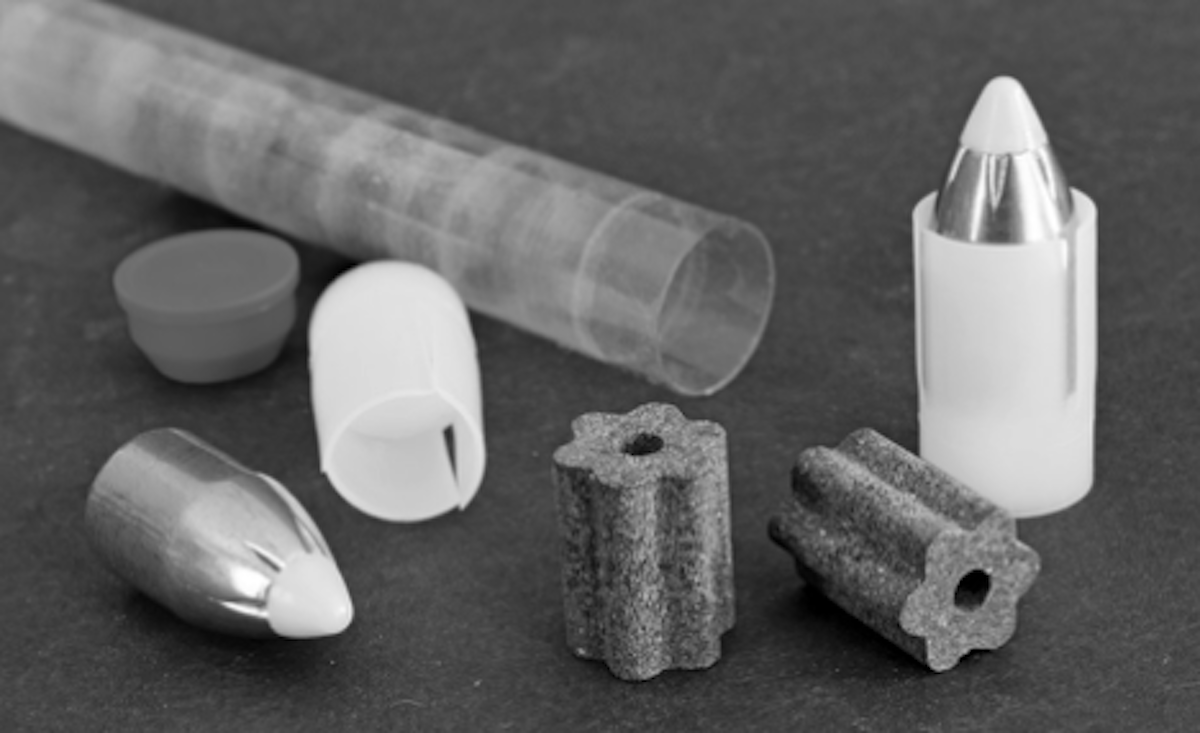
Like TripleSeven pellets, FireStars can be oriented either end down in a barrel; there's no igniter surface as with Pyrodex. Ron pointed out that any given charge of FireStar pellets "stacks taller" than an equivalent charge of TripleSeven. "So the burn is spread over a longer section of barrel. Fouling is less concentrated. Also, the grooves that help each pellet ignite more readily help it burn more uniformly and completely, so there's less total fouling. You'll notice easier bullet seating after three or more shots."
Easy loading can seem unimportant to first-time hunters or to those who fire only a handful of shots off-season. But deer don't always fall to the first shot, no matter how careful you are. Then what? Some years ago a whitetail had me wrestling the ramrod. The buck appeared at dusk, roughly 100 yards from a stump-line. A clear poke. Projecting roots that hid me steadied my rifle. But the deer didn't stop, spooling out yards as it quartered away. With no cover for an approach and my only chance for the week leaving at 130 steps, I fired. The Maxi-Ball struck too far back. For the next half-hour, as darkness fell, I dogged that buck at a trot. Three shots later he collapsed. By then the ramrod had embossed my blistered palm. Fouled before the hunt, the bore had all but denied entrance to my last bullet.
Less fouling? Easier loading? Sign me up!
Designed for use with 209 primers, FireStar ignites reliably with 209s developed by Winchester and Federal for muzzleloaders. "Black-powder-specific primers deliver less physical thrust than shotgun primers, which can move a charge forward at ignition," Ron explained.
My shooting with FireStar has confirmed what Chris and Ron had told me about it. While I can hardly expect to drill another grape-size FireStar group anytime soon, those three shots through one hole got my attention. Sure, luck played a hand, as did the rifle, the bullet, and the primer. But a consistent propellant is key. FireStar is consistent. And then some.