



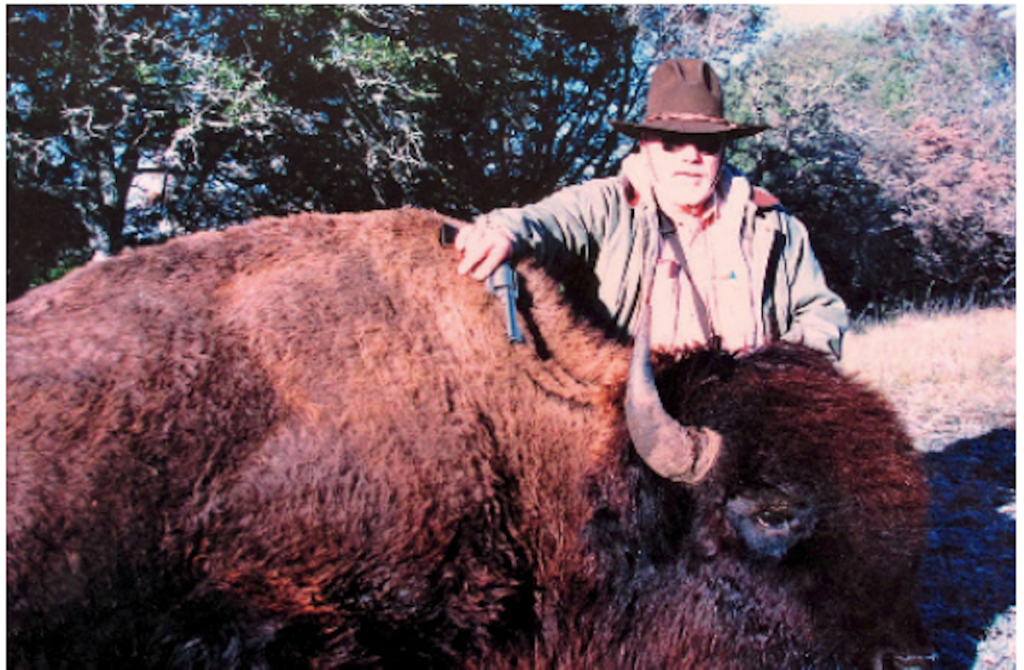

The best cartridges for handgun hunting all benefit from handloads using Hodgdon, IMR, and Winchester powders.
It was one of those beautiful October afternoons that Southwest Idaho is known for. I had hiked to the top of the ridge and was looking across the canyon when I spotted him. It was the largest-racked mule deer I had ever seen—before or since. It would definitely be a long shot; however, I could lay my vest on the downed log I was sitting on, take a very careful rest, and squeeze off a shot. If everything went right, I would have him. It would be a long rifle shot, but the odds were definitely in my favor. Except for one thing. I didn’t have a rifle.
I had a deer tag, but my gun of choice this day was a 10-inch Ruger 44 Magnum, the old original Flattop Blackhawk.
I had spent the summer finishing up my master’s degree at the University of Montana, and when I got home Diamond Dot (my beloved dog) and I went out shopping. We stopped at the Gunhaus, and there was this beautiful older Ruger priced at $200. That was 50 years ago, and that was a lot of money. I passed on it, went out to the pickup, and told Diamond Dot about it, and she said, “Go buy it!” I mated it up with an Al Goerg shoulder holster, and that’s what I had as I looked across the canyon at the big buck. There was nothing I could do except admire him. The amazing thing was I did not feel bad about having a sixgun. I simply enjoyed watching him and knew from that moment on I was a handgun hunter.
I spent many of my teenage years reading Elmer Keith. He was known for using a sixgun on big game. However, as we know today, he was not a handgun hunter. He once said that every morning when he put on his trousers, he also buckled on his sixgun. For him, his .44 was not a firearm of choice for hunting but rather a gun of convenience. He always had one with him so that if a situation arose, he was prepared.
The era of modern handgun hunting really began with Goerg. His book Pioneering Handgun Hunting, published in the 1960s, is sought after by serious handgun hunters. He was followed by the likes of Bob Petersen, Lee Jurras, Larry Kelly, JD Jones, Gary Reeder, Max Prasac, and Mark Hampton, all of whom wrote/write of handgun hunting in the purest sense.
The sixgun or single-shot pistol was not a matter of convenience for them but an actual choice. Together, all of them have taken every big-game animal on the planet, including Africa’s Big Five as well as Alaskan brown bear. In between Keith and Goerg, Col. Doug Wesson went afield with the then-new 357 Magnum and took big game to advertise the possibilities of that with what was then the most powerful handgun available.
Let’s take a chronological look at the best sixgun cartridges available today for handgun hunters. For several reasons, not the least of which is available space, I will look at only standard-length sixgun cartridges, no stretch-frame examples or wildcat cartridges.
45 Colt
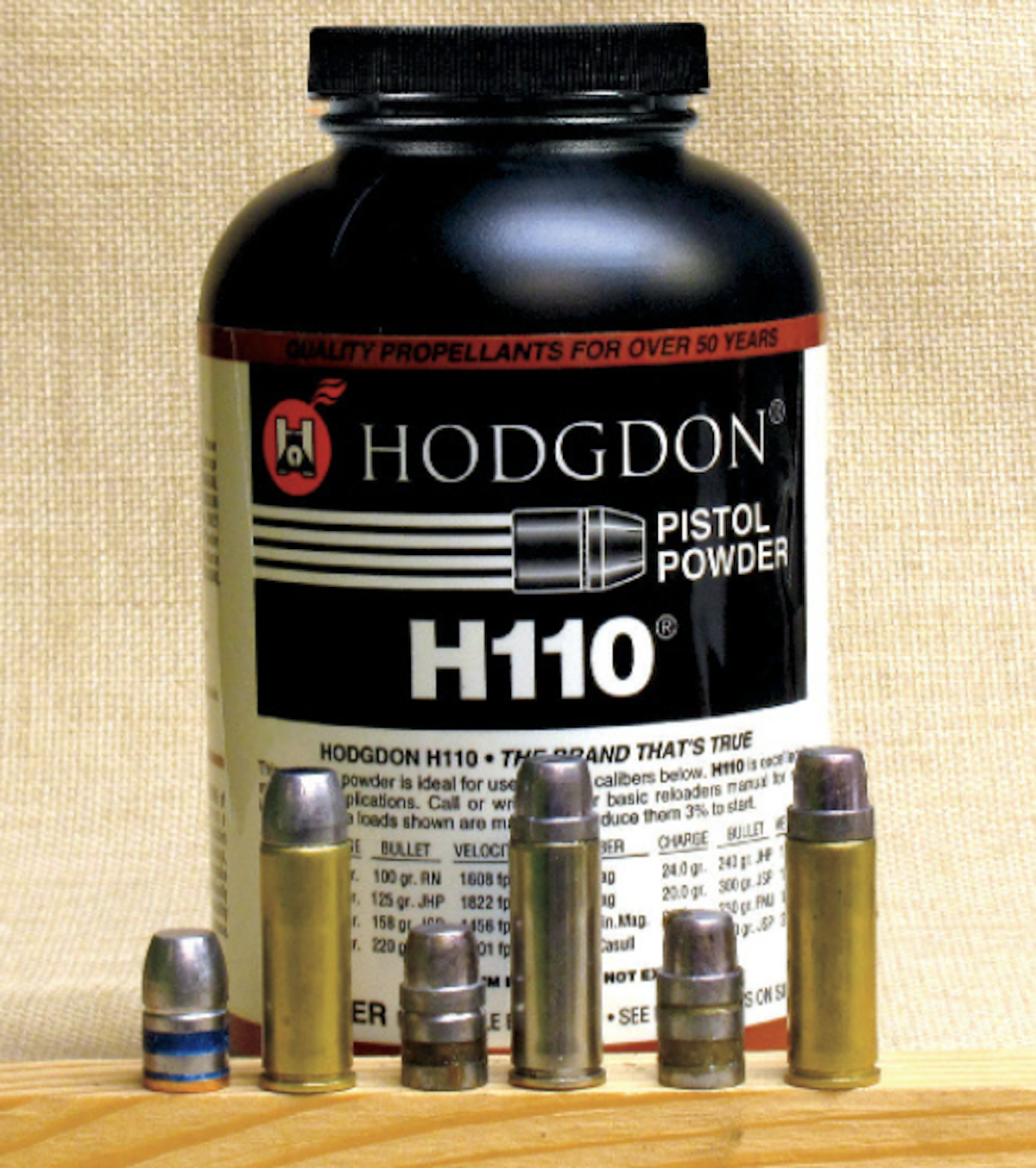
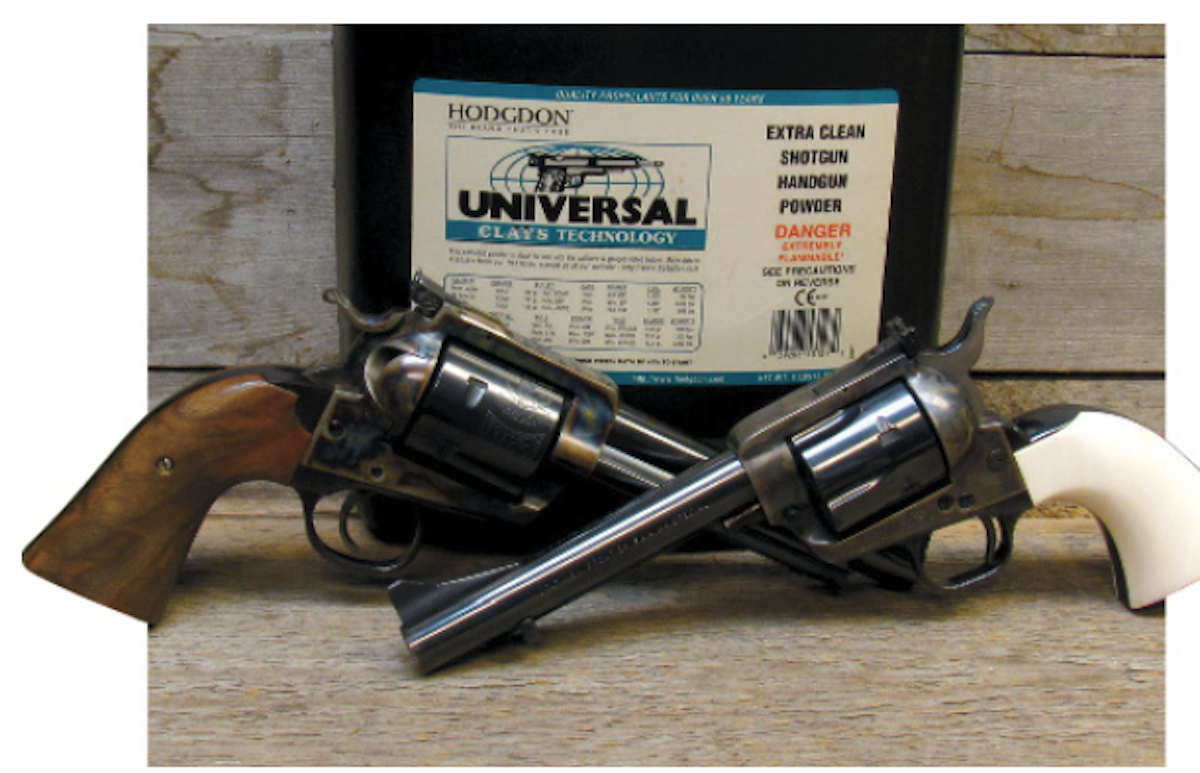
The 45 Colt in the Colt Single Action Army goes all the way back to 1873. It began as a black powder cartridge with a 250-grain to 255-grain bullet at a velocity of about 900 fps. As a gun of convenience, it took many large-game critters. Years ago, I had a 45 Colt New Frontier fitted with a properly dimensioned cylinder and a new 4.75-inch barrel. Everything was as perfect as it could be made. There was only one problem. It was just an average shooter—until I discovered Hodgdon’s 4227 powder.
I found the load in Hodgdon’s manual No. 23, and it was the only one listed for the 45 Colt using that powder. The load was 20.0 grains with a 250-grain cast bullet. I loaded up some using the Lyman/Keith No. 454424 bullet, and it just about duplicated the original black powder load. My first cylinder-full put all shots into one hole, and I have been sold on the powder ever since. For years there were two 4227 powders: H4227 and IMR 4227. After Hodgdon purchased IMR, the company eventually offered only one 4227, and it is IMR 4227. It is simply an excellent powder for the 45 Colt.
The arrival of the 45 Colt Ruger Blackhawk in the early 1970s changed everything when it came to handloading the cartridge. For the first time we had a sixgun capable of handling heavier loads, and I tried various powders and bullets. For hunting, I have settled on bullets in the 300-grain range, namely the 300-grain gascheck Lyman No. 454629GC designed by Dick Casull for his 454 Casull cartridge and the NEI Keith-style bullets in 310-grain and 325-grain weights. I load these three bullets over 21.5 grains of either H110 or W296 for a velocity right at 1,200 fps from a 7.5-inch revolver.
This is a superb game cartridge loading, and it’s also quite accurate. I have fired it out to 700 yards and am able to hit a two-foot-square target several times out of 100 shots. And when I don’t hit it, I scare it.
44 Special
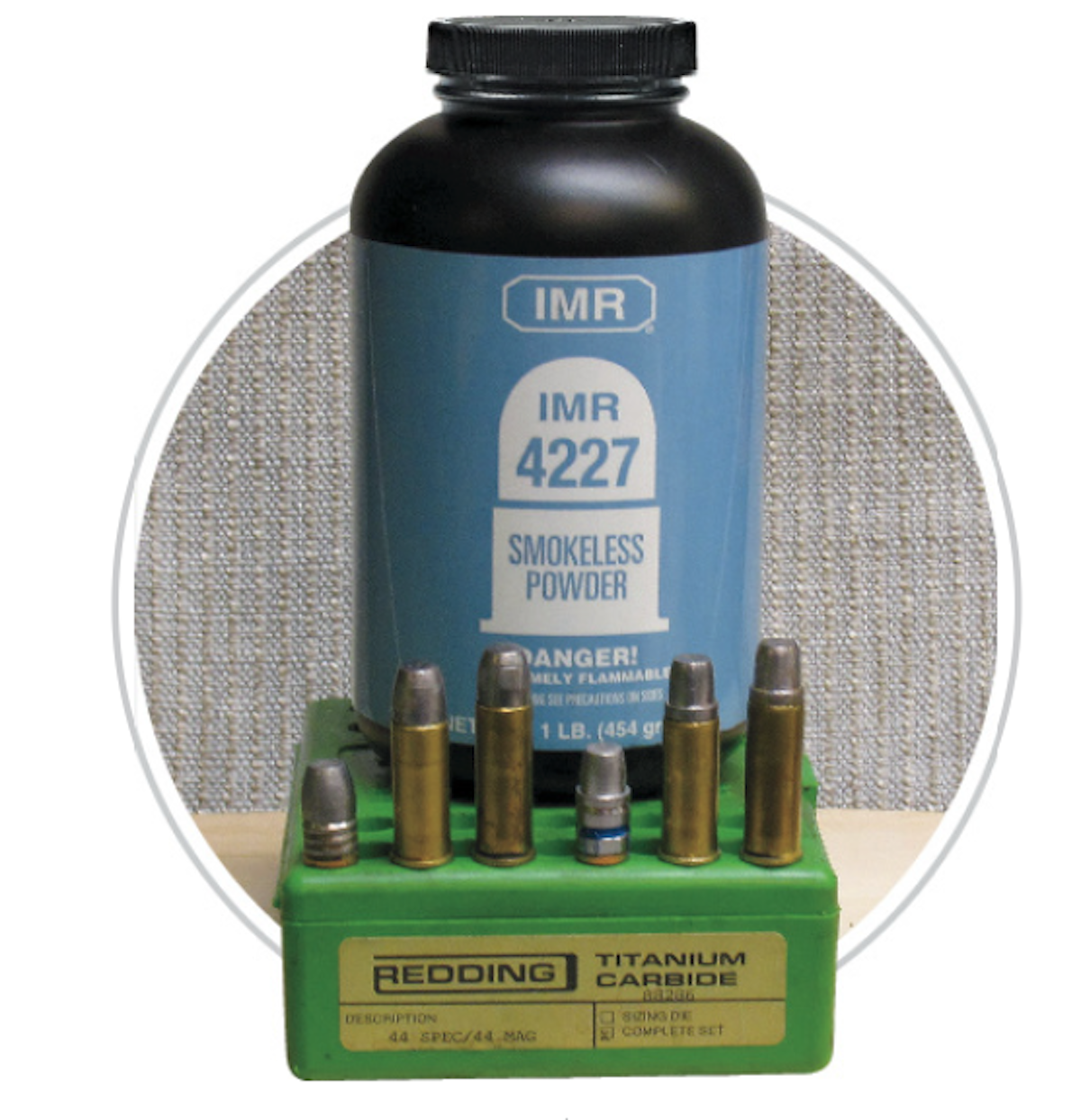
The arrival of the 44 Special in late 1907 is notable not only for the cartridge but also because of the Smith & Wesson 1st Model Hand Ejector New Century revolver. It was the first of what we now call the N-Frames and is lovingly referred to by collectors as the Triple-Lock. As so often happens, those who worked on this project were on the edge of perfection and backed off with the 44 Special cartridge, even though it was a longer case, instead just duplicating the earlier 44 Russian load. It remained for experimenters to find out just what the 44 Special was capable of, and one of them, of course, was Elmer Keith. His work with the 44 Special for nearly 30 years led directly to the 44 Magnum.
Keith reported 1,100 to 1,200 fps with his custom loads, and when I duplicated them using the old powder and balloon-head brass he had access to, I found out his loads were right on the money. Just like with the 45 Colt load, I also found a load in earlier Hodgdon manuals for the 44 Special, namely 16.5 grains of 4227 with a 250-grain Keith bullet. This is a very safe load, and muzzle velocity is right at 1,000 fps, which makes it suitable for small deer at close range. I also duplicate this load with 7.5 grains of Hodgdon Universal powder. Both loads are for full-sized 44 Special sixguns in excellent shape and for 44 Magnum revolvers.
357 Magnum
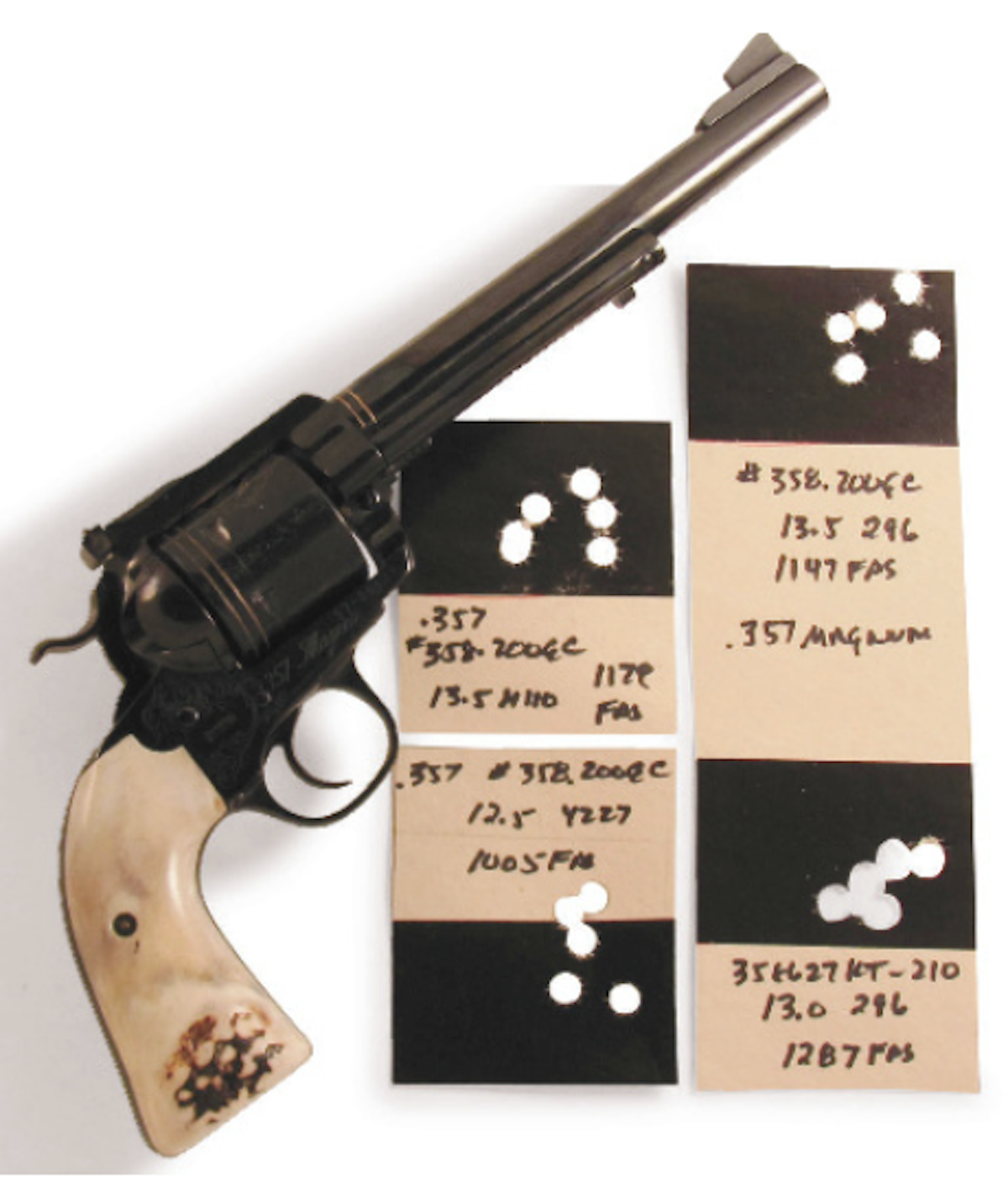
The 357 Magnum arrived in 1935 in the beautifully crafted Smith & Wesson Registered Magnum revolver. The first loading was a 158-grain bullet at about 1,500 fps. The bullet was soft and leaded the barrel quickly, and it was not until the arrival of Ray Thompson’s Lyman No. 358156 gascheck bullet that the leading problem would be solved. I use this bullet over 14.5 grains of IMR 4227 for 1,200 fps, and 15.0 grains of H110 gives me just over 1,300 fps. My most used 357 Magnum loads today are assembled with the NEI No. 200.358GC, which is a 200-grain gascheck bullet.
I had a special Ruger Flattop 357 Magnum made up with a heavy 8.75-inch barrel for shooting this heavy bullet. With 12.5 grains of 4227, muzzle velocity is 1,074 fps, and upping the load to 13.5 grains of H110 or W296 produces 1,250 fps with groups well under one inch at 25 yards. It is a superb handgun hunting load.
44 Magnum
The 44 Magnum has now been with us for more than 65 years. It is no longer the most powerful sixgun cartridge available—I can find at least 10 others in both standard-cartridge length and extended-frame length that are more powerful. However, the 44 Magnum remains the “King of Sixgun Cartridges.” I am not a betting man, but if I were, I would lay everything I could find on the side of the 44 Magnum outselling all the other more powerful sixguns combined.
The Smith & Wesson Model 29 in its original configuration is the sixgun by which all other 44 Magnums are judged. When it comes to performance, some fall short, others surpass it. I view it as the finest-looking double-action revolver ever made, and it definitely has been the slickest handling of all 44 Magnums over the years. For an everyday “packin’ pistol” with standard loads using 240-grain and 250-grain bullets and heavy-duty 44 Special loads, it is at the top of the mountain.
There was a time when I shot nothing in my Model 29s except full-house loads using the Keith 250-grain hard-cast bullet at 1,400 fps. Those sixguns from the 1950s, ’60s, and ’70s are now older, and so am I. My most used load for the Model 29 these days is either the 250-grain or 295-grain hard-cast Keith bullet at a more easily handled 1,150 fps. This can be achieved with 10.0 grains of Universal. The heavier loads are mostly saved for newer, stronger, and, especially, heavier 44 Magnums.
My favorite heavy loading for the 44 Magnum, although it is used very sparingly today, is a 295-grain gascheck bullet over 21.5 grains of H110 or W296. This is virtually the same load I use for heavy 45 Colt loads. In a 10-inch Freedom Arms Model 83 single-action revolver, this load clocks just over 1,400 fps; with shorter barrels, it is closer to 1,300 fps. As they say, there is nothing that walks that cannot be handled with this load.
I also use 4227 in a lot of 44 Magnum loads, with 20.0 grains under the superb Lyman/Thompson No. 431244GC bullet. This load is right at 1,150 fps in a 5.0-inch S&W Model 29 (a perfect “packin’ pistol” if there ever was one). Back in the days of my involvement in long-range silhouette shooting, my load for the 200-meter rams was Hornady’s 265-grain flatpoint jacketed bullet originally designed for the 444 Marlin rifle cartridge. With 23.0 grains of either H110 or W296, this load is just over 1,300 fps from a 5.5-inch Ruger Bisley Model. Both guns are not necessarily the first choice for handgun hunting, but they are very convenient when packed in a quality holster.
I have used just about everything available sixgun-style for hunting, and the 44 Magnum, as far as the number of critters taken, remains at the top of the list. It has been responsible for 24 straight one-shots kills on whitetails, as well as the mountain lion that is mounted on a limb over my desk. Every time I sit down to write, I think of the 44 Magnum.
41 Magnum
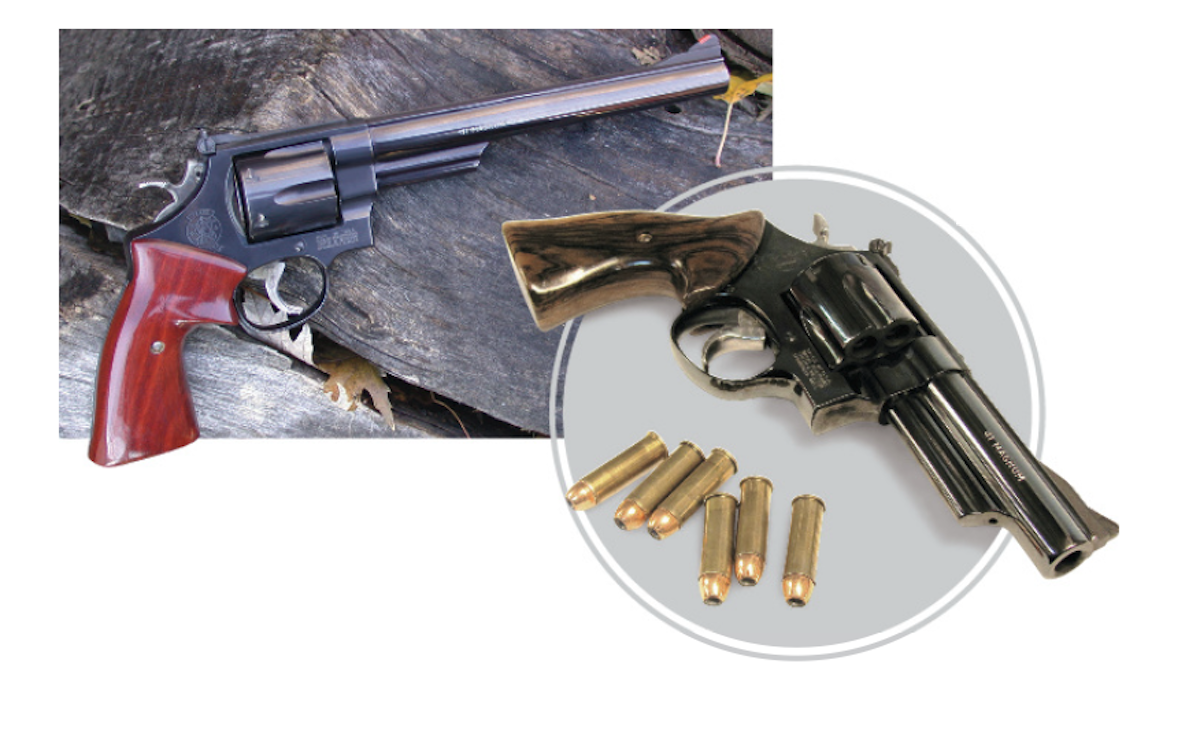
It took me a while to adopt the 41 Magnum. When Diamond Dot and I first visited Elmer Keith in the summer of 1968, he was packing an ivory-stocked 4.0-inch 41 Magnum revolver, but it still took me 10 more years to embrace the cartridge. I finally took the plunge and eventually wound up with a pair of 4.0-inch S&W Model 57s stocked with exotic wood Skeeter Skelton Kingwood grips by BearHug, an 8.38-inch Model 57 that also wears BearHug grips, and a 6.0-inch nickel-plated Model 57 that is gripped with Herrett Jordan Trooper stocks.
To know the 41 Magnum is to appreciate it. It really does not need to be compared to any other cartridge as it can stand on its own merits. I also have Ruger Blackhawk and Bisley revolvers with 5.5-inch barrels that have been tuned by Alan Harton and Ben Forkin. Both feature casehardened frames, and they are not only good-looking sixguns, but also handle much easier with this barrel length. My bullet of choice for these remains the original Keith semiwadcutter design cast in a Hensley & Gibbs mold. It weighs right at 220 grains and loaded over 21.0 grains of H110 clocks 1,250 fps. With 21.0 grains of IMR 4227 it churns up about 50 fps more velocity. With 22.0 grains of W296, this bullet out of a 7.5-inch sixgun clocks 1,445 fps. Feral pigs do not argue with it.
For a softer-shooting load, I prefer the Oregon Trail 215-grain SWC hard-cast bullet over 7.0 to 8.5 grains of Universal for a velocity ranging from 900 fps to 1,175 fps. Such loads are accurate and relatively pleasant shooting, and they will work just fine on close-range deer.
454 Casull
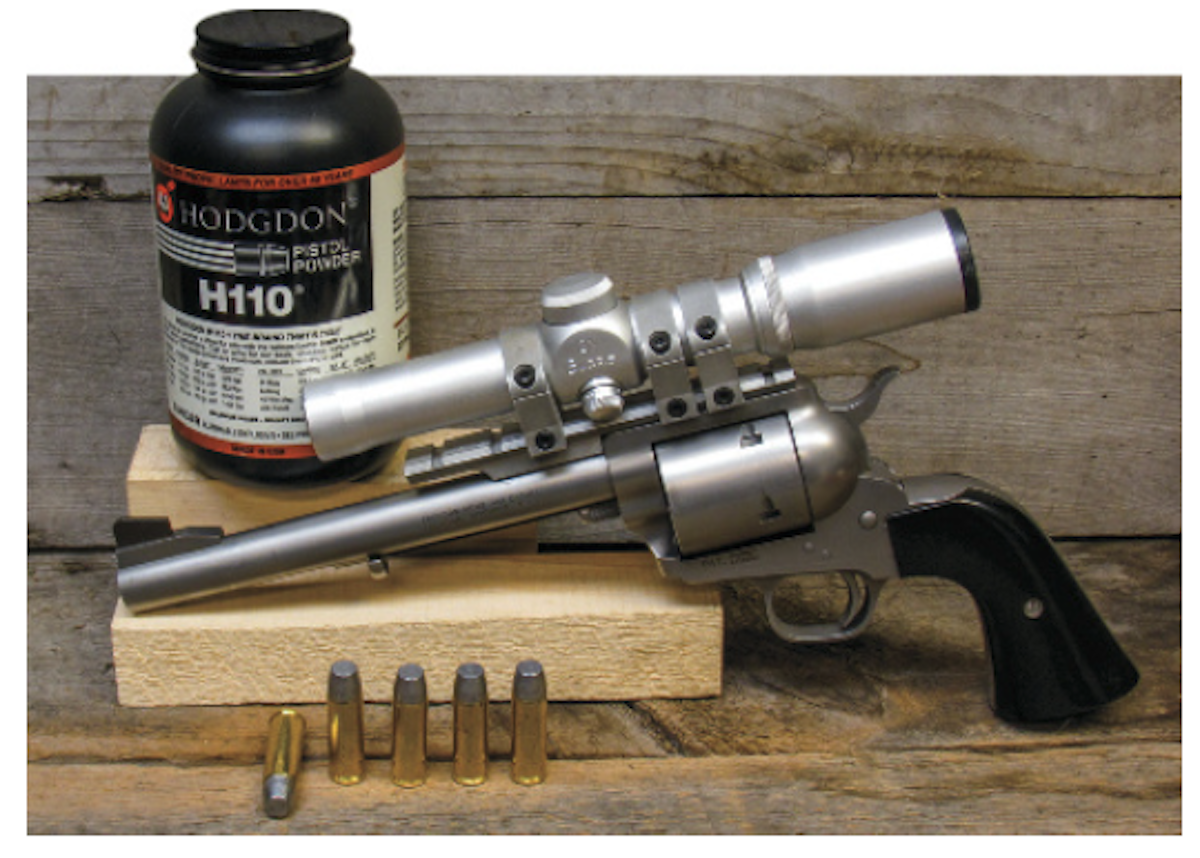
Hodgdon H110 made the 454 Casull possible. Dick Casull started experimenting with heavy 45 Colt loads in the 1950s. At that time 45 Colt brass had been modernized to a solid head, making it stronger than the balloon-head version that had been available for decades. Casull started out with the Colt Single Action Army revolver and used custom five-shot cylinders on his quest for heavy loads. He soon reached the top and started making his own custom five-shot single-action revolvers. The powder he needed at the time did not exist, so he did a magic recipe of a triplex load using three different powders layered in the case. With the arrival of H110, Casull had what he needed and no longer had to concoct a special loading.
Today, H110 remains the premier powder for loading the 454 Casull. All of Casull’s experimenting was done with 45 Colt brass; however, with the arrival of his production gun, the 45 Colt brass case was lengthened to prevent any heavy loads from being fired in older 45 Colt guns. The result was the 454 Casull. He also designed two excellent gascheck bullets for use in his cartridge: the Lyman No. 454628 260-grain flatpoint and the No. 454629 300-grain flatpoint. There are several sixguns offered today chambered in 454 Casull, but all my work with heavy loads over the past 35 years has been using the Freedom Arms Model 83.
Using Casull’s 300-grain bullet over 30.0 grains of either H110 or W296 results in just over 1,600 fps from a 10.0-inch Model 83. Years ago, I shot with Dick Casull using his 260-grain bullet from his custom 12.0-inch Freedom Arms revolver, and we hit muzzle velocities over 2,000 fps. These are very powerful loads in long-barreled sixguns.
My most used 454 is a Freedom Arms Field Grade with a 7.5-inch barrel and a 2X handgun scope. And I came up with some milder but very potent loads for this sixgun. Using 21.5 grains of H110, the Lyman No. 454629 300-grain bullet and the NEI No. 310 KT bullet clock 1,120 fps, while the 325-grain NEI KT picks up just over 100 fps more muzzle velocity, no doubt due to reduced powder capacity. With the Keith-style No. 454424 bullet designed for the 45 Colt, muzzle velocities have to be held down or accuracy disappears. I especially like this bullet over 22.0 grains of IMR 4227 for right at 1,050 fps.
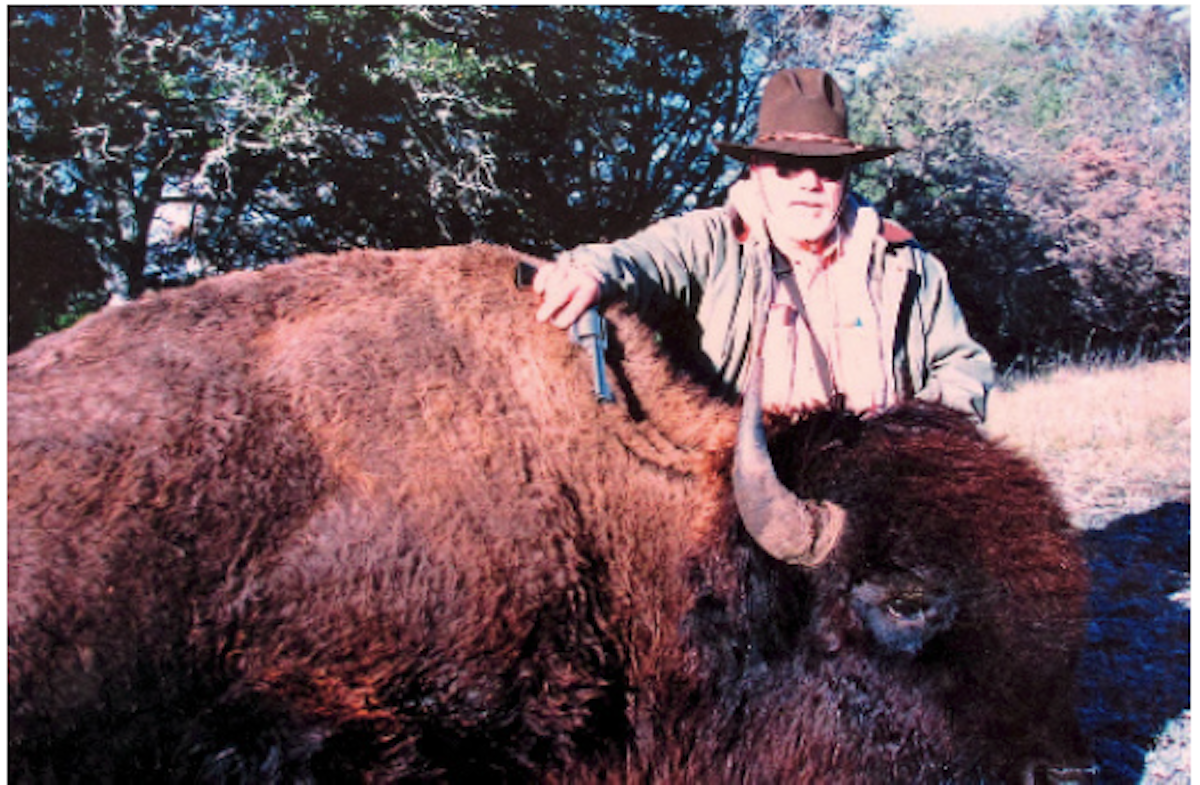
When I started reloading back in the late 1950s, I thought everything had to be loaded to the hilt. In my older and wiser years, I have learned that big-bore sixguns can be very potent at reasonable muzzle velocities. In fact, I doubt we ever need anything more than 1,200 fps. Two of my bison bulls have been taken with heavy bullets under this velocity, and they both were one-shot kills.
The best cartridges for handgun hunting all benefit from handloads using Hodgdon, IMR, and Winchester powders.