


If you've read the two other feature articles on the new CFE BLK powder elsewhere in this manual, you know Hodgdon has developed yet another propellant that reloaders are really going to appreciate. Several years ago the company introduced the first Copper Fouling Eraser (CFE) propellant designed to eliminate most of the jacket fouling cleaning chore. It was called CFE 223, and it was designed—as the name clearly suggests—for handloaders who enjoy shooting lots of 223 Remington/5.56 NATO ammo in modern sporting rifles. CFE Pistol powder followed soon after, so that handloading pistol shooters had a similar product option.
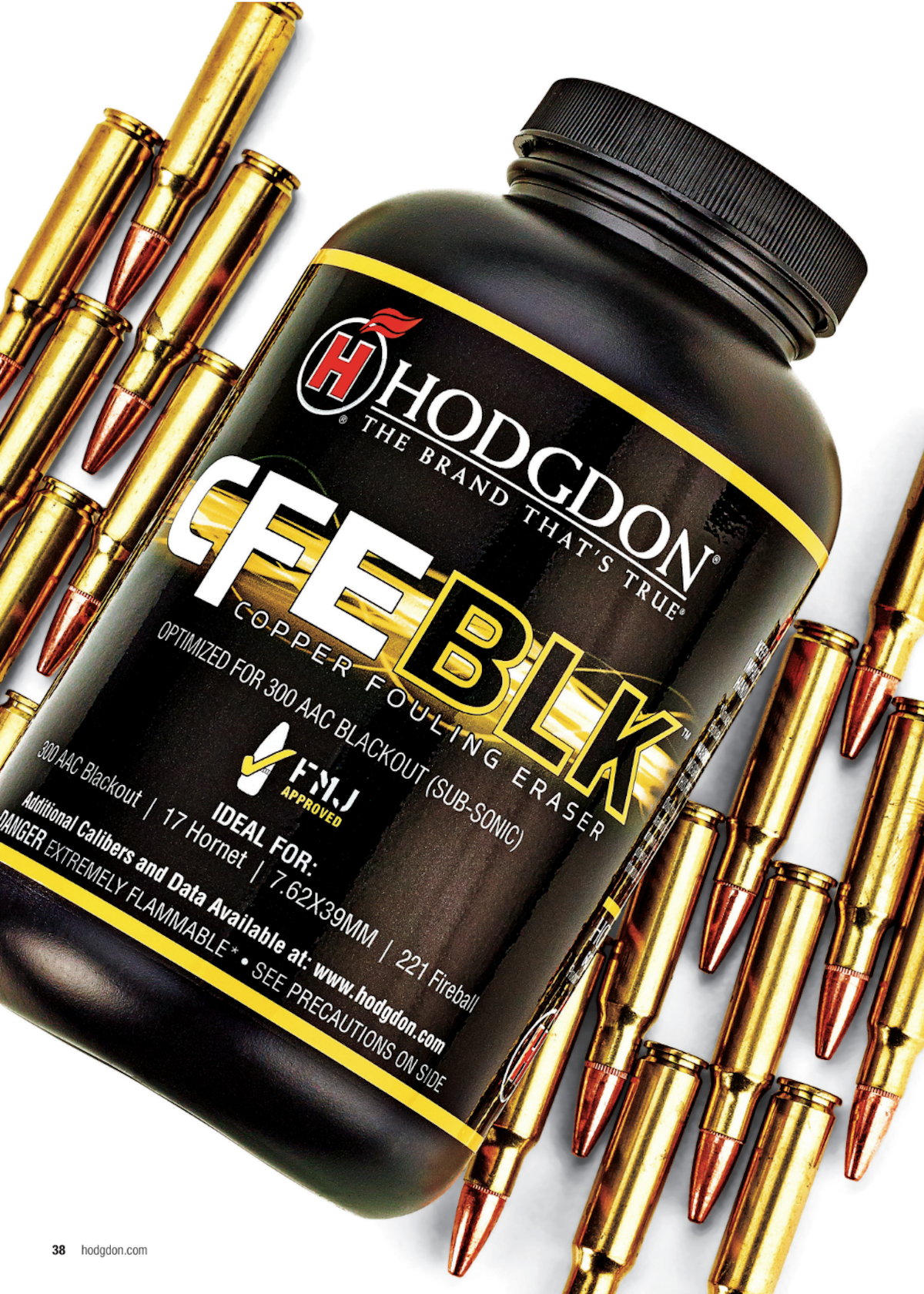
Two propellants can't possibly satisfy every rifle and pistol handloading need, so this year Hodgdon introduces CFE BLK, the third in the series of CFE propellant offerings.
CFE BLK is specifically targeted at those who enjoy reloading and shooting 300 AAC Blackout ammo. However, this new powder is not restricted to a single cartridge. Among the several other small-capacity cases that CFE BLK is suitable for is the 6.8 Remington Special Purpose Cartridge (SPC), and that's the cartridge I worked with for this special report.
When Hodgdon Product Manager Ron Reiber discussed this assignment with me, I received the news with mixed feelings. As an engineer and avid shooter/handloader, I welcome any opportunity to test and evaluate a new product; however, the cartridge specified introduced an extra level of considerations.
Why? Because I had zero previous experience with the 6.8 SPC. I own many firearms and reload 100+ different cartridges, but I couldn't recall ever firing a single round of 6.8 SPC before this assignment. But I shrugged and thought to myself, "What the heck—how hard could it be?"
The 6.8 SPC
At the urging of a U.S. Special Forces team in 2002, Remington began developing a more effective alternative to the 5.56 NATO cartridge for close-combat situations, and thus the .270-caliber 6.8 SPC was born. S.A.A.M.I. gave the 6.8 SPC round official status in 2004, about when Winchester and Remington were touting their new short and super-short magnums.
At the time, I was not the least interested in ARs. I was much more involved with channeling the extraordinary performance of my new bolt-action 270 WSM on pronghorns and whitetail deer to notice another comparatively puny .270-caliber round.
During the next few years, Remington and Ruger offered bolt actions and/or autoloaders chambered for the 6.8 SPC. When I finally became interested in ARs, the round had lost much of its glamour, and the two big-name manufacturers had dropped every model from production. Most of the AR makers (ArmaLite, Barrett, Bushmaster, Daniel Defense, Double Star, Rock River Arms, LWRCI, Wilson Combat) continue to offer 6.8 SPC models. However, the mainstay 223/5.56 and 308 Win./7.62 NATO rifles and the 6.5 Grendel and 300 AAC Blackout options have the interest of mainstream shooters.
Eventually, I joined the ranks of AR fans and now own AR-15 and AR-10 rifles or dedicated uppers chambered for 204 Ruger, 223 Rem., 308 Win., 338 Federal, and 458 SOCOM cartridges. I had casually considered and quickly dismissed the 6.8 SPC as just another "also-ran."
Then I was assigned to test and evaluate this new Hodgdon propellant specifically in a 6.8 SPC AR. The fact that I didn't have a gun or upper to shoot was quickly remedied and, fortunately, complemented another AR later when I ran into functioning issues with my first one. The T&E effort has been a learning experience and has added yet another round to my lengthening list of favorites.
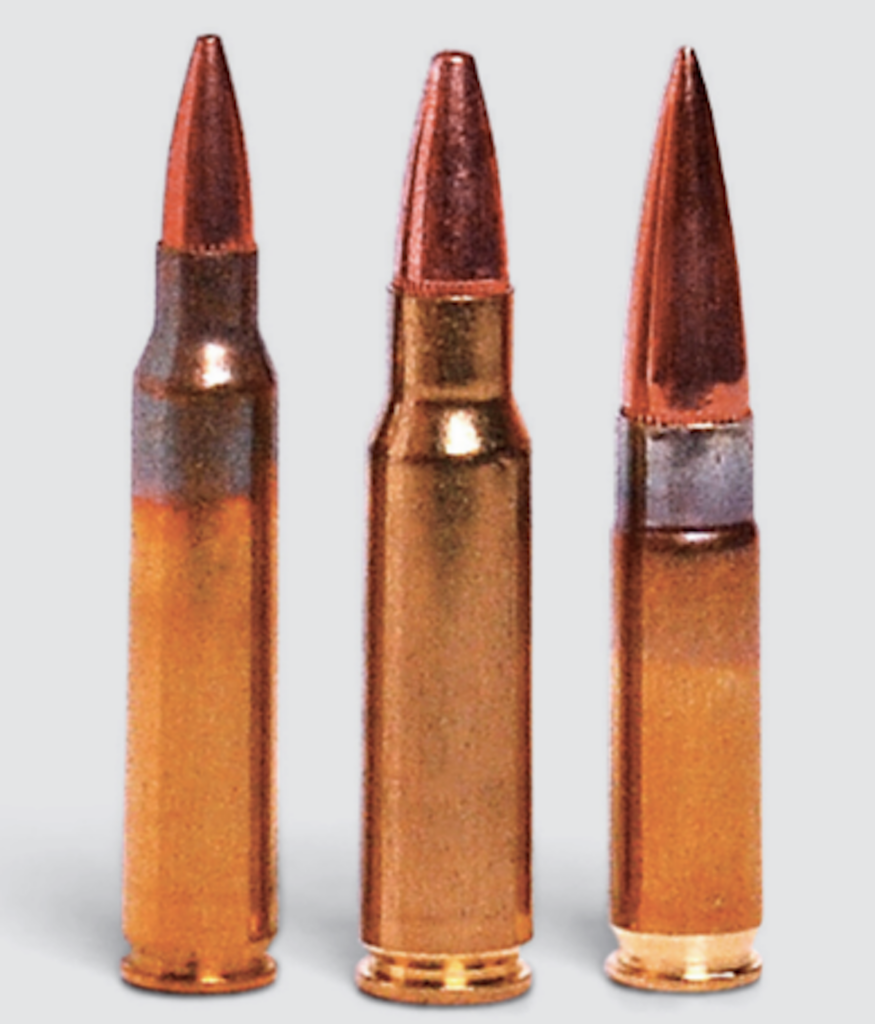
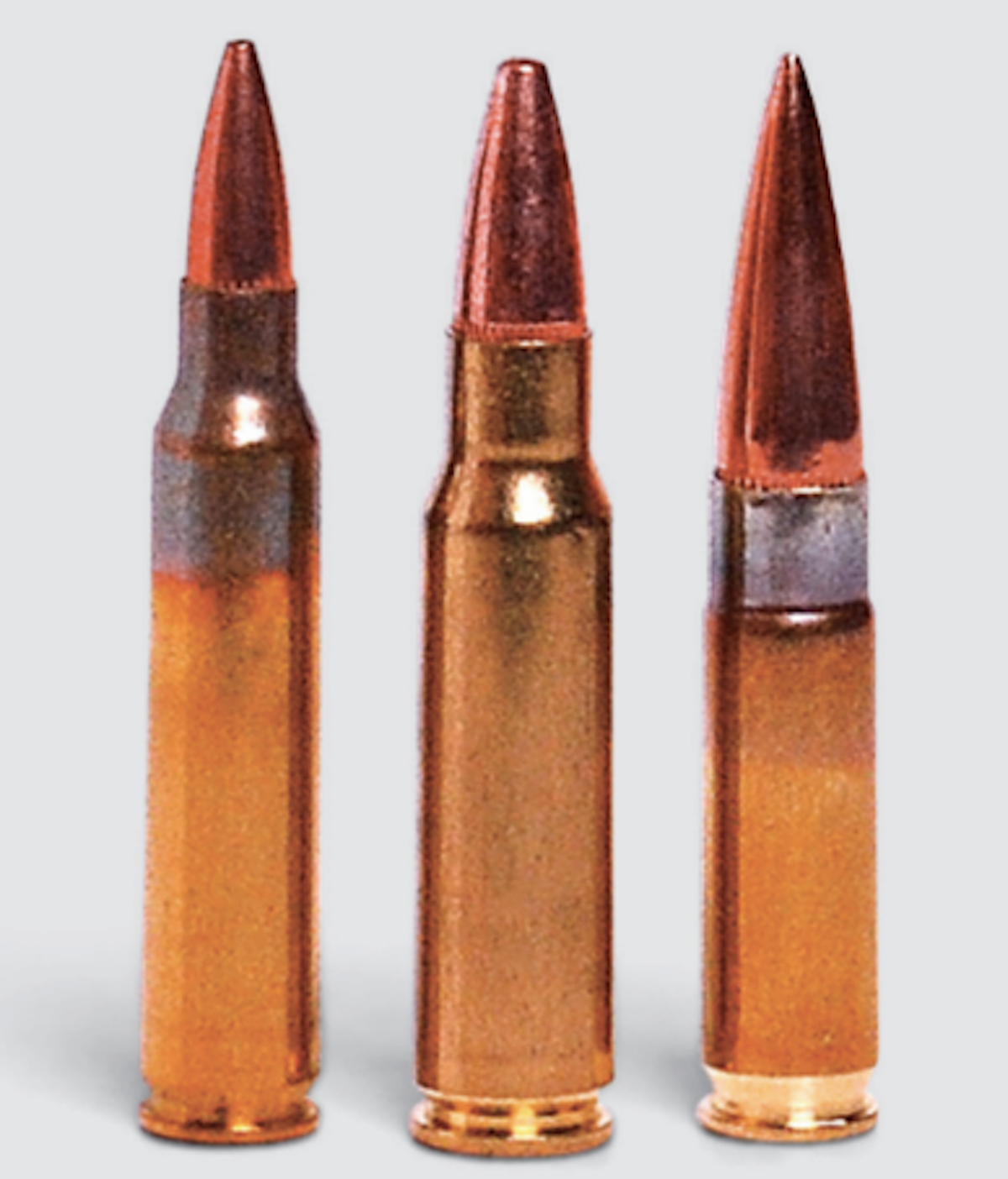
The 6.8 SPC case is a shortened version of the near-obsolete 30 Remington round (not to be confused with the short, stubby 30 AR Remington cartridge). The 6.8 SPC's case head dimensions and shoulder angle are the same as the 30 Rem., but the overall case length is about one-third of an inch shorter, at 1.686 inches max. Remington chose to retain the original Large Rifle primer; however, Hornady, Federal, Silver State (SSA), and other makers concluded the standard Small Rifle primer was adequate to reliably ignite the 6.8 SPC's relatively small smokeless propellant charge.
More recently, the 6.8 SPC has experienced an unofficial improvement of the S.A.A.M.I.-approved chamber specifications. Referred to as the 6.8 SPC II, the chamber has approximately .050 inch more freebore. I believe that's supposed to avoid excessive pressures when the round is topped with heavier, i.e., longer, bullets. S.A.A.M.I. maximum average pressure spec is 55,000 psi, i.e., the same as the 223 Rem. Because the 6.8 SPC case head diameter is approximately 0.042 inch greater, its bolt thrust is also increased.
Prepping for the Project
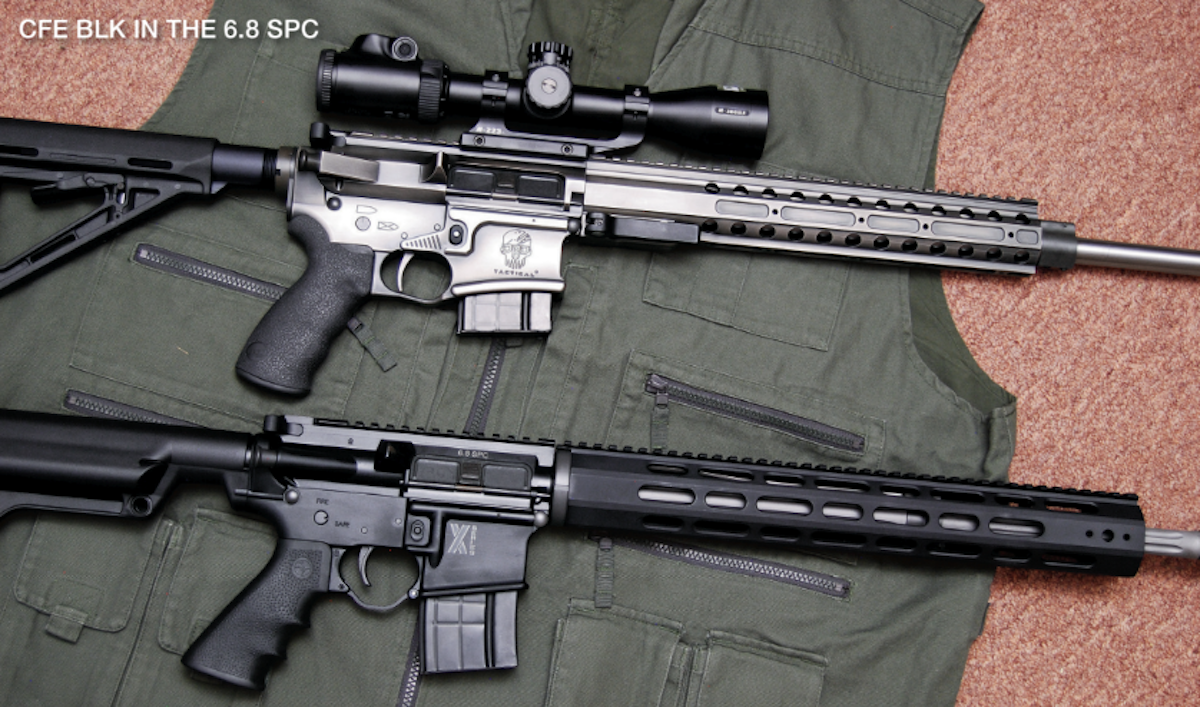
Since I didn't own a rifle, or even an upper, when I accepted the assignment, I called a shooting buddy, John Fawcett, for advice. Fawcett offered to loan me an early upper chambered for the S.A.A.M.I.-standard 6.8 SPC round and also suggested I call Skip Patel, proprietor of DRD Tactical firearms. Patel graciously provided one of his switch-barrel, AR-style custom rifles. He didn't offer a 6.8 SPC model, so I purchased a premium, cut-rifled barrel (to my specifications) from Steve Satern to retrofit DRD's CDR-15 rifle.
That's where my lack of knowledge resulted in less than satisfactory results and led to a premature (and wrong) conclusion. I ordered a 20-inch stainless barrel with a rifle-length gas system. Most 6.8 SPC barrels feature 1:10- or 1:11-inch rifling twist rates. I intended to test loads topped with 85- to 120-grain bullets, so I opted for an even tighter, 1:9-inch twist.
Optic selection was easily accomplished. I simply switched a Nikon M300 BLK 1.5-6X 42mm BDC scope from an S&W M&P15 over to the DRD Tactical's Picatinny rail.
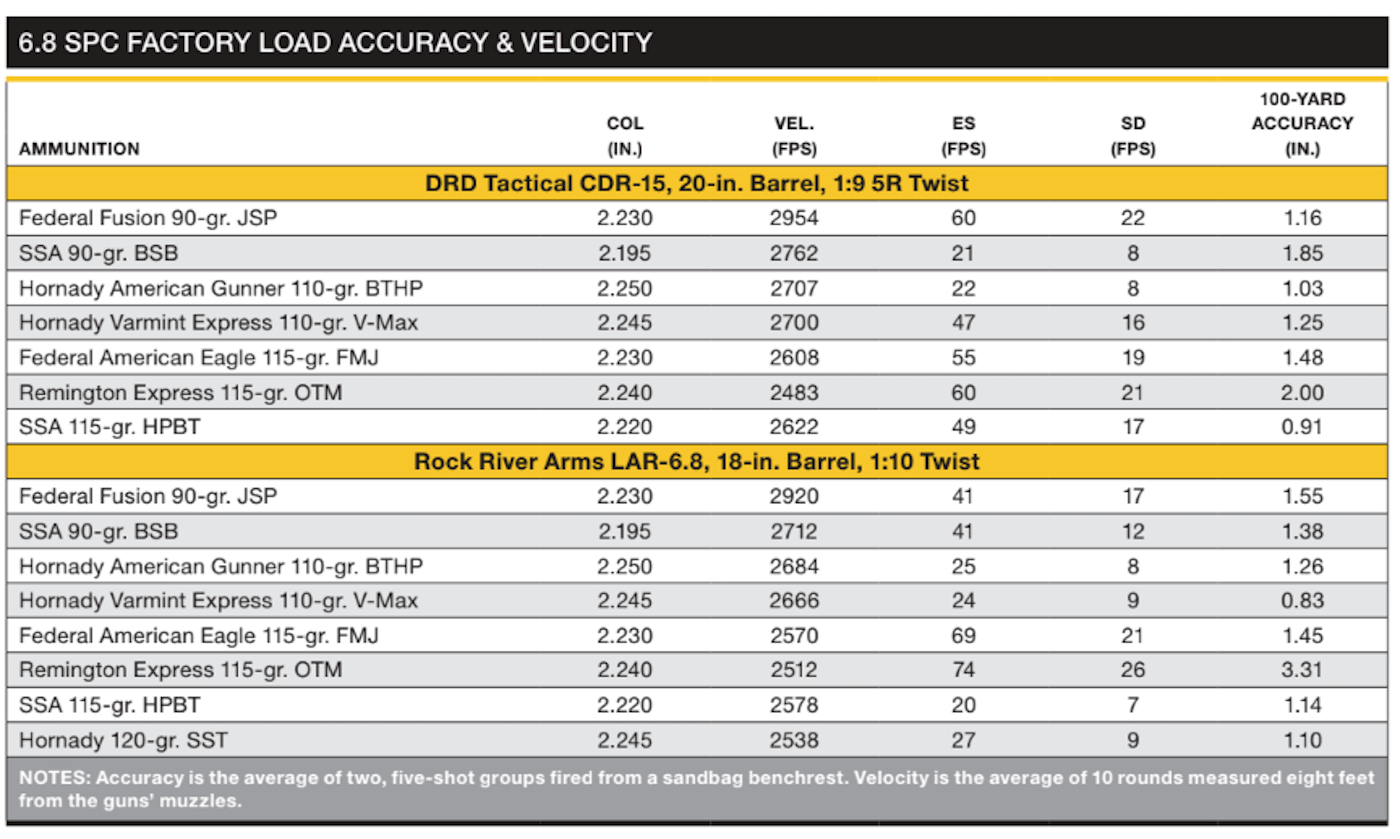
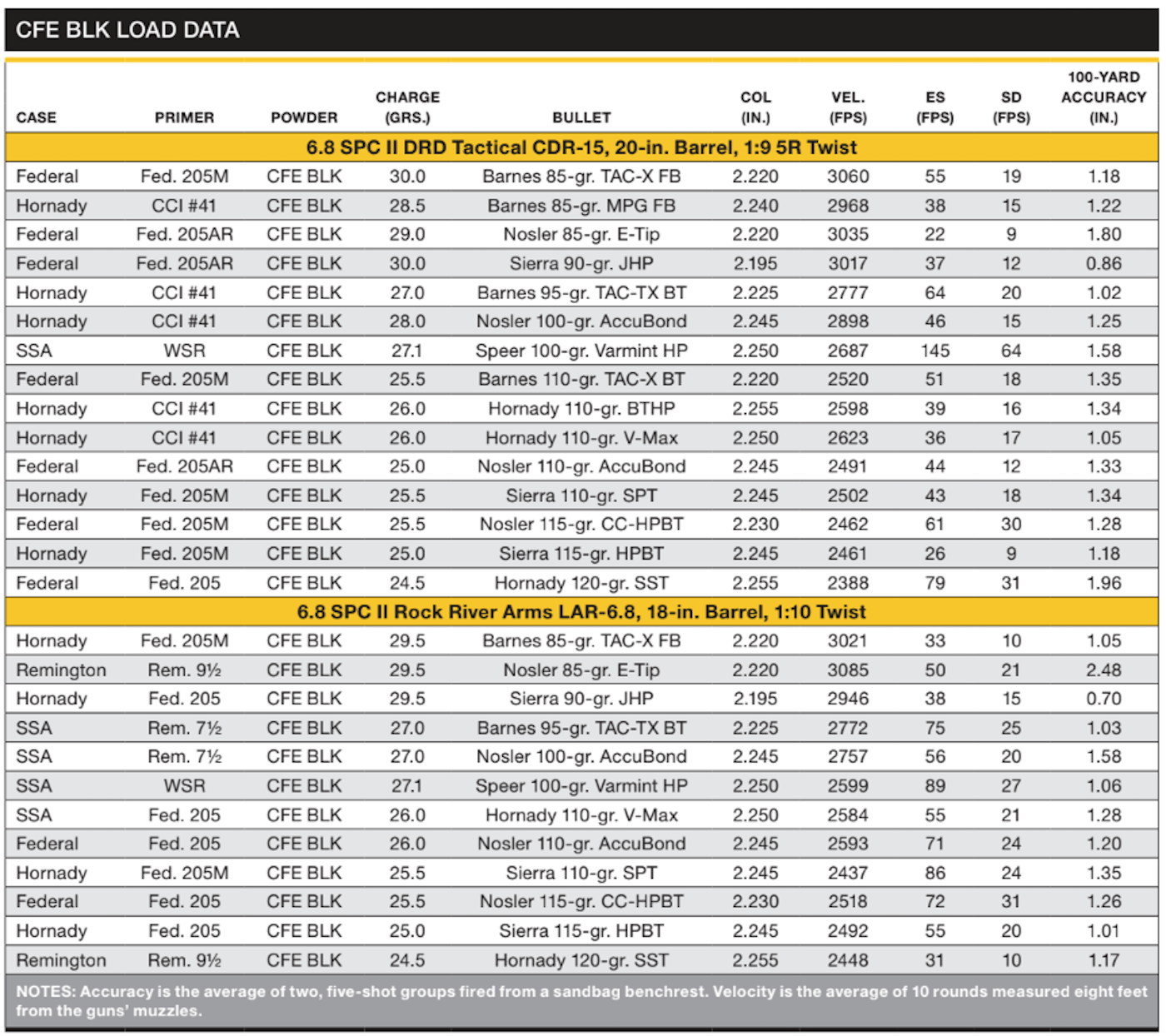
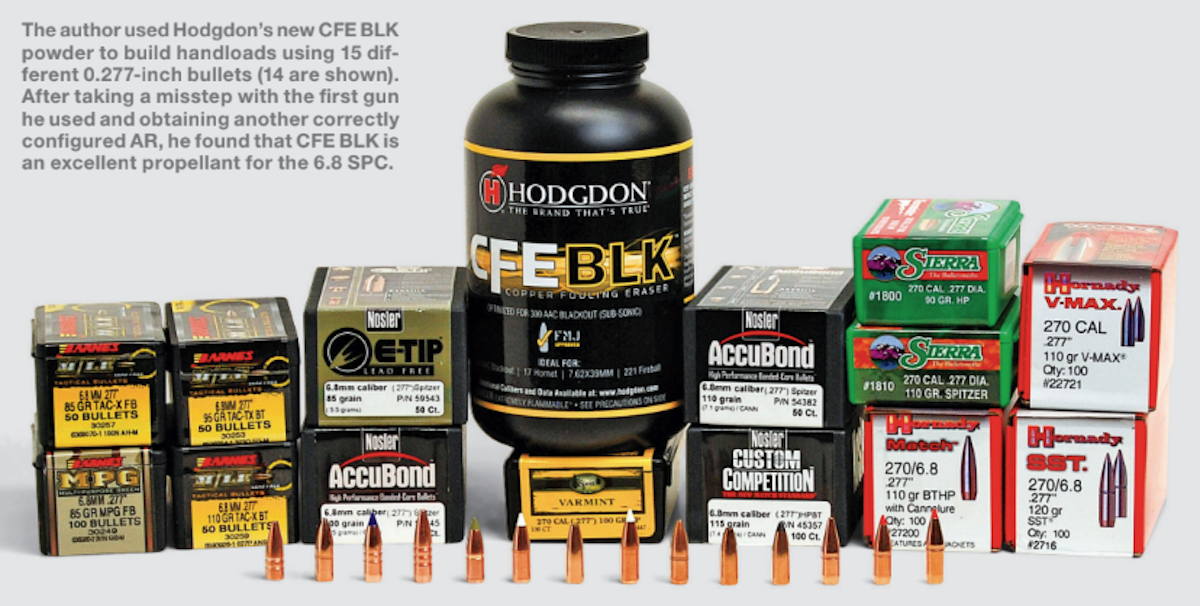
I received a broad selection of bullets, several boxes of factory ammo, and 100+ pieces of primed Federal brass. Hodgdon sent me a pound of CFE BLK and four representative load recipes. My initial results, as the accompanying chart indicates, were not so good. Not knowing I had screwed up, I concluded that the new propellant wasn't one of the best ones for loading the 6.8 SPC.
Fortunately, the annual OSG writers' roundtable was scheduled before my review was due. While there, I related my less-than-reliable functioning issues with a couple of much more AR-knowledgeable colleagues. Both promptly stated the 6.8 SPC was designed to optimal reliability when fired in a 16- or 18-inch barrel with a carbine-length direct impingement gas system.
Obviously, my gun was tapping gas at a point where the bore pressure had dropped too low to assure 100 percent reliable function. Coupled with the relatively low propellant charges (30.0 grains max) and relatively lightweight bullets, the rifle-length gas setup did not complement the gas port diameter, buffer weight, and buffer spring rate very well.
Fortunately for me, Rock River Arms attended the conference, and I urgently asked the company's media relations contact, Steve Mayer, to check RRA's inventory when he returned to his office. He was able to ship an X-Series LAR-6.8 rifle to my dealer, and it featured an 18-inch barrel, a carbine-length gas tube, and a wicked-looking muzzle brake. Needless to say, the experts were right, and as the chart clearly shows, CFE BLK performed superbly in every test load fired in the RRA rifle.
Reloading Techniques
First of all, CFE BLK is a very fine spherical powder and meters through my Redding precision pistol powder measure with little and usually no charge weight variation. The only thing I had to remember was to cycle the handle twice to obtain the precise propellant charge. I prepared 500+ handloads (Hodgdon sent me another pound of propellant!) and only mischarged one. I always carefully inspect each tray of charged cases with a small flashlight, so I caught and remedied the mistake before seating a bullet.
Ammunition for the 6.8 SPC is readily available from several sources. As stated earlier, all except the original manufacturer chose to make their brass with Small Rifle primer pockets. Remington ammo uses the Remington 9½ Large Rifle primer, and a standard—not magnum—rifle primer should be used to reload this round.
Since I was loading for an AR, I full-length resized each case—every time—using a Hornady die set. Because the 6.8 SPC case is based on the old 30 Rem., you need a #12 Hornady shellholder.
The Federal cases had Federal's special 205 AR primers fully crimped in place, and the Hornady brass I used also had the primers crimped in place. The primer pockets were very tight, to the point you could easily crush a primer when seating if you're not careful. I fully recut crimped primer pockets using a Lyman or RCBS powered case-prep tool.
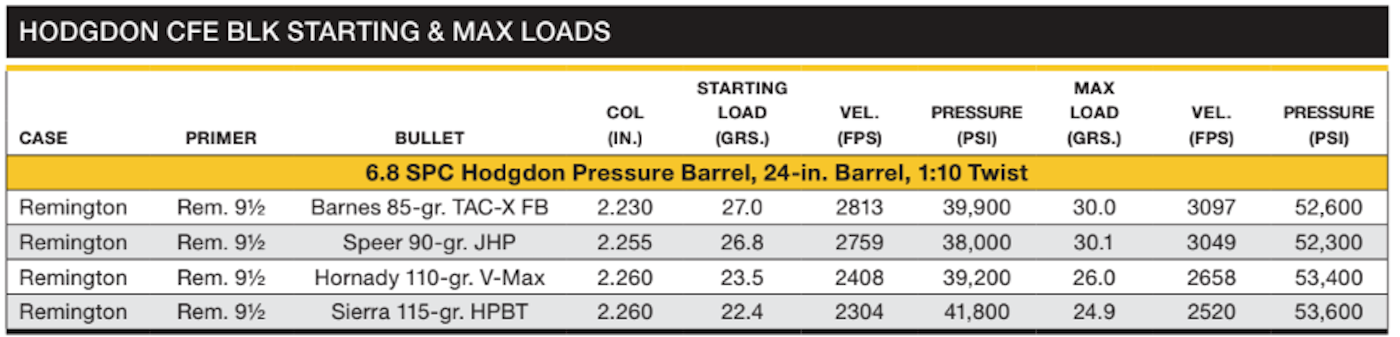
Like I said earlier, Hodgdon provided four recommended start/maximum load recipes with the corresponding pressure for the max loads (see chart). That data was based on using Remington cases with 9½ primers and 85-, 90-, 100-, and 115-grain bullets, representing both conventional and monolithic construction. You'll note that their velocities were measured in a 24-inch test barrel. So the results I obtained are understandably less.
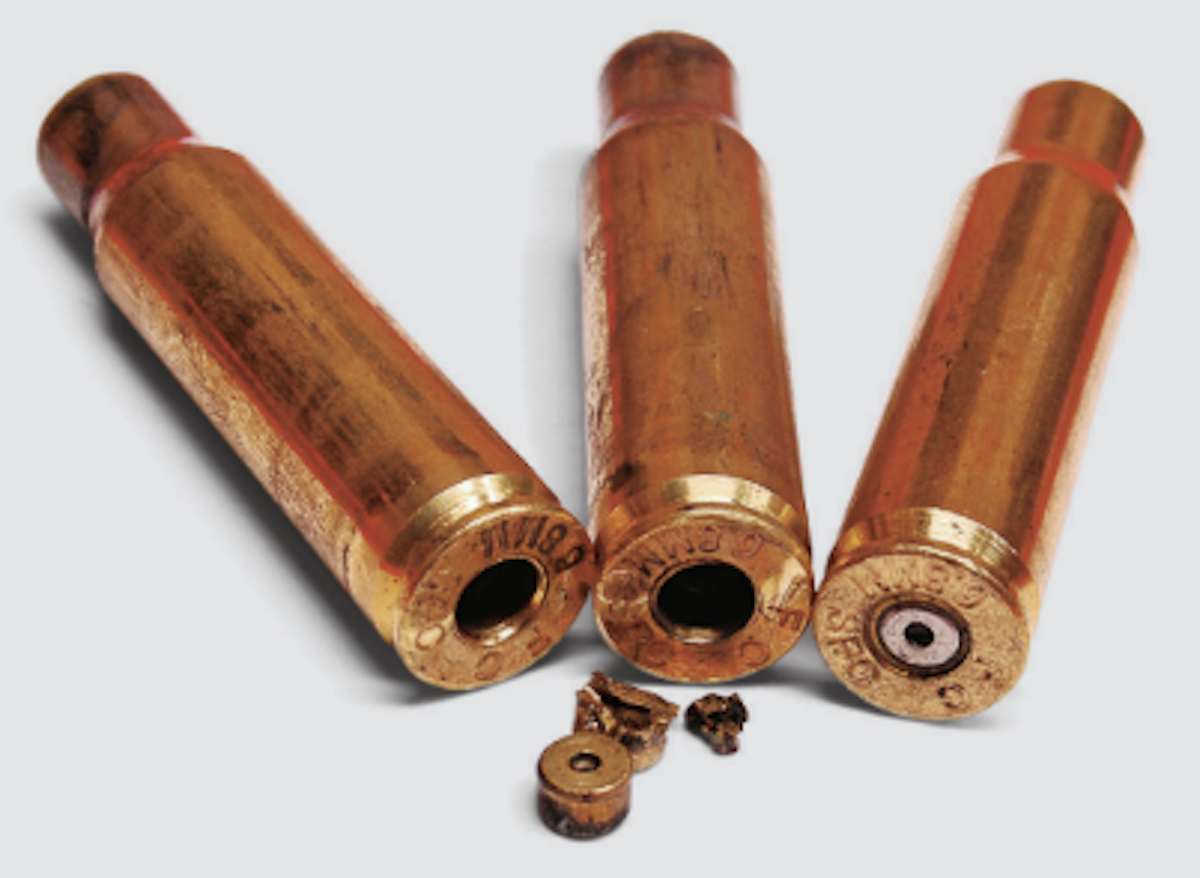
As the performance chart shows, I included several more bullets in the tests. I interpolated the Hodgdon data to start with a reasonably conservative propellant charge and worked up watching for signs of excessive pressure. As you can see in the photo on page 42, I obviously misjudged because I blew a primer on more than one occasion.
Results
As I've indicated, I started with the DRD Tactical rifle fitted with the 20-inch barrel and rifle-length gas system. I fired two, five-shot groups with each of the different factory loads. Everything went great until I fired the SSA 90-grain bonded solid-base rounds. I had several jams and concluded the relatively short overall length just wasn't compatible with the rifle. The other nearly 100 rounds of factory ammo loaded with bullets ranging from 90 to 115 grains cycled the action like clockwork.
When I switched over to testing my initial handloads, I quickly ran into a recurring problem. The rifle would always extract and eject the empty case but sometimes failed to feed the next round from the magazine. At first, I figured the starting loads were too light, i.e., not producing enough gas. However, after bumping the charge up to what I considered max, I still had the same problem with about half of the range of bullet weights.
Ignorance is supposedly bliss! I was achieving 1.5 MOA and usually even better results. I blissfully concluded that CFE BLK was simply one of several suitable propellants for reloading the 6.8 SPC, but it shouldn't be at the top of the list. I'd burned almost a whole pound of powder and was just frustrated.
Actually, ignorance is not acceptable—especially when addressing a technical issue. How would my editor and Hodgdon have responded to my report if I'd reported ill-conceived conclusions caused by my improper barrel specifications? My credibility would have been sorely slammed—and rightfully so.
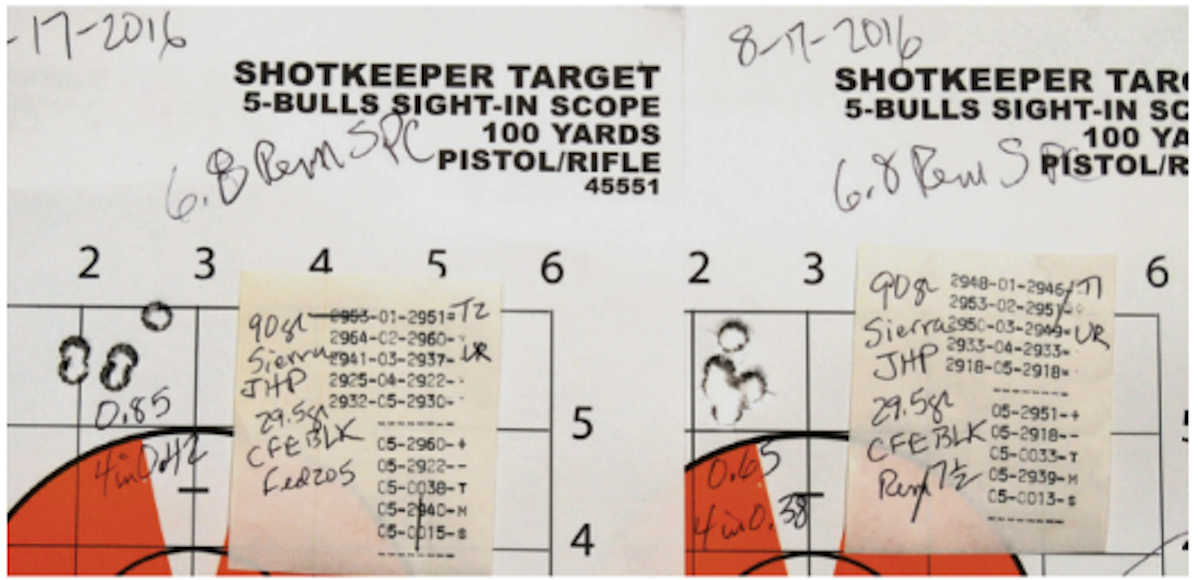
When the Rock River Arms LAR-6.8 X-Series rifle arrived, I mounted the Nikon scope and returned to the range. This time even the SSA 90-grain load fed, fired, extracted, and chambered without a hiccup. RRA touts its rifle will deliver 1.5 MOA accuracy, and as the chart shows, all but one factory load and handload met that target.
I fired about 200 additional handloads and experienced only one misfeed, and that was with the same test load I'd had the most problems with before. The mishap may have been triggered by the residue from 80+ rounds I'd fired since the last cleaning. I also blew two more primers with the same too-hot load I'd shot in the DRD rifle. Sometimes my "lessons learned" take effect slowly. Reducing the charge by one grain eliminated that problem.
However, this time I observed a new anomaly. During the first tests, I loaded the Hornady 120-grain SST bullets in Remington cases with CCI 200 primers. When I repeated the tests, I fired some of the SST bullets with Remington 9½ primers and other handloads in Federal and Hornady cases with Federal 205 primers. I noticed the velocities with the Remington-component loads measured up to 100 fps faster than the others. I reviewed my data and noted the same test loads with CCI 200 primers yielded about 50 fps greater velocity compared to the loads using Small Rifle primers.
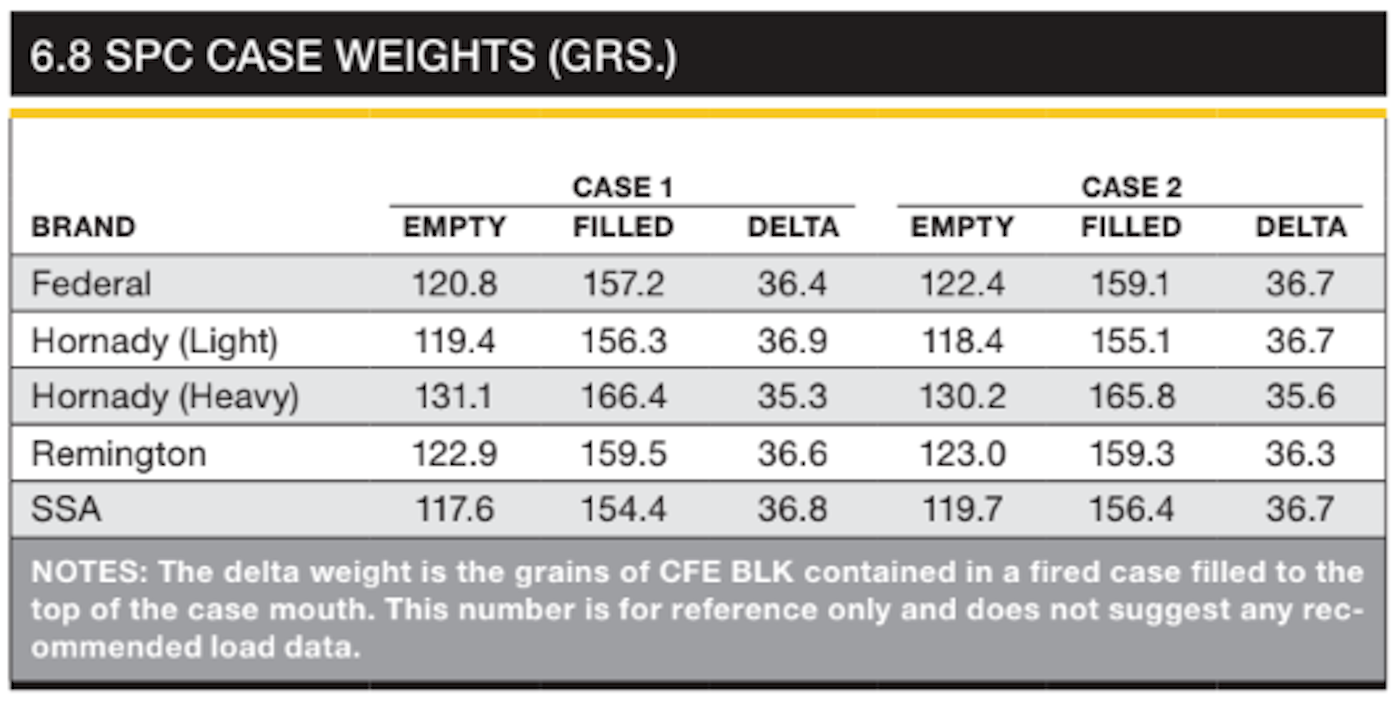
The Remington cases weighed 2 or 3 grains more than the others, and I later discovered that 20 pieces of Hornady brass weighed 12 grains more than the rest of the Hornady cases. I then selected two pieces of each headstamp and weight range and, after weighing both, filled them with CFE BLK propellant to the case mouth rim.
After weighing them again to determine the difference, I discovered the Remington cases held only about 0.3 grain less powder than the lighter Federal, SSA, and Hornady cases. But the heavier Hornady cases held about 1 grain less powder than the lighter cases.
Later, I prepared five test loads each with Hornady 120-grain SST bullets in both light and heavy Hornady cases ignited with Federal 205 primers. I shot them back to back and measured a velocity difference of just over 100 fps. The earlier results with the in-between weight Remington brass and Remington 9½ or CCI 200 primers apparently indicate the slightly less reduced case capacity coupled with Large Rifle primers boosted the velocity results similarly.
The 6.8 SPC hasn't gotten the respect it deserves. Compared to the 300 Blackout with similar supersonic-velocity ammo, the 6.8 SPC readily exceeds the more popular load's performance. The 300 Whisper (the 300 Blackout's precursor), as originally conceived by J.D. Jones, was intended to quietly launch heavy .30-caliber bullets at subsonic velocities in a suppressed rifle. The current and essentially identical 300 Blackout cartridge does the same job well. Otherwise, the smaller round can't and doesn't outperform the 6.8 SPC as a conventional sporting cartridge.
And, of course, I must comment on the new CFE BLK powder's impact on minimizing bore fouling. I cleaned both guns four or five times, i.e., typically after firing 50 to 75 rounds at each range session. I soaked the bore with Hoppes, stroked the bore once or twice (max) with a ProShot bore brush, swabbed it out again with a Hoppes-soaked patch, and dried it with three or four clean patches. If I hadn't recently acquired a Lyman Borecam digital borescope, all I could say was, subjectively speaking, the last patch was almost white and the guns shot just fine for each 50- to 75-round session.
Both guns/barrels were new before the test. The photos of the RRA rifle were taken after the last range session and after I had cleaned the bore following the same steps noted earlier. I could see slight traces of copper, but compared to other rifles in my vault, the RRA barrel looks great.
All in all, I was pleased with the results—and the learning experience. One of my writer friends attending the recent roundtable reminded me that Mr. Einstein once stated, "If I knew what I was doing all the time, we wouldn't call it research."
I couldn't have said it better!