



I'm going to stick my neck out and declare that in terms of popularity and pure usefulness the 6.5 Creedmoor is the 30-06 of the 21st century. It's a superbly efficient cartridge of cutting-edge design. It's well mannered, effective on most game and for long-distance shooting, and easy to handload for extreme accuracy. It's not the elk cartridge that the 30-06 is, but for darned near everything else it's better—and lest you get the wrong impression and tar and feather me for being an ought-six hater, I love the old warhorse cartridge.
As the tale goes, one summer evening during the National Matches at Camp Perry, Hornady's ballistic guru Dave Emary and champion long-range shooter Dennis DeMille found themselves musing on how to create the ultimate long-range competition cartridge. The challenge, they reasoned, was making a cartridge accurate enough that shooters could purchase factory ammunition on their way to a match and—assuming a good shooter behind the trigger—win.
Emary took up the quest, Mr. Hornady laid down the dough, and the wizards in Hornady's R&D division began stirring the cauldron. With practical input from DeMille, a cartridge took shape: a cartridge that in a few short years would become the flagship long-range precision cartridge across America.
Naturally, it was a short-action cartridge. Instead of basing it on the 308 Winchester (that would be far too boring), Hornady chose to use the 30 T/C case, which was based on the legendary but languishing 300 Savage.
Sporting a quite-short 1.92-inch overall case length, the 30 T/C case offered a foundation short enough to load long, aerodynamic projectiles to standard short-action length without unduly intruding into powder capacity. The 30 T/C's relatively steep 30-degree shoulder was kept to maximize internal capacity, provide distinct headspacing, and promote efficient propellant burn within the combustion chamber. However, it was bumped back 0.022 inch to allow the downsized case neck adequate length to securely, consistently, and concentrically grip a bullet. Maximum pressure, as listed by S.A.A.M.I., was established at 62,000 psi.
If you wish, postulate that Hornady got lucky with the design of the 6.5 Creedmoor, but I'll argue heatedly that the engineers did their due diligence, mixed a lot of passion and ballistic know-how into the recipe, and created what just might be the perfect midsize long-range precision cartridge.
Now, I'm no engineer, and I'm certainly no mathematician, but practical experience has shown me that that 6.5 Creedmoor is incredibly well balanced, superbly efficient, and naturally accurate. I've yet to test one that didn't perform excessively well.
Tips for Building Handloads
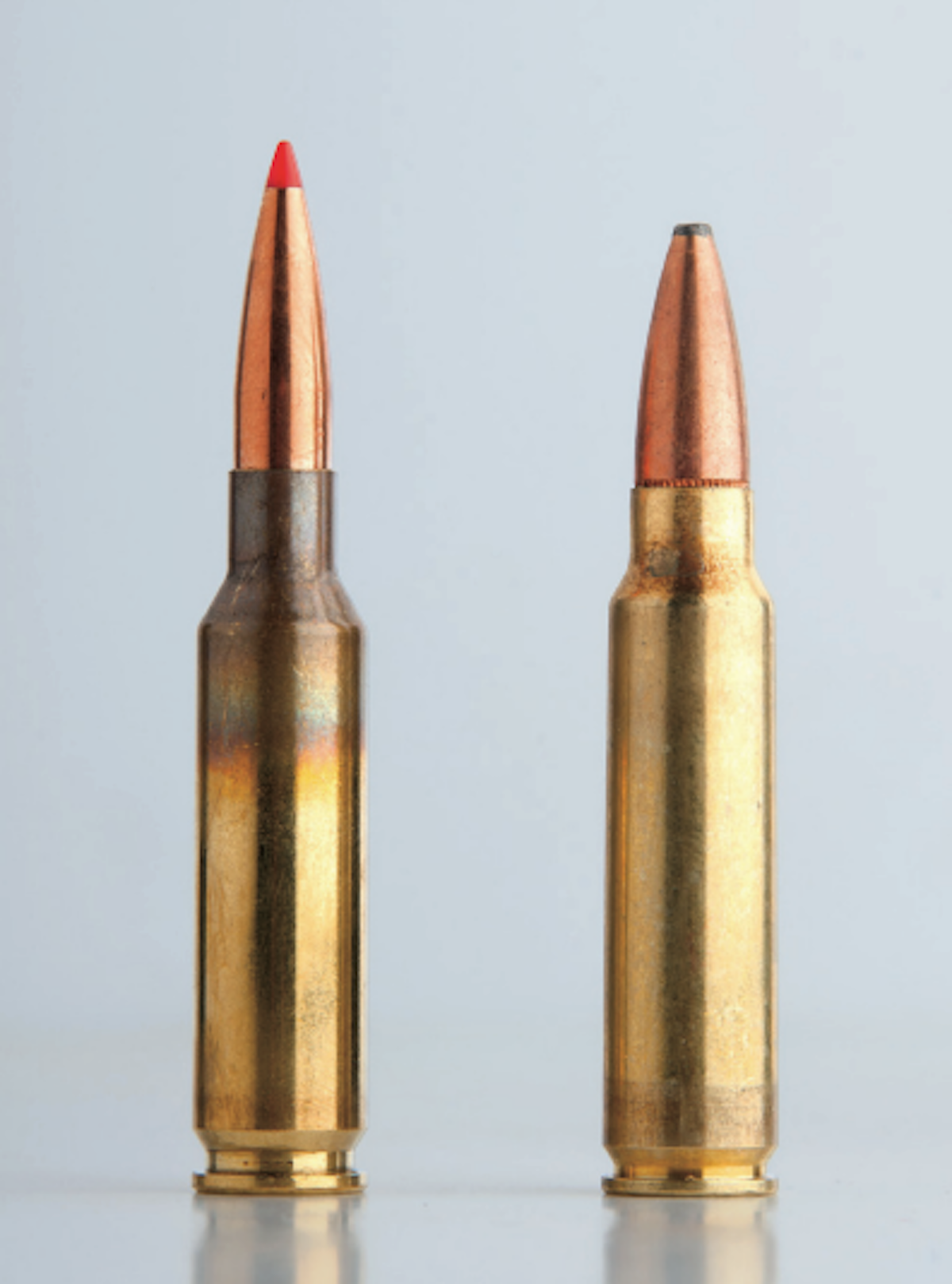
During the cartridge's short but radically popular life, the 140-grain A-Max load has proven to be the bee's knees for distance work with factory ammo, typically offering 2,700-plus fps in velocity and 1/2- to 3/4-MOA accuracy out of quality rifles. Custom rifles with bona fide match-grade barrels often achieve sub-half-MOA accuracy.
For the most part, 6.5 Creedmoor shooters scorn bullets that weigh less than 140 grains. There are exceptions, but the cartridge offers such spectacular downrange performance with the long, heavy-for-caliber 140-grainers that there are few applications that call for lighter and faster.
When the 6.5 Creedmoor first came out, Hornady printed a handload designed to match factory ballistics on the cartridge box. As I recall, it was 41.5 grains of H4350. However, unless your rifle was wearing a 26-inch barrel, it tended to fall about 50 fps short of factory ammo's advertised 2,700 fps.
Depending on the source, one can find 6.5 Creedmoor data for popular powders with maximum-charge discrepancies of up to 2 grains or more. Handloaders being handloaders, enterprising souls with a thirst for velocity have worked above maximum loads to match or exceed factory-load speeds. Doing so is risky. As the manual states, begin with suggested starting charges and work up, and never exceed maximum loads. Lest you brush that off, allow me to point out that at 62,000 psi the 6.5 Creedmoor operates at a higher pressure than the 7mm Remington Magnum's 61,000 psi to begin with. Push past that and you get into Weatherby-cartridge pressure realms, and 6.5 Creedmoor cases aren't engineered for that.
Most importantly, pushing those boundaries isn't really necessary. Fire up your trusty ballistic app and crunch the numbers, comparing a 140-grain bullet's trajectory at 2,700 fps and 2,650 fps. Practical difference is minimal.
About the only downside you'll hear precision shooters grumbling about is the lack of Lapua brass for the 6.5 Creedmoor. Lapua is, according to shooters that measure success by group size differences of hundredths of an inch, the holy grail of cartridge brass. Since the Finnish company introduced its 6.5x47mm Lapua cartridge—a superbly accurate but much less popular ballistic twin to the 6.5 Creedmoor—just a few years before the American 6.5mm star was born, Lapua brass is not and is never likely to be made for the 6.5 Creedmoor.
That said, it's pretty hard to argue that Hornady brass housing factory loads that routinely shoot around a half-MOA in match rifles isn't good stuff. I've had outstanding luck with Hornady brass, shooting too many sub-half-MOA groups with different rifles to turn my nose up at what are obviously very consistent cases.
The popularity of the cartridge is such that most of the major ammunition brands are manufacturing 6.5 Creedmoor loads, so brass is becoming available from other manufacturers, including Nosler.
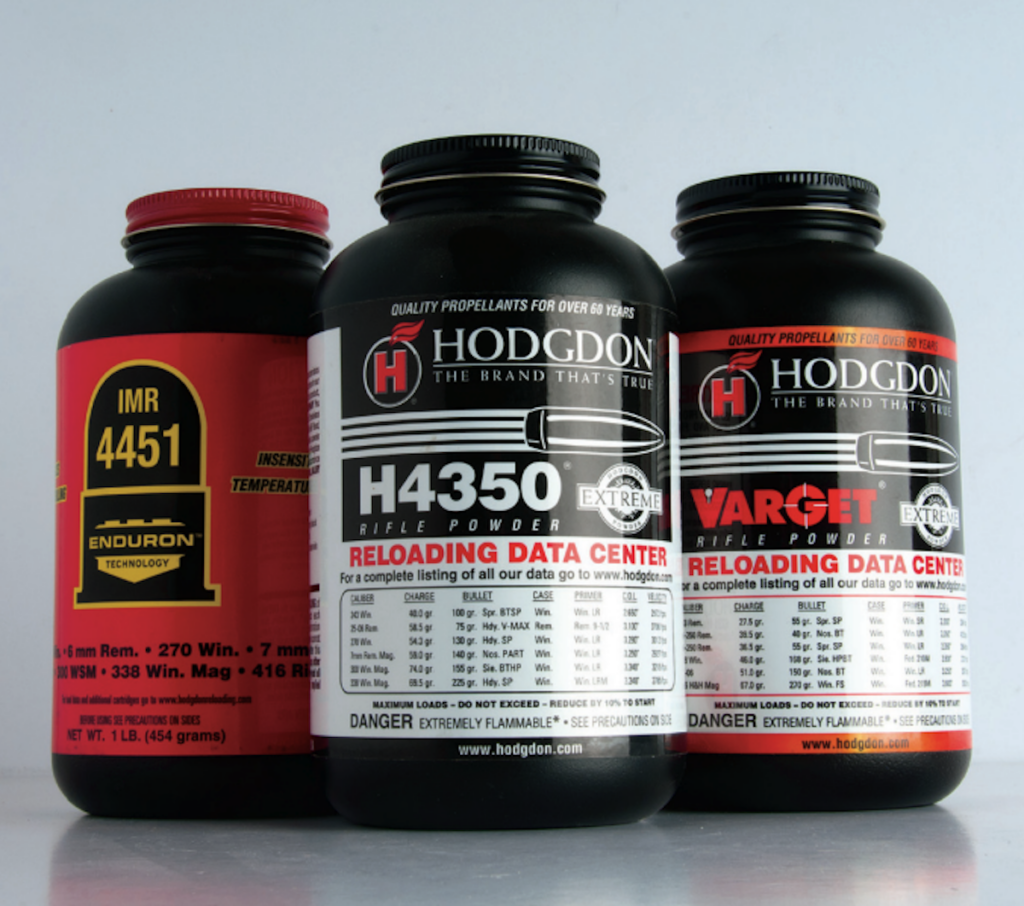
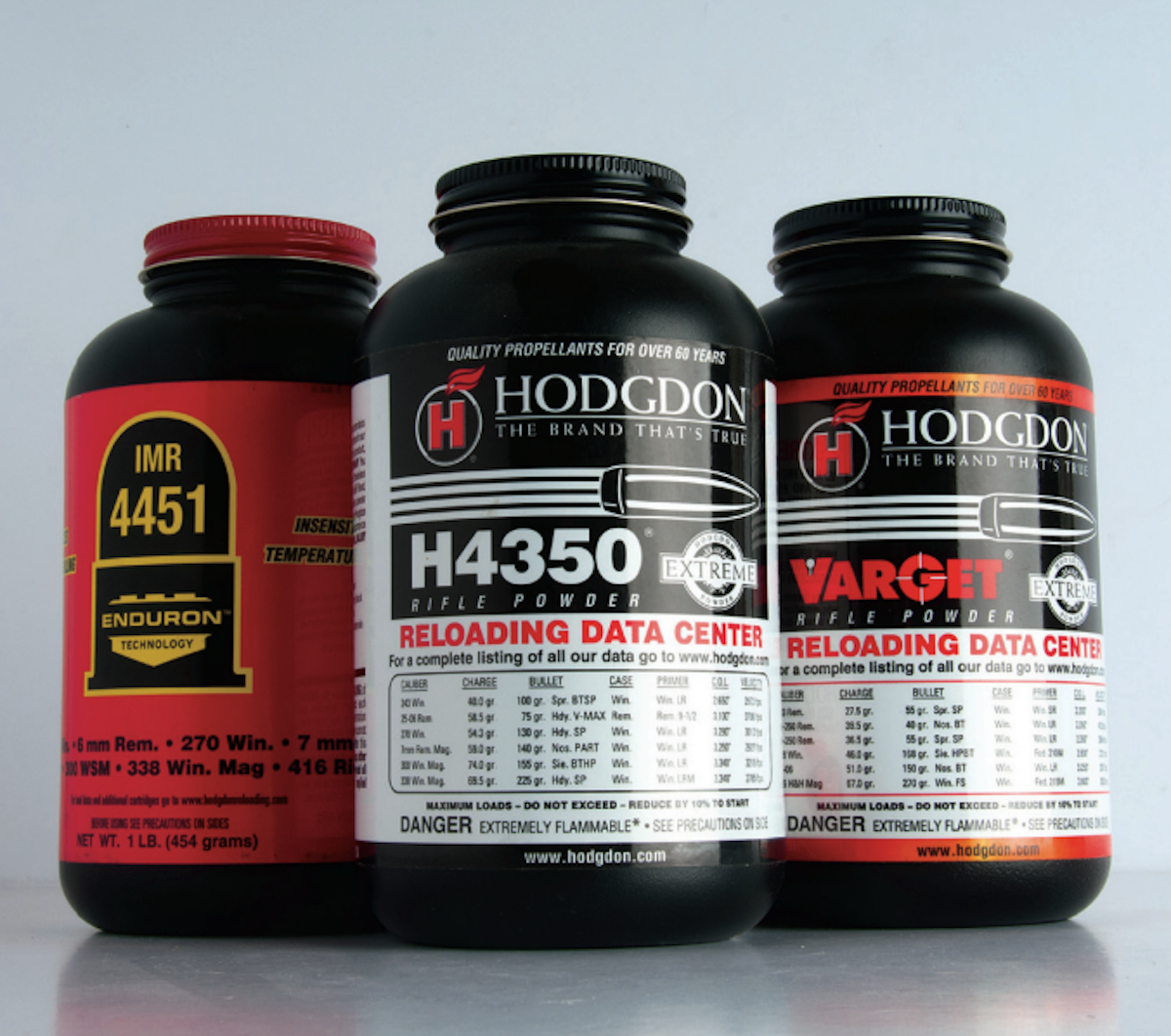
By a huge margin, H4350 is considered the go-to propellant for the 6.5 Creedmoor, at least for the heavy bullets favored by long-range precision shooters. It's so popular because it almost invariably provides outstanding accuracy and consistency; because it is one of Hodgdon's Extreme line of powders, which shrug off massive temperature swings with imperceptible velocity variation; and because it produces admirable velocities. In a 26-inch barrel, a maximum load of 41.5 grains generates very close to the 2,710 fps that the new Hornady ELD Match factory load is advertised to provide.
For lighter bullets—say, 120 grains down to the very light 95-grain varminting projectiles—Varget is very good.
In order to offer shooters an optional line of powder with similar attributes to its Extreme propellants, Hodgdon—which owns the Canadian IMR brand—recently introduced the Enduron line by IMR. It features outstanding temperature stability that rivals that of the Extreme powders and a copper fouling erasing agent to boot. I've put Enduron powders through some fairly rigorous temperature tests, and it's amazingly stable. Plus, it's my new favorite type of powder for use when breaking in barrels because it so effectively minimizes copper residue left in the rifling.
More to the point of this report, one of the IMR Enduron propellants is specifically engineered for the 6.5 Creedmoor and other cartridges of its ilk. Labeled IMR 4451, it offers burn rates similar to that of H4350. (As always, never substitute charge weights.)
Since it's manufactured in Canada and customs processes are simpler—not to mention shipping—IMR powders are readily available in the United States.
IMR 4451 or H4350
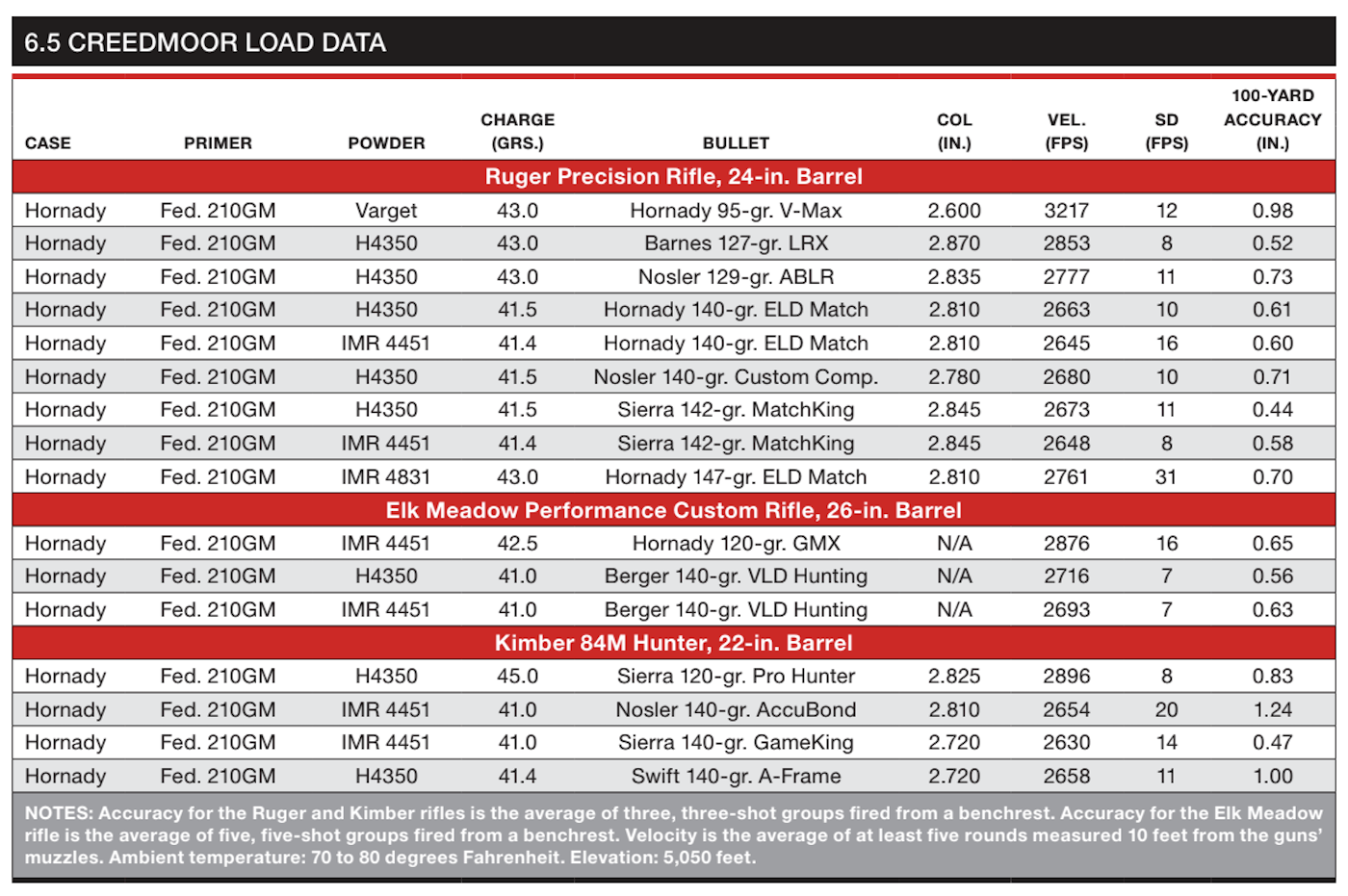
According to Chris Hodgdon, in company tests with the 6.5 Creedmoor, IMR 4451 Enduron powder has proven to offer accuracy and consistency comparable to H4350. While gearing up for this article, I determined to conduct side-by-side tests using IMR 4451 and H4350, beginning with a load of known accuracy using H4350, and see if I could achieve similar results with the newer Enduron propellant in my Ruger Precision Rifle. I enlisted friend and fellow handloader Dale Carter to do the same in his extremely accurate custom 6.5 Creedmoor rifle made by Elk Meadow Performance.
At this point I will confess that I ran my tests performing a series of three-shot groups for average. Carter, being more diligent, used five-shot groups, and his results are more impressive for it. Group sizes and velocities with both rifles are listed in the accompanying charts, but the quick and dirty of it is this: Using maximum loads of each powder type, IMR 4451 groups averaged a few hundredths of an inch tighter under Hornady 140-grain ELD Match bullets, and H4350 groups averaged a few hundredths of an inch tighter under Sierra 142-grain MatchKing bullets. Both were within the margin of error of my shooting ability, and the results could easily swap were I to repeat the test.
Carter's pet load consists of 41.0 grains of H4350 under the Berger 140-grain VLD Hunting bullet. It generated 2,716 fps, and five-shot groups averaged 0.56 inch. His rifle also shot well with a 41.0-grain charge of IMR 4451, averaging 2,693 fps and 0.63-inch five-shot groups. After testing with the heavy Berger bullets, he tried IMR 4451 with Hornady 120-grain GMX bullets and got surprisingly good results. Five-shot groups averaged 0.65 inch, and the GMX exited the muzzle of his rifle's 26-inch barrel at 2,876 fps.
Long-Range Precision
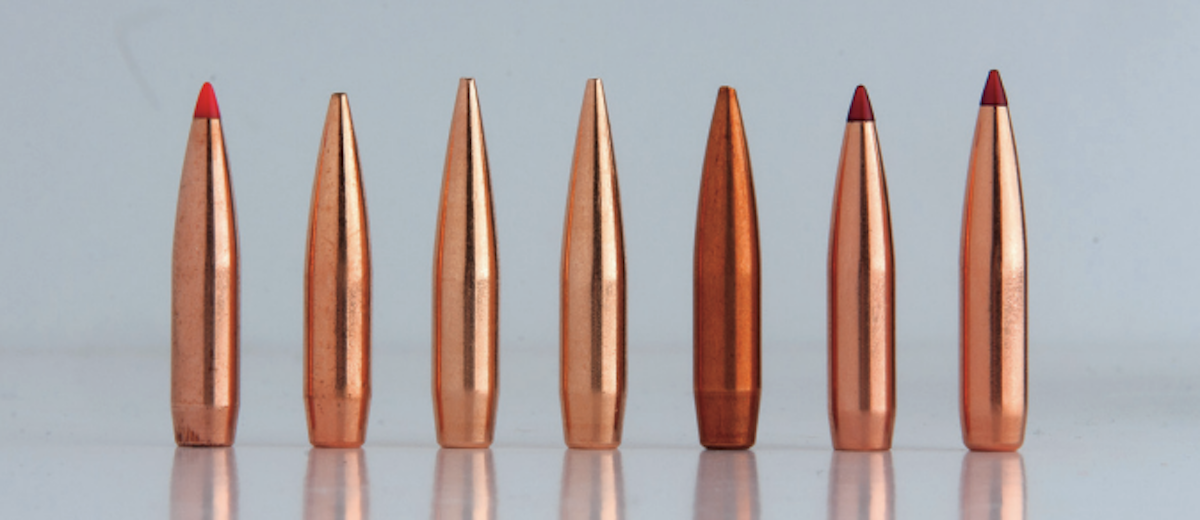
For precision work, the 6.5 Creedmoor should be loaded with match-grade bullets, and for long-range precision work, it should be loaded with high-ballistic-coefficient match-grade bullets. Although the cartridge is extremely efficient and admirably consistent, it doesn't generate a tremendous amount of velocity, and to get the most out of it, knowing shooters load long, heavy, low-friction projectiles.
As a Hornady development, the 6.5 Creedmoor was built around and introduced with Hornady's 140-grain A-Max match bullet, and in factory ammunition it proved to be a formidable force. Before long other bullets were added to the factory-ammo lineup—129-grain SST and 120-grain GMX—utilizing the company's blended-propellant Superformance technology. Eventually, a 120-grain A-Max load was added as well. Currently, the 140-grain A-Max has been replaced with the new ELD Match bullet, which features Hornady's new heat- and erosion-resistant Heat Shield tip. It should prove to be an outstanding bullet for long-range work, since it offers extraordinary aerodynamics (BC: .620), better than the 140-grain A-Max (BC: .584).
Even better, Hornady is in final development of a new 147-grain ELD Match bullet. According to Emary, it is expected to have a G1 BC of .650 or higher. It has the same profile as the 143-grain ELD-X hunting bullet but a much thinner jacket.
I had the opportunity to accuracy-test the new 147-grain ELD Match loaded over 43.0 grains of IMR 4831 (a prototype load assembled by Hornady, using virgin brass) through my Ruger Precision Rifle. Groups averaged 0.70 inch. Assuming a little fine-tuning to get it shooting sub-half-MOA and reduce the standard deviation, it would arguably be the best long-distance 6.5mm bullet available.
Other precision bullets that offer outstanding long-range performance in the 6.5 Creedmoor are the Sierra 142-grain MatchKing (BC: .611), Berger 140-grain Hybrid Target (BC: .607), Berger 140-grain VLD Hunting (BC: .600), and Barnes 140-grain Match Burner (BC: .586).
One of the cartridge's great assets is outstanding barrel life—ballistic technicians and competitive shooters are reporting from 3,500 to 5,000 shots before discernible wear—so fret not that you'll wear it out.
Bullets for Hunting
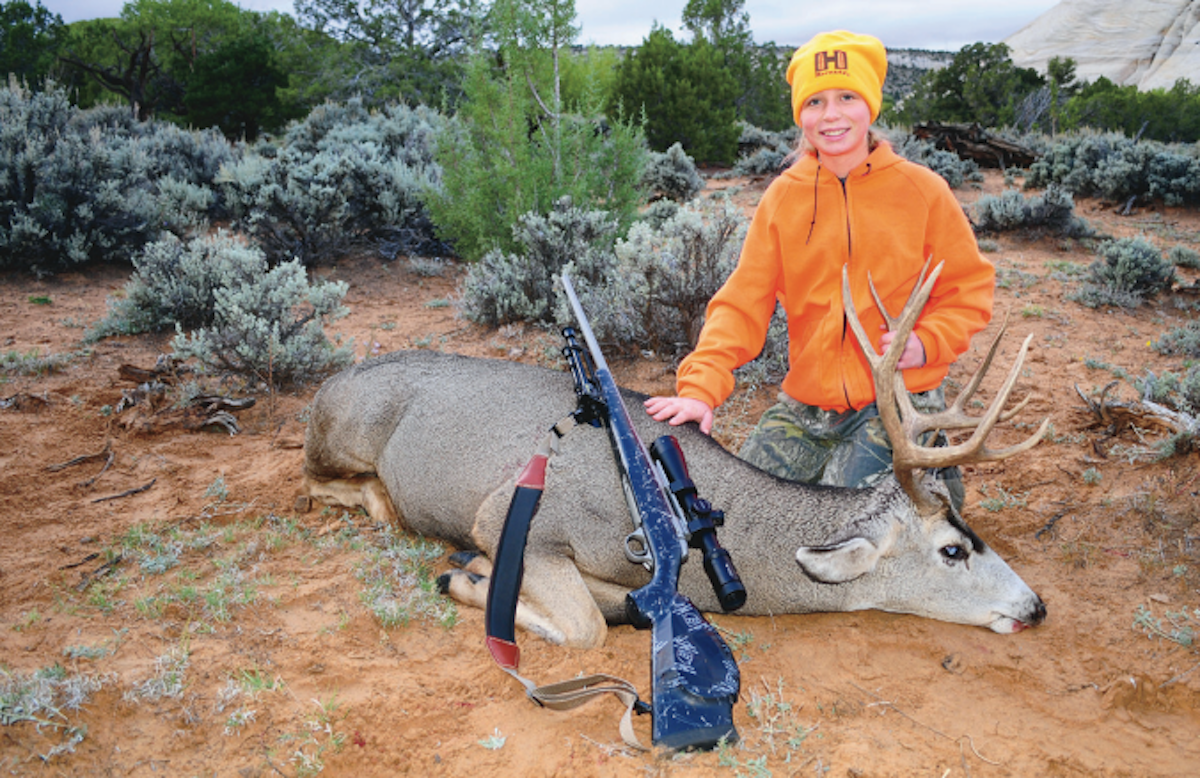
Although the 6.5 Creedmoor was originally conceived as a match cartridge for competitive shooting to 1,000 yards, it has proven to be both incredibly capable and surprisingly popular in the hands of hunters.
It's easy to see why. Not only is it super-accurate, its mild recoil and report make it easy for most people to shoot well. Combine that with ballistics that perform with classic hunting cartridges like the long-action 270 Winchester to 500 yards (and outclasses them from there to 1,000 yards) and you have a sure winner. However, great hunting bullets are constructed differently than great match bullets, although there is some crossover, such as in the case of Berger's VLD Hunting bullet.
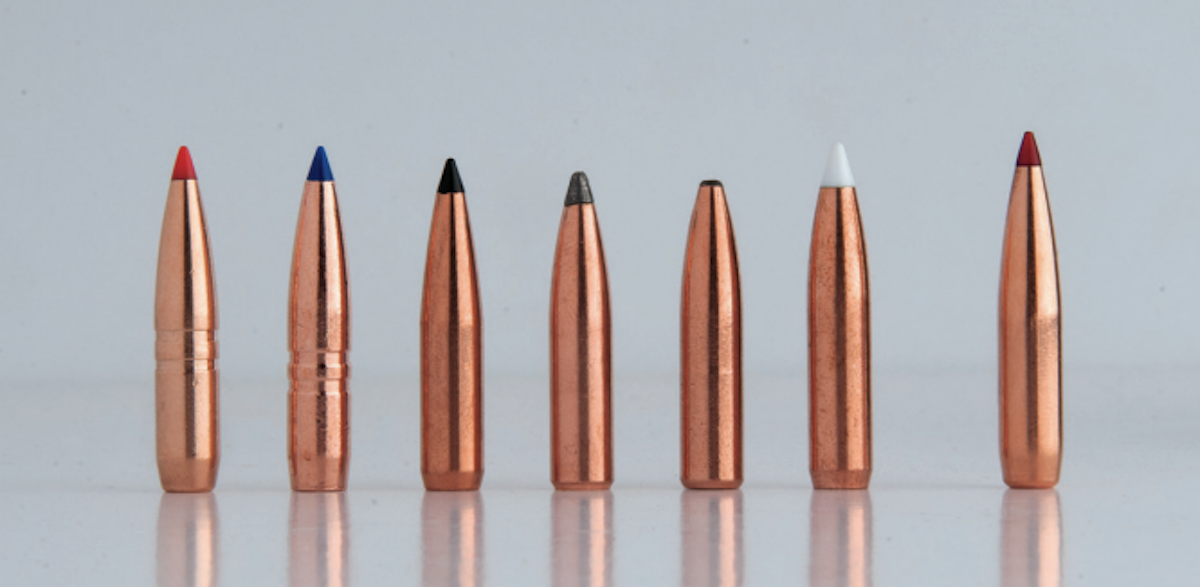
If you focus on game no bigger than mule deer, you'll be well served with one of the "soft" hunting bullets that offer dramatic expansion and medium penetration. Purely in terms of terminal performance, the 6.5 Creedmoor will not generate bullet-destroying levels of velocity—meaning so much speed that a bullet can fragment to nothing on impact and fail to penetrate, at least with the heavier 140-grain range of projectiles. Great options include Sierra's 140-grain GameKing (my favorite deer bullet in my super-light Kimber Hunter, which puts them into tidy half-MOA groups), Nosler's 120-grain Ballistic Tip, Hornady's 129-grain SST, Nosler's 129-grain AccuBond Long Range, and the Berger 140-grain VLD Hunting. With a little load development most of these bullets will provide outstanding accuracy and good on-game performance to 400 yards or more.
If you plan to take on elk, bighorn sheep, mountain goats, caribou, and the like, you'll be best served with a tough bullet designed to break bones and penetrate deeply. Outstanding options are the Barnes 127-grain LRX (a surprisingly accurate bullet), Swift 140-grain A-Frame and 130-grain Scirocco II, Nosler 140-grain Partition and AccuBond, and Hornady 120-grain GMX.
If you want to maximize your downrange reach with a bullet that will get the job done on any hooved game, short of bison and moose, in the Lower 48, opt for Hornady's new 143-grain ELD-X (Extremely Low Drag eXpanding) bullet. Held to the same accuracy standards as the company's ELD Match bullets, it's engineered to provide dependable terminal performance across a vast range of impact velocity (1,600 fps to 3,000 fps) and has an outstanding BC of .625.
Special Concerns
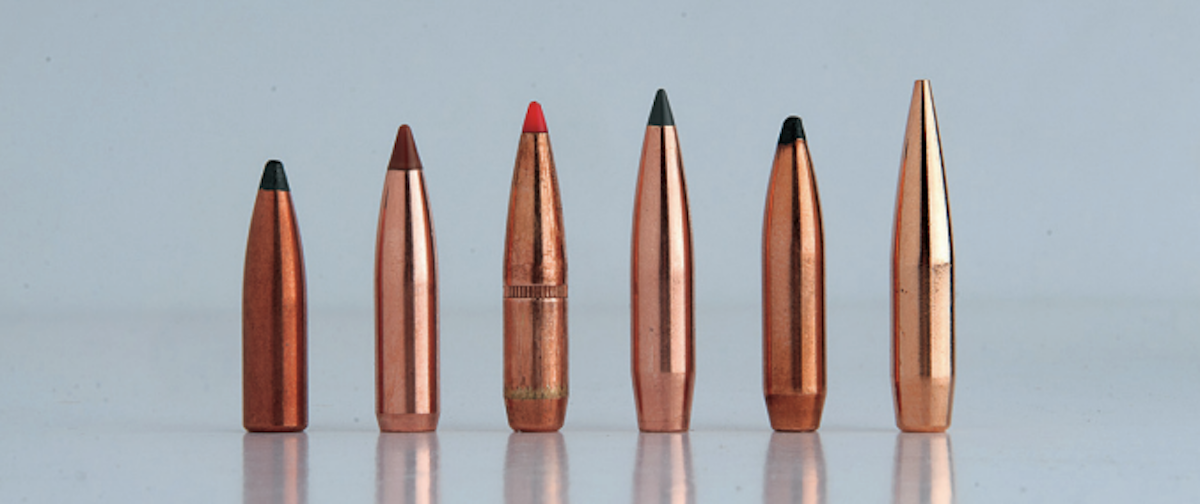
Like almost all cartridges, the 6.5 Creedmoor has some special considerations worth being aware of when handloading. One of these stems from the case length and overall cartridge length; the other is occasionally introduced by the rifles the cartridge is chambered in.
Intentionally, the 6.5 Creedmoor was engineered with a short case to allow plenty of room in the forward end of rifle magazines for long bullets. That way sleek, aerodynamic projectiles can be seated in the case necks without intruding into powder capacity. Of course, chambers have to be cut with fairly long throats to enable cartridges with long-seated bullets to fit. It's a perfect marriage of long bullets, efficient cartridge cases, and short-action magazine boxes.
However, shooters who want to load light, short bullets can't seat them to touch the rifling leade—a technique that often benefits accuracy—and get them deep enough in the case mouth to hold securely. Instead, short bullets must be seated adequately deep to be secure and concentric and—when fired—must jump the gap to the rifling. It's not the end of the world, and some reloaders get superb accuracy by jumping bullets. It's just that if you want to shoot light-for-caliber bullets in a standard 6.5 Creedmoor chamber, there's no alternative to jumping them to the rifling.
The other special consideration occasionally encountered is introduced by rifles with magazine overall lengths shorter than a 6.5 Creedmoor cartridge with a long-seated bullet. For the most part, unless you're willing to have a gunsmith modify your magazine, you're stuck seating your bullets to fit into the magazine. Such is the case with the Ruger Precision Rifle that I used for much of the load development in the accompanying charts.
Thankfully, the 6.5 Creedmoor cartridge doesn't seem to care all that much, and bullets forced by short magazines to jump a bit of a gap can still shoot with excellent accuracy. In fact, some seem to benefit.
It's pretty hard to go wrong when handloading the 6.5 Creedmoor. I'd go so far as to say beware of getting complacent—the very first load you try may shoot so well that you just quit on load development. But don't do that. Keep after it. That 0.75-inch average may well become a 0.50-inch average, and in a very accurate rifle, a 0.50-inch load may fine-tune into a 0.25-inch load—presuming, of course, that you do your part and consistently and precisely execute your shots.
Combined with its inherent accuracy, the 6.5 Creedmoor's forgiving nature when handloading and its eyebrow-raising ability at long range have made it the most popular precision cartridge on the market—a place in history that I believe it well deserves.