



Call me a fussy old grouch, but I have to grin and chuckle every time I hear of modern-day handloaders rending their garments and suffering fits of despair over shortages of powder or primers or bullets or any of the other handloading gadgetry we deem essential to the pursuit of a fulfilling existence. Little are today's handloaders aware that it wasn't too long ago (well, yeah, maybe it was) when not only were reloading components hard to come by, but also the overflowing cornucopia of reloading equipment we now take for granted simply didn't exist. Not only that, the shooting industry that now embraces the large and profitable reloading branch of the gun business was once all but hostile to the proposition of anyone reloading their ammunition.
If you think I'm kidding, come back with me to the gunshop where I made myself a pest every Saturday morning when my family went to town. The year is 1950 and I'm a lad in his early teens enthralled by anything that burned gunpowder, so any place that sold guns drew me like a cat to catnip. Actually, it wasn't a gunshop, but a hardware store, and like all hardware stores of those days, it carried a line of guns plus a shelf or two filled with colorful boxes of ammunition.
What I'm getting to was a boldly lettered sign on the counter: WE DO NOT SELL, BUY OR TRADE ANY FIREARM IN WHICH RELOADED AMMUNITION HAS BEEN FIRED. I reckoned the sign served clear notice about how the management felt about reloaded ammo, but every time I looked at the sign I wondered how they would know if the gun had fallen victim to a reloaded rifle or shotgun shell. Too polite to question their motives, I assumed some ugly stigma was attached to any firearm thus ignobly deflowered and was clearly identifiable thereafter.
Or, rather, that's what retailers, like my local shop, along with a majority of dealers and ammo manufacturers, would have you think because if the growing threat of reloading proved true, they stood to lose the most profitable segment of the firearms industry. After all, selling a shotgun, pistol, or rifle earns a profit only once. But making and selling ammo for that gun turns a profit year after year, hunting season after hunting season. No greater threat to that tidy profit center could be imagined than if consumers began reloading their own ammo. Which was the real reason for that threatening sign on the counter of my favorite gunshop.
Among the instigators of such fear within the shooting industry was a small but determined group of visionaries who traveled far and wide preaching the gospel of handloading. Visionaries like toolmaker Fred Huntington, bulletmakers Joyce Hornady and Vernon Speer, and a hardrock Kansan by the name of Bruce Hodgdon literally carried the message of reloading from town to town, talking to anyone who would listen, setting up their equipment in any sports shop or shooting venue that would have them, and giving demonstrations.
Despite the sign's dire warning, or probably because of it, I figured there must be something worth knowing about the forbidden practice of reloading and started asking around. What I discovered set me on a life's journey that morphed into a career and, eventually, became one of the reasons I'm now on these pages.
The central figure of that discovery was Mr. Hale Williams, an old-school southern gentleman who always wore a white shirt and tie, even when wearing his shooting coat. A gray fedora that he unfailingly tipped at ladies added more inches to his six-foot-six frame, and under the coat of his dark suit was holstered a cocked-and-locked Colt Model 1911. The reason for the Colt was that he was a detective for Southern Railways, and his duties included, among other things, kicking gamblers, bootleggers, and suspicious-looking damsels off his trains.
When I learned that Mr. Williams was the man I should see to learn something about handloading, I had to screw up my courage before giving him a telephone call as I fully expected a gruff response and warning that he wasn't to be bothered by gun-struck kids. Instead, after I gibbered my interest in handloading, he politely asked if I would like to visit and see a demonstration. Would the next Saturday be too soon? Thus began a friendship that lasted over 40 years.
Almost every summer Sunday afternoon when he was in town he would drive to our farm in his blue Plymouth and take me off to a magical shooting adventure. Invariably, I'd have a slew of questions about handloading. For the few he couldn't answer he'd direct me to Complete Guide to Handloading by Phil Sharpe and Principles and Practice of Loading Ammunition by Earl Naramore, which he had loaned me with orders to read and study.
Thinking back on those wondrous days, some of Hale's greatest gifts were the men he introduced me to. Like himself, they were old-school southern gentlemen, and each was deeply involved in reloading and rifle performance.
One, who had been the executive officer on a submarine that sank Japanese warships in the Pacific, helped me get into centerfire target shooting by selling me his glassy-smooth C model '03 Springfield and letting me pay for it a few bucks at a time. It's my longest continuously owned firearm and will never be sold because there's no way to put a price on such memories.
In addition to a part-time custom reloading business, Hale kept a stock of reloading components, mostly bullets and primers, that he sold to a gaggle of handloaders in our area and would special order bigger items like presses and dies and powder measures at discount prices. Which is how I came to own my first reloading equipment: a Pacific "C" press with a set of Pacific loading dies, a Lyman 55 powder measure, and a copy of Lyman's reloading guide, which at that time was the only publication of its type in existence. I still have the press and measure, and they are mounted like trophies on the wall of my loading room.
Naturally, one of the first rifles I loaded for was that 30-06 Springfield. My standard load used Hodgdon 4895 powder that Hale ordered in bulk and weighed out to customers in paper bags. Even today, every time I open a fresh container of powder and sniff its distinctive scent I'm reminded of the many times Hale set a brown paper bag on his kitchen scale and carefully weighed out a pound of the aromatic propellant.
Within a couple years I was loading for more calibers and figured I ought to get in the custom reloading business. I ran an ad in the local paper, offering to reload a customer's fired cases for only a dime each. A box of centerfire ammo cost about $4, so I anticipated being swamped with business.
But as it turned out, my commercial reloading venture was a financial catastrophe, not only because of sluggish demand but also because many of the customers wanted ammo in odd calibers for the rifles and drillings they'd picked up in Europe. So after investing $13 (average price for a set of dies in the early 1950s) for a set of loading dies for, say, some prospective customer's 6.5x58R Sauer drilling, he'd end up buying only three or four rounds, in his words, "Just to see if it will shoot," and never return thereafter.
Thinking back on those times one might assume that about anyone who got in the business of purveying all that easily accessible powder was bound to succeed. But it was anything but easy. It required a lot of reloading knowhow, plus a dogged willingness to learn a lot more. Years later, the name Hodgdon had become a byword in reloading circles. I got to know Bruce pretty well, and one thing I learned about him was that "dogged" could have been his middle name.
Bruce got into the salvage powder business in 1947, just as the government had tons upon tons of surplus wartime propellants to dispose of. One of the first challenges once he had acquired a given batch of powder was finding where it belonged in the reloading spectrum and convincing reloaders that it was workable.
Consider, for example, the powder that had been made to load ammo for the .30-caliber Garand rifle (30-06), which today we know as 4895, one of the all-time favorite propellants for the '06. But in 1950 no loading manual acknowledged a powder by that designation. Meaning that Hodgdon had to develop loading data for it in an ever-widening variety of calibers and bullet weights.
Multiply that by the variety of different powders Bruce was acquiring and you get some idea of the tasks he confronted. In some cases, he found a close fit or similarity of certain newly acquired surplus powders to existing brand-name (DuPont, Hercules, etc.) canister powders and suggested matching his powder to existing load data. (Which for many handloaders, I'm sure, required a leap of faith.) Plus, mainline makers of canister powders were in no way inclined to offer support to an upstart wooing their customers with powders priced at half or less than their established products.
Enter 4831
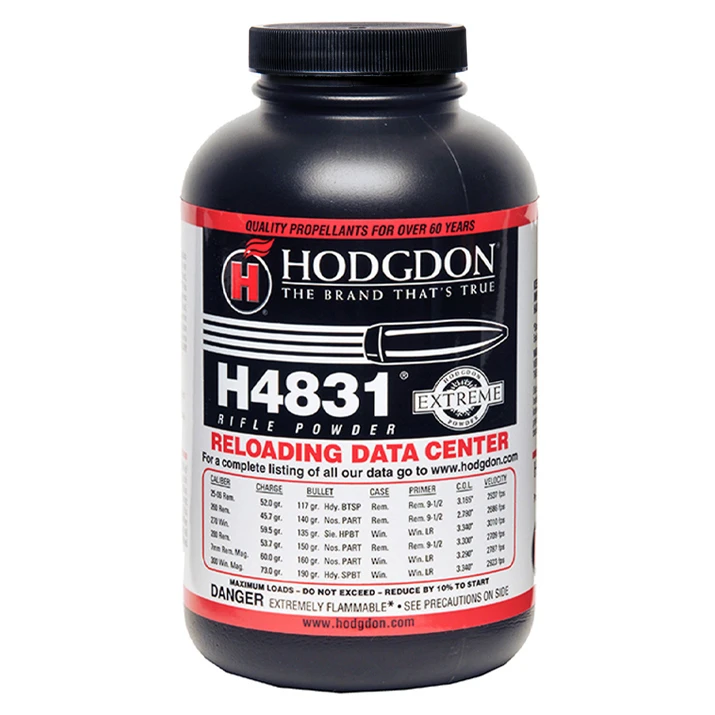
That is how it was in 1950 when Hodgdon introduced a relatively slow-burning powder and christened it 4831. It was a wartime product originally developed for the 20mm Oerlikon, an autoloading cannon used by the American and British navies. As produced at war's end, the 20mm (.787 inch) projectile weighed 2,000 grains, had a velocity of 2,800 fps, and was loaded with 400 grains of the medium-slow-burning powder.
Firing at a rate of some 650 rpm, an Oerlikon burned about 37 pounds of 4831 in a minute, which meant many tons of it had been made for the war, and apparently a lot of it had been left over for Hodgdon to sell because he initially offered it at what was one of the all-time greatest bargain prices—especially if you bought a lot of it. That's how I came to have 20 pounds at one time when normally I could afford no more than one pound of canister powder at a time. I forget the exact details, but the price was significantly less than a buck a pound if you bought 100 pounds or more. It was too good a deal to miss out on, so a few of my shooting pals and I pooled our meager resources and ordered 100 pounds. After divvying up the 100 pounds of loose powder, I had 20 pounds of 4831. I funneled it into a tin drum that formerly had held another brand of powder. My closely protected remaining share of that shipment still resides in that tin drum more than 60 years since the day we popped the lid off the original cardboard barrel. Notice I said closely protected, for which there is a sacred reason, which I'll get to in a moment or two, but first let's discuss the early days of handloading with 4831.
In my vintage copy of the Lyman Ideal Handbook, dated 1951, there is no mention of 4831, which is understandable since there had been no time at that date to develop data for any Hodgdon powder, even if they'd had samples. But with the introduction of Speer's first handloader's manual, dated 1954, Hodgdon's 4895 and 4831 were much in evidence. As mentioned earlier, bulletmaker Vernon Speer, like Bruce Hodgdon, was a hard-driving apostle of handloading back in the good old days, and they helped each other at every chance. In fact, I think it can be convincingly argued that Speer was largely responsible for the early success of 4831 by pointing out its possibilities to handloaders of that era.
To better understand how this came about, you must recall that one of the main selling points for handloading your own ammo back then was not just equaling, but actually surpassing, factory ammo velocities. That's the reason for the rather unrestrained virility of some 1950s-era loading data. For example, loads for the 270 Winchester with 130-grain bullets in Speer's 1954 manual listed a husky 60.0 grains of 4831 for a velocity of 3,180 fps, which just happened to be faster than Winchester's advertised velocity for the same caliber and weight bullet. And it just so happened that popular gun writer Jack O'Connor lived just a few blocks from Speer's Lewiston, Idaho, bullet-making plant.
No gun writer ever had it so good. O'Connor had easy access to Speer's shooting tunnel to test new rifles and ammunition and work on his various shooting and writing projects with the full cooperation and invaluable input of Speer's technical staff. It's no secret that O'Connor was also a big fan and promoter of the 270 Win., and when he discovered that the factory ballistics of his favorite caliber could actually be exceeded simply by filling its case to the brim with 4831 and putting a Speer 130-grain bullet on top, he lost no time spreading the news to his many thousands of fans. Thus was the success of 4831 secured.
Wildcatting—the practice of designing and building non-mainline cartridges and rifles—was a popular enterprise in those days. Since nearly all wildcats are characterized by increased capacity/bore size ratios, they almost universally benefit by slower-burning powders, and just at that right moment in time bargain-priced 4831 was there to fill the bill. Some wildcats that I could name simply would never have been born had not their makers had an abundance of 4831 to tinker with.
Projects such as my 25-06, which was then a fairly popular wildcat, were steadily decreasing my 20 pounds of 4831 until by 1968 no more than half remained in the pink tin drum. And it would have continued to disappear had there not been a change in my shooting fortunes.
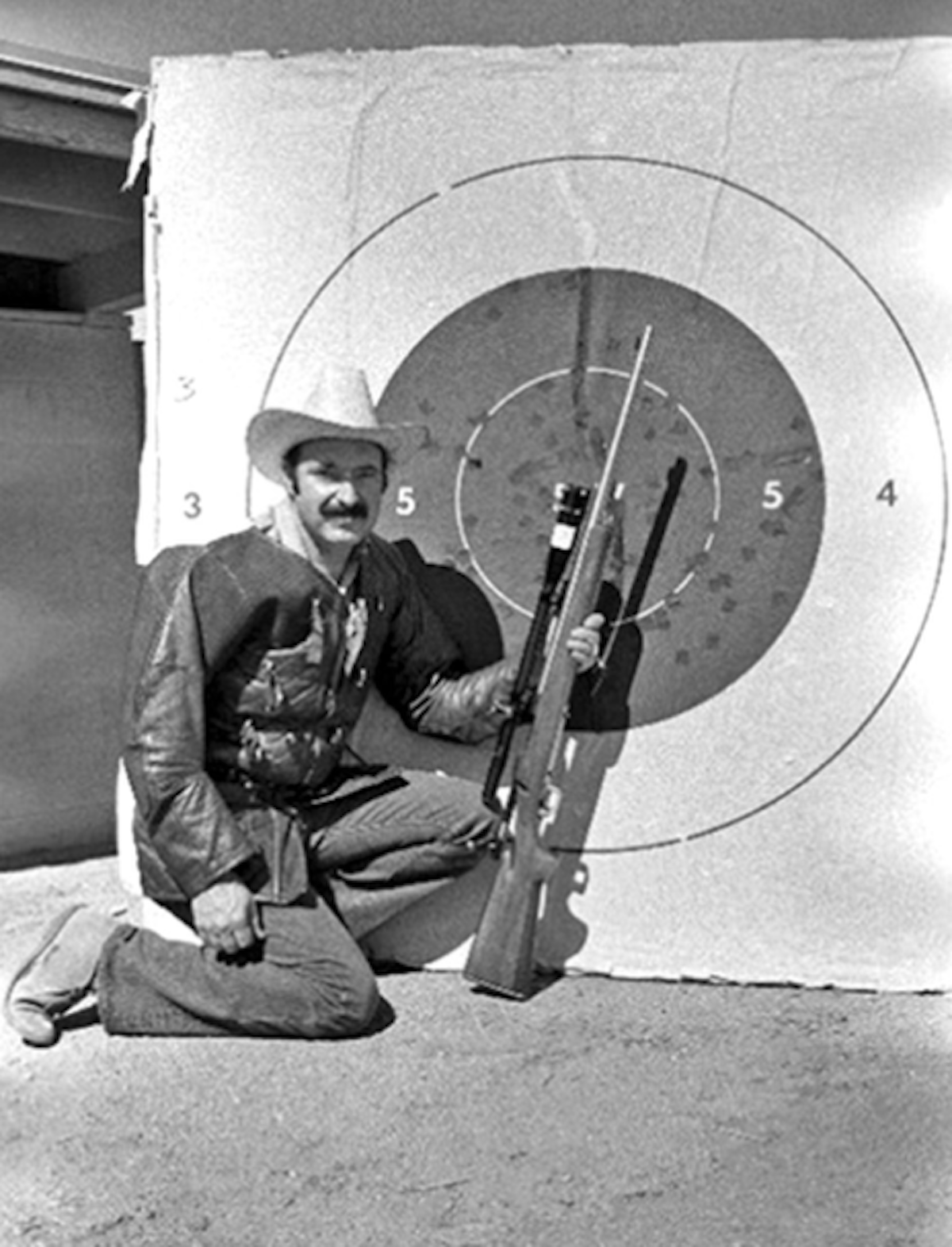
By then I was out of college and had a job that paid fairly well. I picked up a few stray bucks writing for various shooting publications, mostly about handloading and do-it-yourself gunsmithing. I was also getting back into rifle competition, especially the high power scene and the National Match Course, which was then fired with the 30-06. I had a couple of pretty good rifles, one being the '03 Springfield I'd bought years before and still fired in specialty matches, and another was a good Winchester Model 70 Target Model that had been made even better after I fitted it with a semi-finished stock I got from well-known gunsmith Roy Dunlap. (The '03 Springfield and the Dunlap-stocked Winchester Model 70 continue to occupy honored places in my gun rack.)
But for the long-range events at 1,000 yards, I was coming up short and in need of equipment to put me on a somewhat more level playing field with competitors who were hogging most of the trophies with their wind-defying magnums.
To get this in perspective, other things being equal, a bullet going fast will be less affected by a crosswind than the same bullet going slow. So, if I maxed out a Sierra 180-grain MatchKing (at that time the prevailing .30-caliber target bullet.) at 2,700 fps with my 30-06, an unexpected 10 mph crosswind would carry it about 10 inches farther off course at 1,000 yards than the same bullet launched 200 fps faster, enough to keep the Magnum-wielding guy or gal I'm shooting against in the V-ring while my bullet drifts over into the 4-ring. That meant I'd have to be a pretty savvy wind doper to overcome the handicap. I wasn't, so it was time to level the playing field somewhat. The 300 Winchester Magnum had emerged as the round to beat in long-range competition. The winning rifles often were custom jobs by specialists like Dunlap and were pretty well out of my price league. But for dedicated do-it-yourselfers like me, there were other affordable possibilities, so I set out to build my own 300 Win. Mag. target rifle.
So on the afternoon of January 15, 1968, I set out for Charleston, West Virginia, and on the following morning appeared at the door of Douglas Barrel Works and presented my plan to Arlie Gardner, the company's owner. I needed one of Douglas's premium-grade barrels fitted to a Pre-'64 Model 70 action that I had been saving for the project. I wanted all the work done at the Douglas works: fitting a heavy, straight taper barrel; chambering; and opening the face of the bolt, which had previously been a 30-06, for the larger Magnum rim.
Then, as now, Douglas barrels were known for match-winning accuracy, and Arlie must have sensed my determination to build a match-winning rifle because when the newly barreled action arrived I was astonished to find it accompanied by three more barrels, all fitted and chambered for the same action. "Try them all." Arlie had written on the invoice. "They check out fine on the air-gauge and should shoot great, but some barrels have an edge that you never find until you actually try them."
Meanwhile, I had ordered a semi-finished stock from Reinhart Fajen, which was pretty much styled after Winchester's Marksman target stock, a design hard to improve on. That's why, except for the light-colored laminated walnut stock and stainless-steel barrel, my rifle looks so much like a vintage Winchester Model 70 Target Model.
By spring of '68 the project was finished, iron sights and scope blocks were mounted, and a supply of gleaming new 300 Win. Mag. cases were ready to be loaded with Sierra's 180-grain MatchKing bullets. Almost all loading data indicated 4831 was a top choice for the combination, but by then the dwindling stock of my original 4831 was getting old, at least 25 years old and probably older. The reason I'd wanted the 300 Win. Mag. was for its long-range velocity edge, but would that edge be sacrificed to a batch of powder too aged to give me the velocity boost I wanted? There was only one way to find out, and 50 rounds were loaded with 4831 from the old tin drum.
On the advice of my pal Ron Reiber, Hodgdon's chief ballistician, I'm not saying how much of that early 4831 I loaded in my first batch of ammo because the same charge would probably be dangerously over-pressure with current-manufacture 4831. But what I can tell you is that ancient lot of 4831 really rocked in my new rifle. They were made for each other, the perfect wedding of components and rifle that handloaders have sweet dreams of. Would another powder, a newer lot of 4831, be as good? I never found out because the old tin drum and the small remaining lot of my original 4831 were forever consigned to that rifle.
In time three of the original four Douglas barrels were worn past their prime. Today, that long-serving rifle is fitted with the last of those wonderful barrels, and just enough of that magical 4831 remains for a few more loads. It's 70+ years old. Does any of its magic remain?
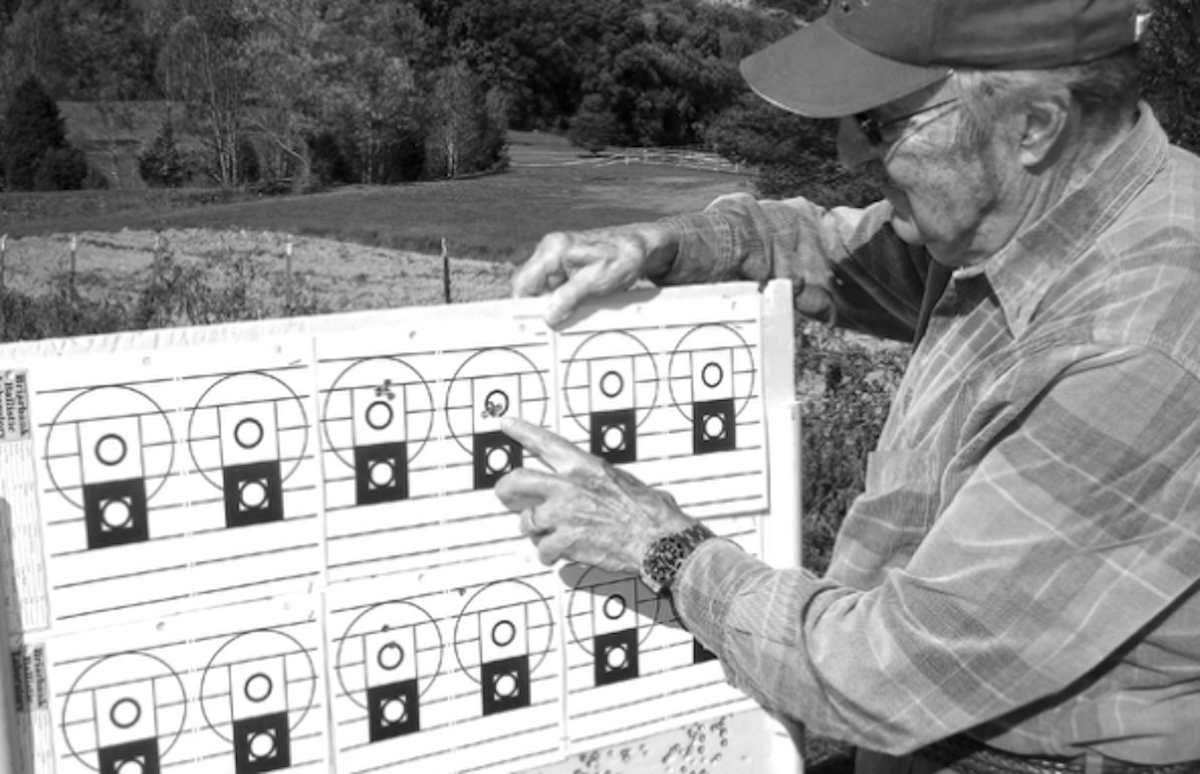
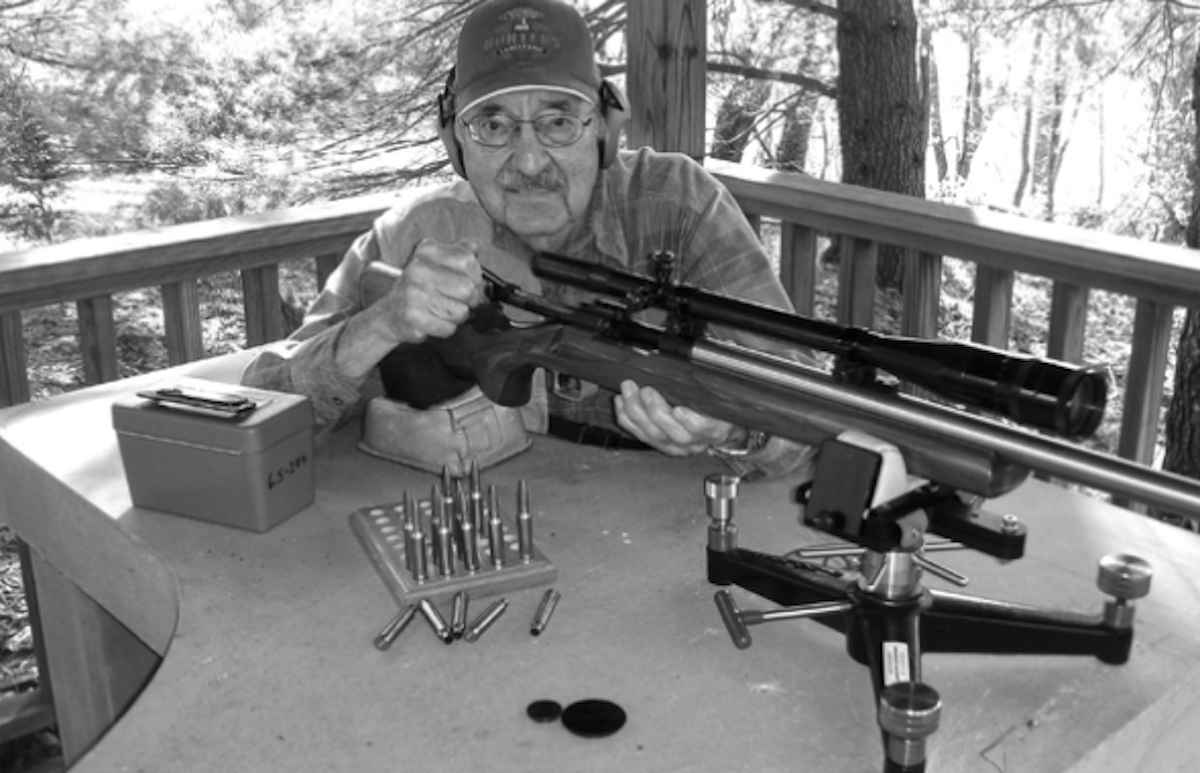
The day before I finished this article, I fired a couple of five-shot groups at 100 yards loaded with 4831 made over 70 years ago. How well did it shoot? See the photo.