



In the 1980s I somehow decided my hunting life needed a "wild boar," and a California friend arranged a guided ranch hunt in the western foothills of the Central Valley. Until then I'd only taken Montana big game with over-the-counter tags—pronghorns, whitetails, mule deer, elk, and black bear—and been the chief guide and packer when my wife, Eileen, had drawn a Shiras moose tag.
Some research on possible pig rifles seemed in order.
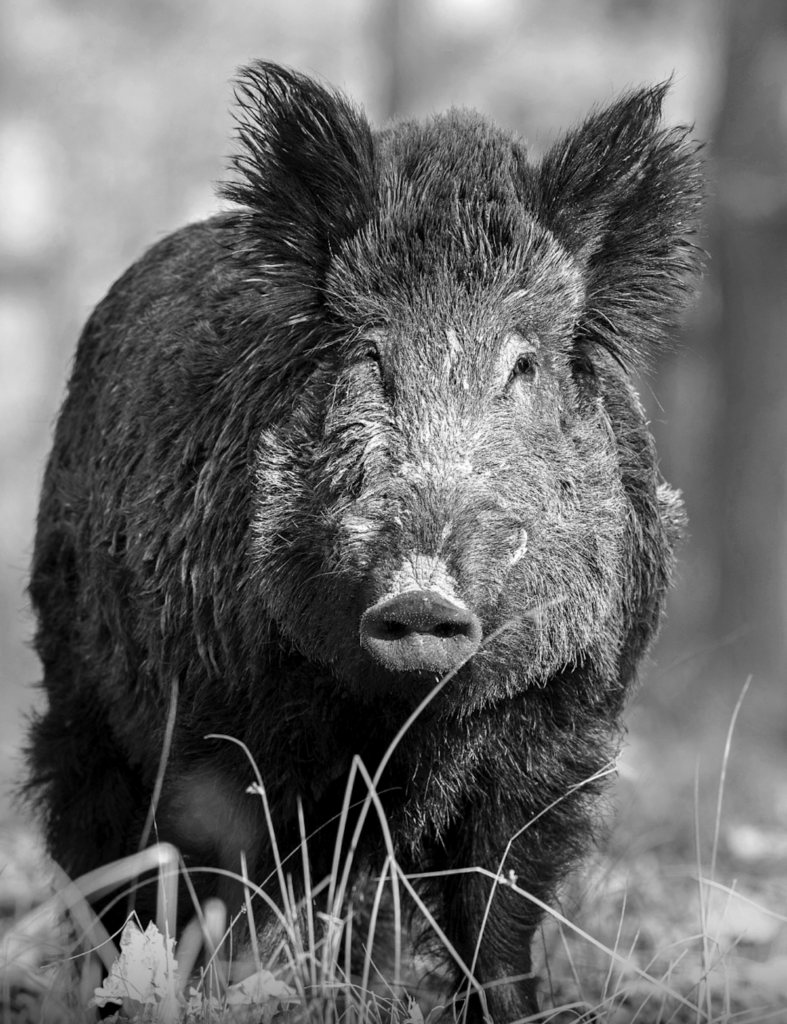
Back then very few magazines ran articles on hog hunting. The feral pig population hadn't yet "exploded" across the United States, and only a handful of science nerds used the then-tiny Internet. The little information available said big boars were extremely hard to kill, due to the heavy cartilage shield over their ribs and a surly attitude. Some sources claimed boars frequently grew up to 500 pounds or more, and several said wounded boars were extremely dangerous, due to their "razor-sharp" tusks.
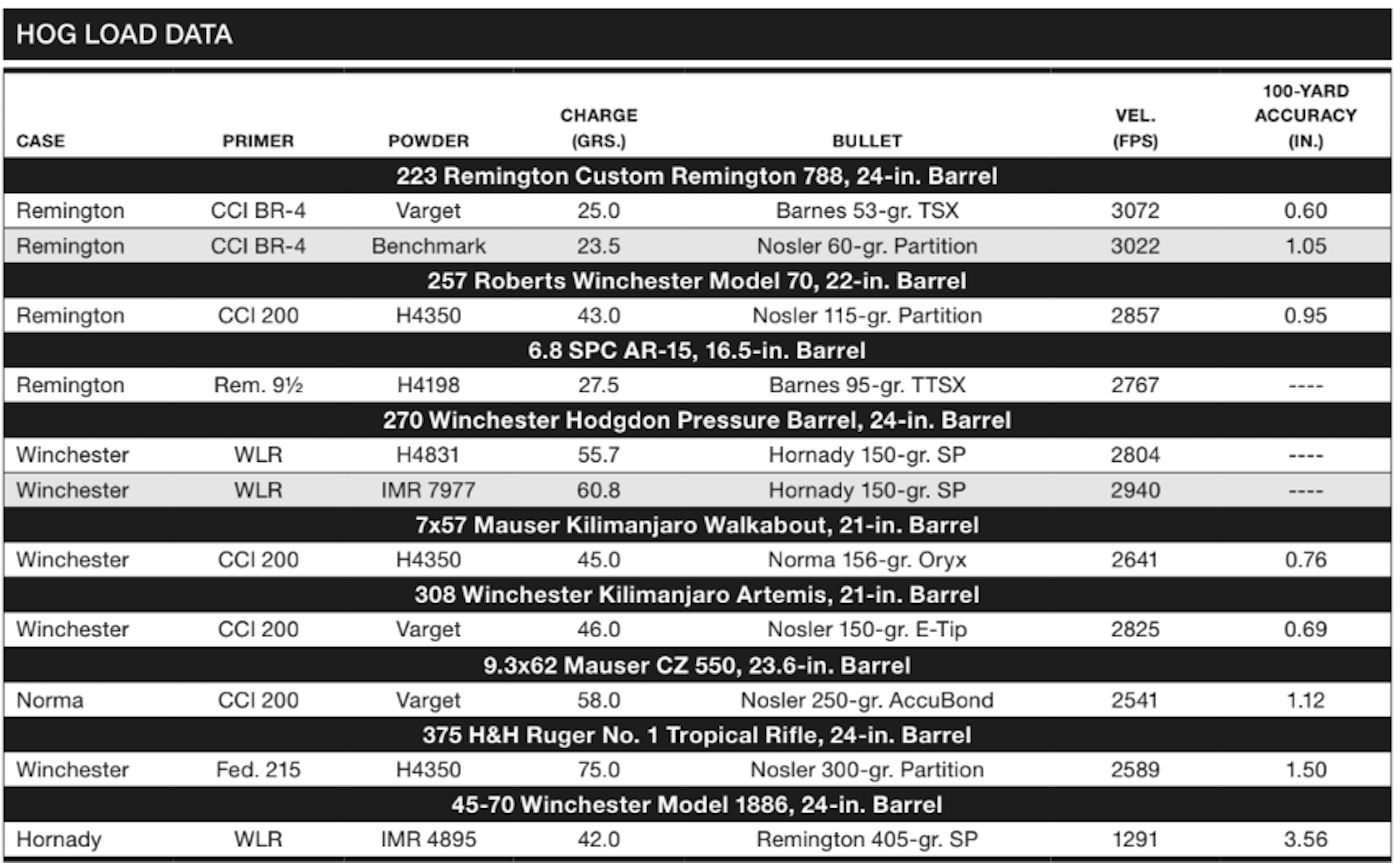
All of this made me briefly consider a recently purchased 375 H&H, but eventually, I decided on a 270 Winchester, partly because I knew the toughness of elk was often greatly exaggerated. Eileen and I had taken elk handily with various 270s, and Eileen's had proven more than adequate for her bull moose, which dropped very quickly with one Nosler 150-grain Partition through the lungs. A stout 150-grain bullet also seemed like a good idea for a big boar, so I worked up a load with Speer 150-grain Grand Slams, which had proven pretty tough on several Montana animals.
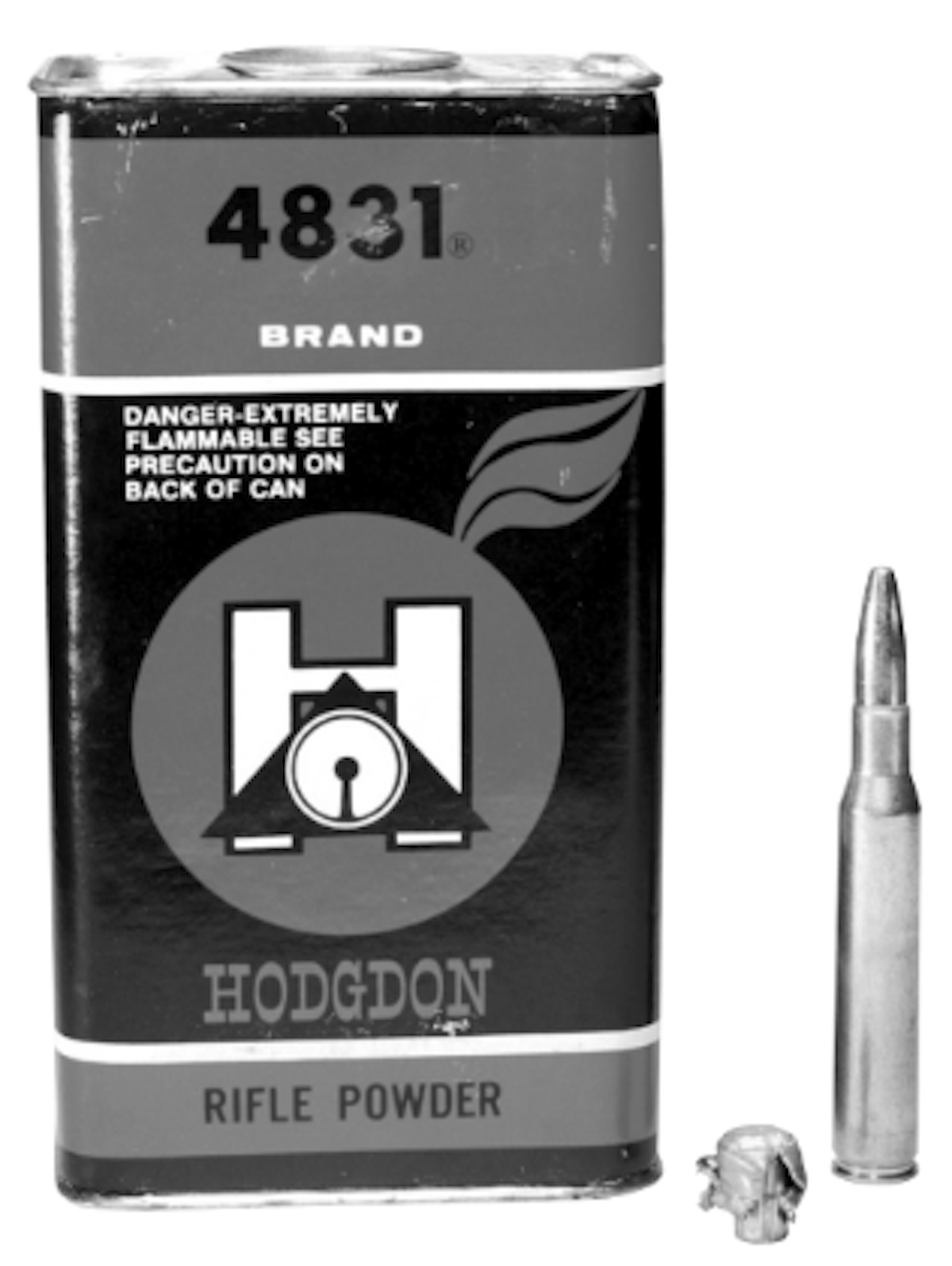
The powder chosen was H4831, the classic 270 propellant ever since Jack O'Connor acquired a bunch of the "war surplus" powder Hodgdon started marketing after World War II. O'Connor worked up some pretty zippy loads—finding the powder somewhat slower burning than IMR 4350, previously the slowest-burning commercial powder—then went forth and slew all sorts of big game. By coincidence, my H4831 was military-surplus powder, a gift from an old handloader who had decided to quit big-game hunting. I worked up to the same charge O'Connor used with 150-grain bullets and Eileen used on her moose, and the Speer bullets grouped into an inch.
Winter still hung on in Montana in April when we left to drive to California, but in the Central Valley orange poppies bloomed across green hillsides. We arrived in the evening, and my guide, a young man named Mitch, said he hadn't seen any big boars all winter while escorting other hunters around the ranch. That was discouraging; a magazine had assigned an article on hunting big, fierce boars. We decided to look for one anyway, at least for a day or two.
Early the next morning we came over a rise in a supposedly empty cattle pasture to see a small herd of pigs running toward the far side of the field. The pig in the rear was much larger than the rest, with burly shoulders and a long, wedge-shaped head.
"That's a big boar!" Mitch said. I was already aiming. The range looked to be at least 150 yards, and I held the scope's reticle in front of the boar's snout as it ran angling away. After the shot, we heard the hollow thump of a solid chest hit, but the boar kept running. A second shot, taken as the herd dropped into a deep draw, missed high.
A couple of minutes later we were side-hilling through the steep draw, looking for blood between the oaks and chamise brush. Mitch suddenly pointed uphill, where the boar trotted slowly through small oaks. I waited for an opening before shooting, and the boar dropped and rolled downhill toward us. It stopped a few yards away, then rose and staggered briefly toward me, clashing its tusks, before collapsing for the final time.
In the ranch's skinning shed, the boar weighed 245 pounds, but after all these years I can't remember if that was whole or field-dressed. Either way, it was a pretty big pig, with tusks curving nearly 3 inches from its mouth. We found my first shot had been placed well enough—if the pig had been a deer.
None of the material I referenced back then mentioned that a pig's lungs don't extend nearly as far back from the shoulders as those on a deer or elk or most other cloven-hooved big-game animals. The Grand Slam bullet had entered the ribs a few inches behind the left shoulder but only clipped the rear of the left lung before centering the right lung. The second bullet had angled upward through the left shoulder and cracked the bottom of the spine, the reason the boar fell and rolled downhill. We recovered it, perfectly expanded and retaining 74 percent of its original weight, from under the hide on top of the opposite shoulder.
Bullets
In the decades since, both Eileen and I have taken a bunch of feral pigs across the US, though mostly at the epicenter of the porcine epidemic: Texas. I've also done a little hunting of truly wild boars in Europe (Sus scrofa, the ancestors of our feral pigs) and some for their New World relative, the collared peccary, in Texas, Arizona, and Old Mexico. Eileen and I have also hunted warthogs in Africa several times.
I've decided wild pigs aren't very dangerous, since only that first boar even vaguely "charged," and aren't very hard to kill. Instead, their reputation for toughness rose partly from the simple cup-and-core bullets most hunters used prior to the 1980s, before they became aware of the advantages of controlled-expansion bullets.
The cartilage shield and relatively heavy shoulder bones of larger boars can disintegrate cup-and-core bullets, which is the reason heavy bullets at moderate velocities were traditionally favored for driven-boar shooting in Europe. But as I discovered in California, a relatively small and fast controlled-expansion bullet will penetrate the cartilage, shoulder, and vitals of a large boar.
The smallest cartridge I've used on a mature boar was the 6.8 Remington SPC, during a hunt in northeast Texas with Bill Wilson of Wilson Combat fame. Wilson likes hunting pigs so much he bought a small ranch primarily for that purpose. While many Texas pig hunters use AR-15s in 223 Remington,
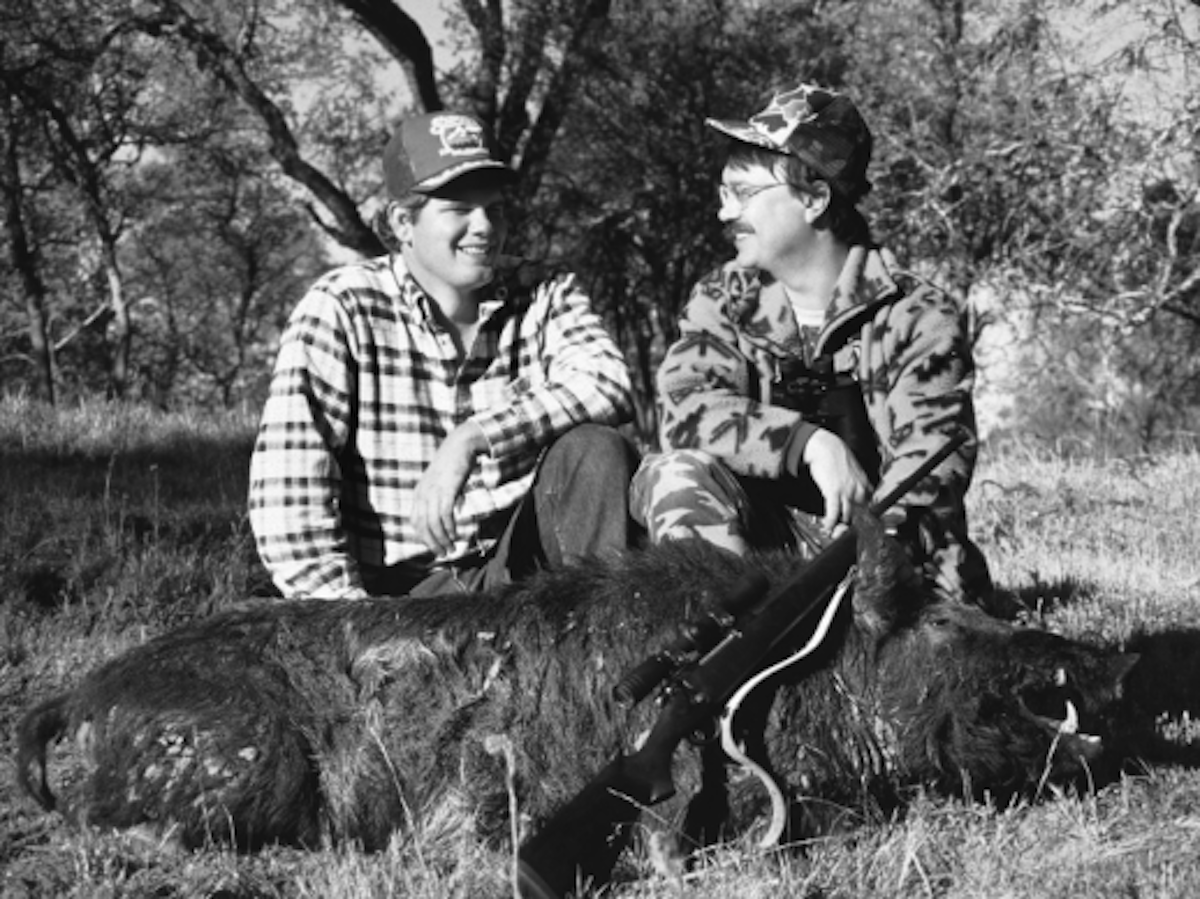
Wilson believes the 6.8 SPC is more reliable on larger boars. It certainly worked well for me during the hunt, while using a pair of Wilson Combat AR-15s and Wilson's handloads featuring Barnes 95-grain Tipped TSX bullets.
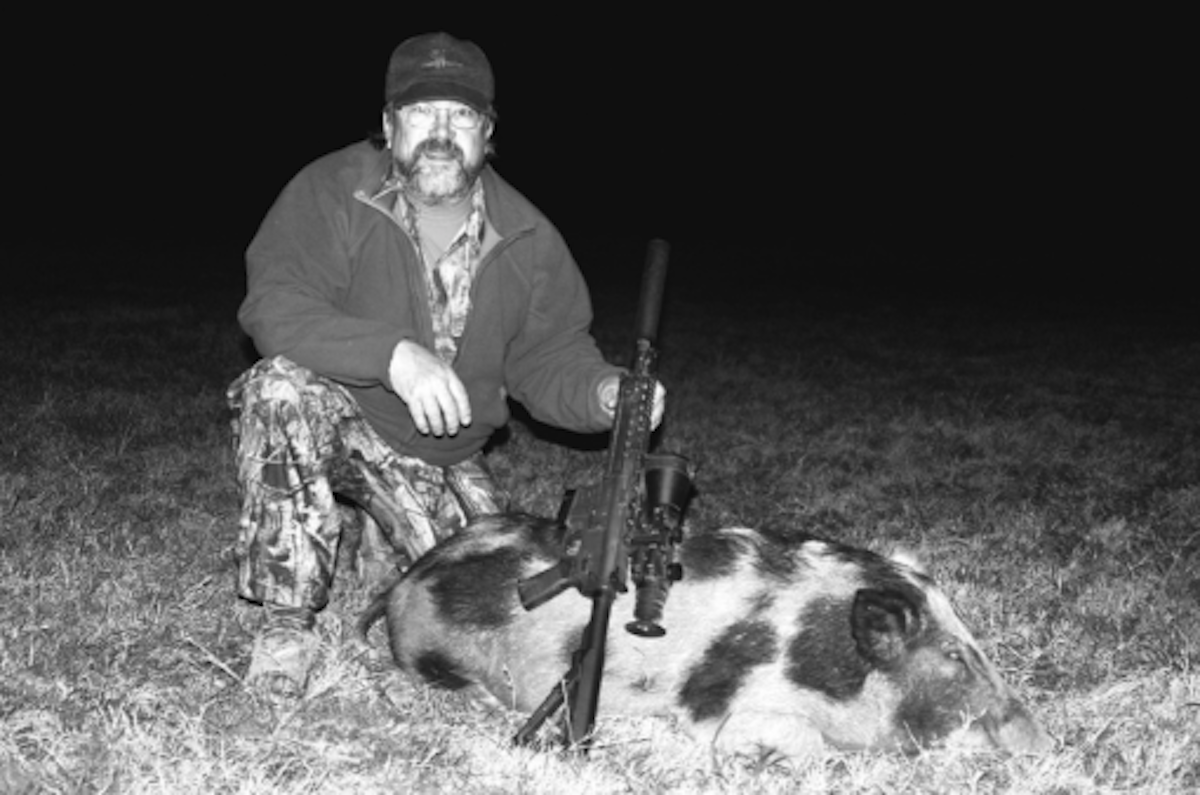
The first pig fell just after dark, and my aim was helped by an illuminated-reticle Burris scope. Wilson had earlier explained that while the TSXs penetrate very well, if somebody wants to drop a boar right there, without any trailing through the oak thickets, his preferred shot placement is the middle of the neck, just in front of the shoulders. A head shot or high shoulder/spine shot will also do the job if properly placed, but a pig's spine and major blood vessels run right through the middle of the neck, providing a larger target. So I put the red dot on the eating-size boar, and it dropped right there. I've hunted pigs all across Texas, and everybody everywhere has a firm opinion of the maximum size for a good-tasting boar. Those opinions vary from 100 to 150 pounds, and this one weighed maybe 100 pounds.
The second boar weighed at least twice as much and was taken close to midnight with a suppressed AR-15 equipped with a Gen 3 night-vision scope. Wilson also owns top-notch night-vision binoculars, so we went out after dinner one evening, eventually finding a couple dozen pigs scattered across a cattle pasture half a mile away. We circled into the mild breeze and walked quietly up within 100 yards of the nearest boar as it grazed, quartering away. I rested the AR-15 on Wilson's shooting sticks and waited for the boar to turn slightly before aiming at the same place. This boar also dropped right there—as did a coyote we spotted while hiking back to the ATV—to a 150-yard shot through the shoulders. (Before anybody objects, in Texas it's legal to hunt both varmints and "exotic," non-native animals at night—and feral pigs are exotics.)
With the 6.8 SPC, Wilson prefers a softer bullet for whitetails, specifically Nosler's 110-grain AccuBond, but he prefers the bone-breaking penetration of Barnes's TSXs for pigs. I don't know what powder he uses, but Barnes data lists H4198 as getting almost 2,800 fps with the 95-grain Tipped TSX from a 16.5-inch barrel. That's zipping right along, basically duplicating typical 100-grain 243 Winchester factory loads from 22-inch barrels.
We didn't get a second shot at any of the other pigs in that pasture. Despite the suppressor, the clatter of the AR's action spooked them into the brush. But the firepower of AR-15s often allows hunters who get into a herd to take several, and these days much of Texas is so infested with feral pigs that many hunters are out to shoot all they can find of any size. (Eileen prefers that sort of pig hunting, so she can bring a cooler stuffed with pork home to Montana, including piglets she splits lengthwise and prepares in a water-smoker. Excuse me while I wipe away some drool before it messes up the keyboard.)
Field Experiences
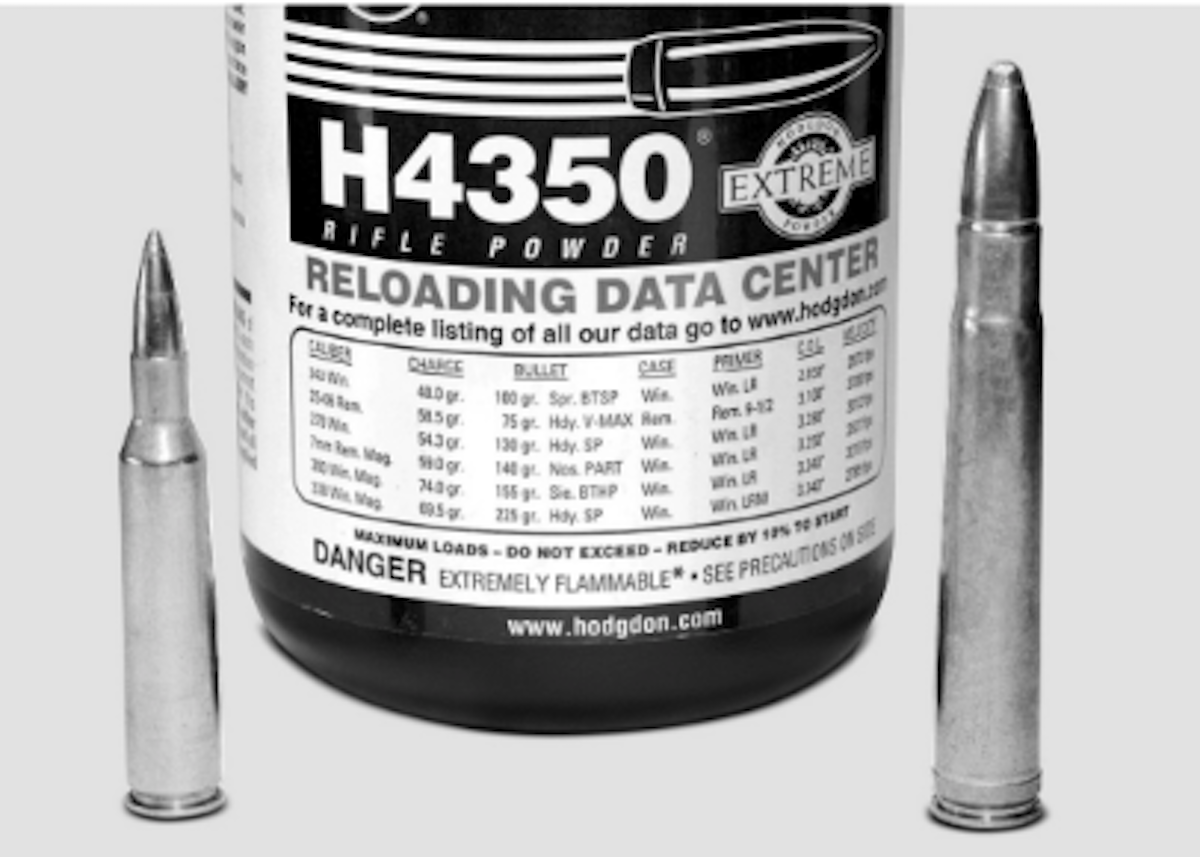
Most feral pigs probably are shot with rifles typically used for deer because they're taken by deer hunters. For one Texas hunt sponsored by Cabela's, they sent me a limited-edition Winchester Model 70 in 257 Roberts beforehand to work up handloads. The 257 Roberts is one of my very favorite deer rounds. The handload was also a longtime favorite, combining a maximum load of H4350 with the Nosler 115-grain Partition. The biggest pig the 257 took was a boar weighing around 175 pounds, but my shooting position wasn't steady enough to risk a neck shot, so I aimed for the shoulder but missed slightly. The bullet landed right behind the bone, a typical deer-type lung shot. The boar dropped straight down and never moved.
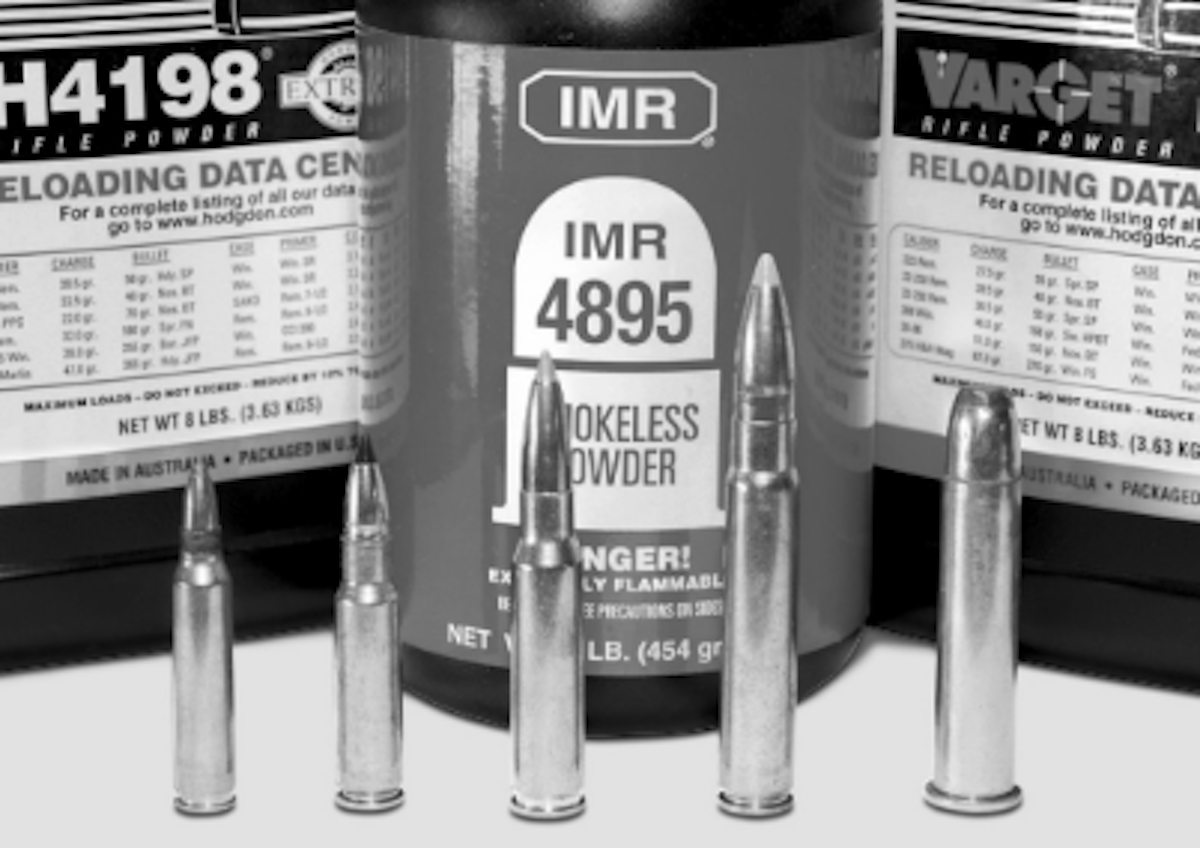
Several javelinas were also taken on that hunt. Of course, the 257 worked just fine, but one of my companions used the other Winchester I brought: a lever-action Model 1886 in 45-70. It used handloads featuring Remington 405-grain flatnose softpoints and enough IMR 4895 to duplicate the original blackpowder ballistics. Younger javelinas taste all right, too, and the big, slow bullet didn't shoot up much peccary-pork.
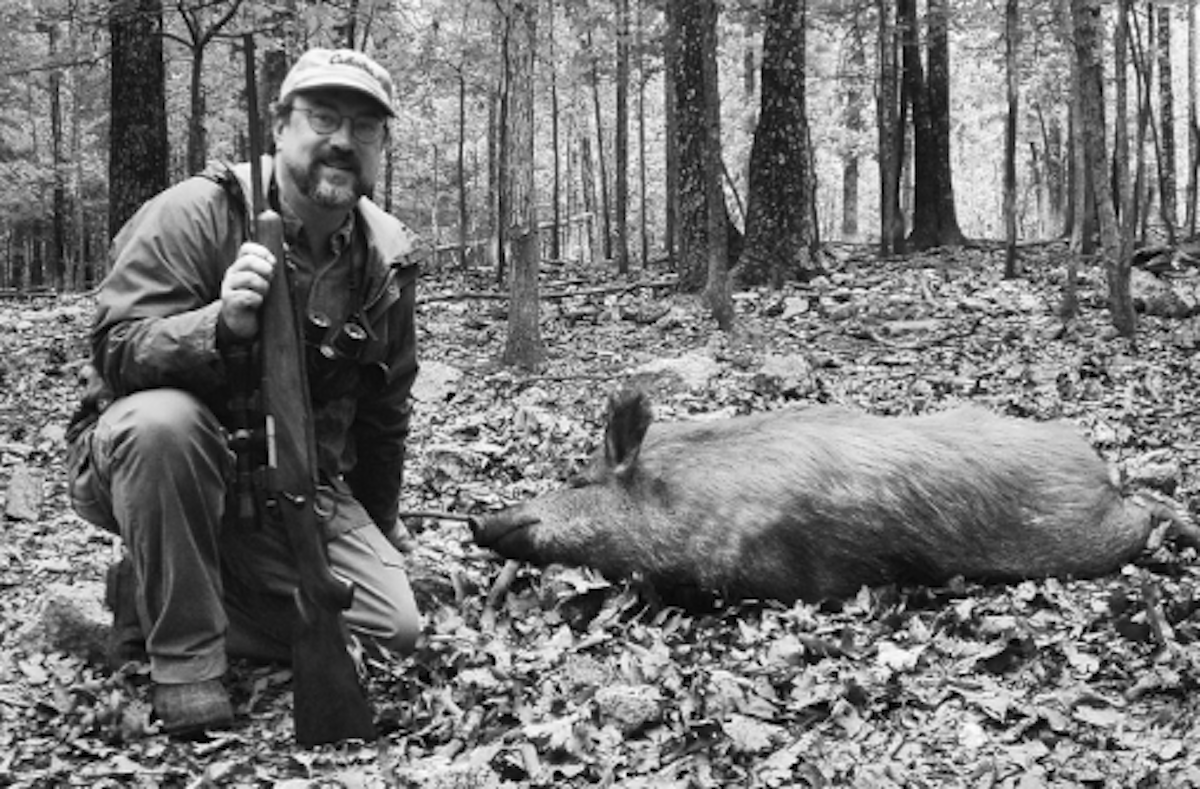
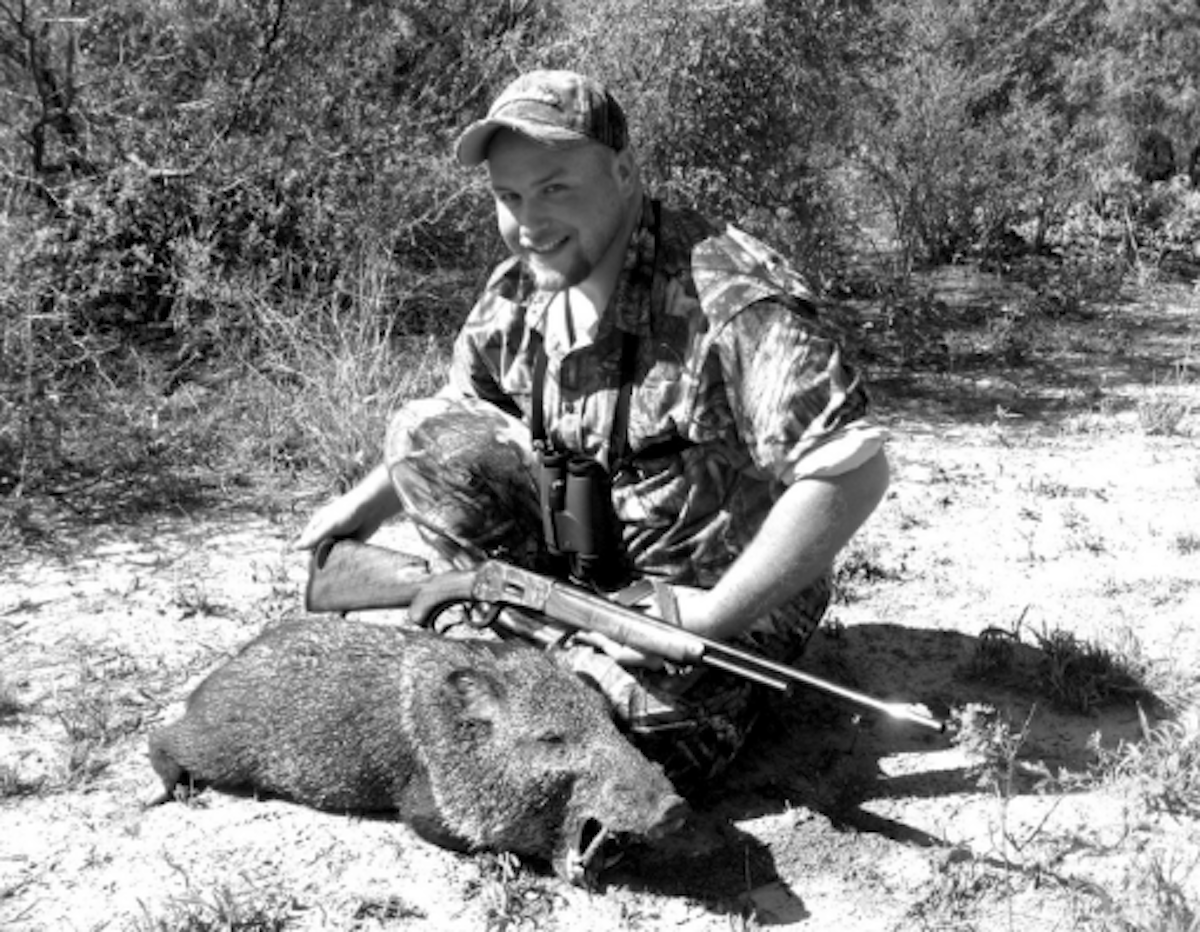
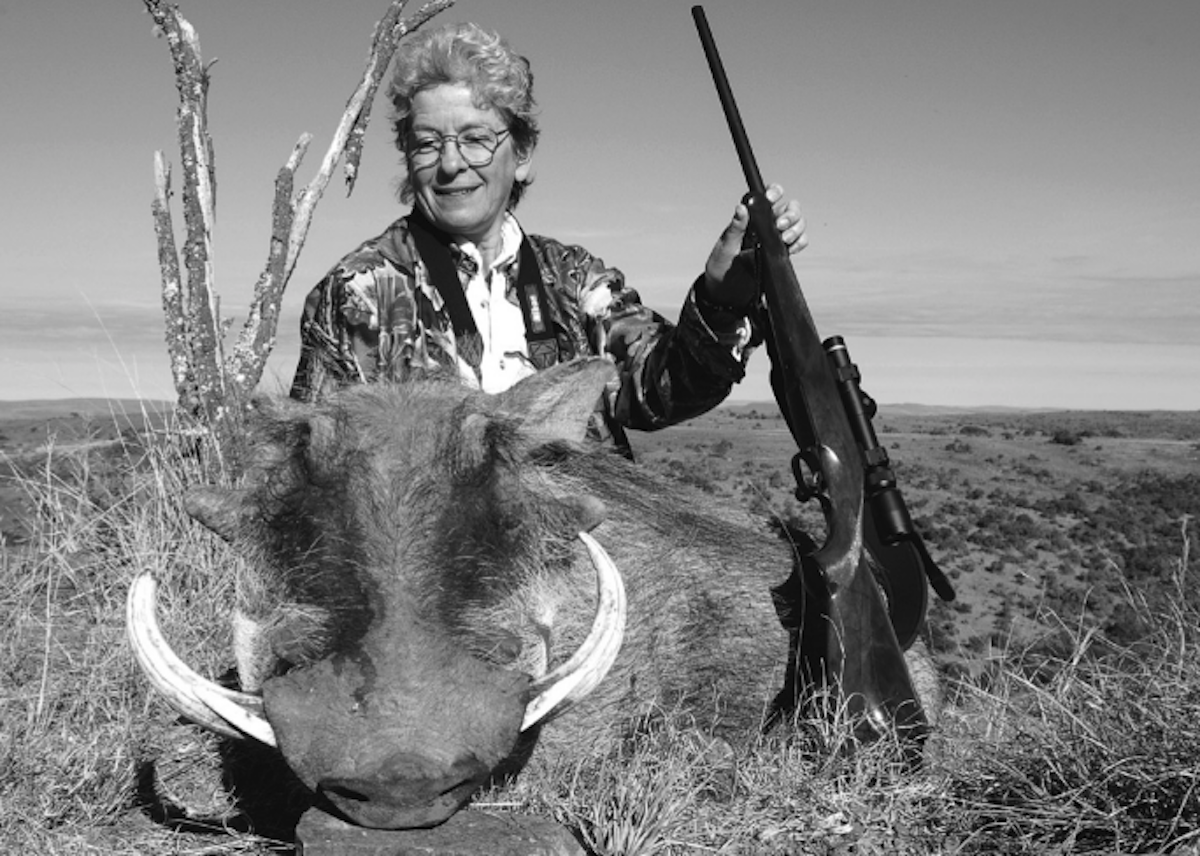
Pig culling also takes place in Africa, where warthogs are expanding their range into areas where they weren't originally found. Warthogs cause the same problems there as feral pigs cause here, digging under fences and rooting through crops and pastures. Until relatively recently, the problem was semi-controlled by landowners and professional cullers (game meat can be legally sold in much of Africa), but in the last decade or two safari operators have found their clients are often willing to help cull. Many safari companies even offer lower rates for cull hunts, though the hunter must still pay a standard fee for any real trophy, whether a warthog or kudu.
Most hunters headed to Africa don't bring a special warthog-culling rifle and instead use whatever they brought along for general hunting. In Africa that usually means a larger cartridge than used by the average American deer hunter. I've taken more warthogs with the classic European/African 9.3x62 Mauser than any other round, but the largest cartridge I've used was the 375 H&H, which on the same safari also took a Cape buffalo. It did the job quite efficiently—many years after I had considered taking a 375 on my first pig hunt in California.
That's one of the great things about pig hunting. Hunters can use just about any rifle they want and still end up with pork.