



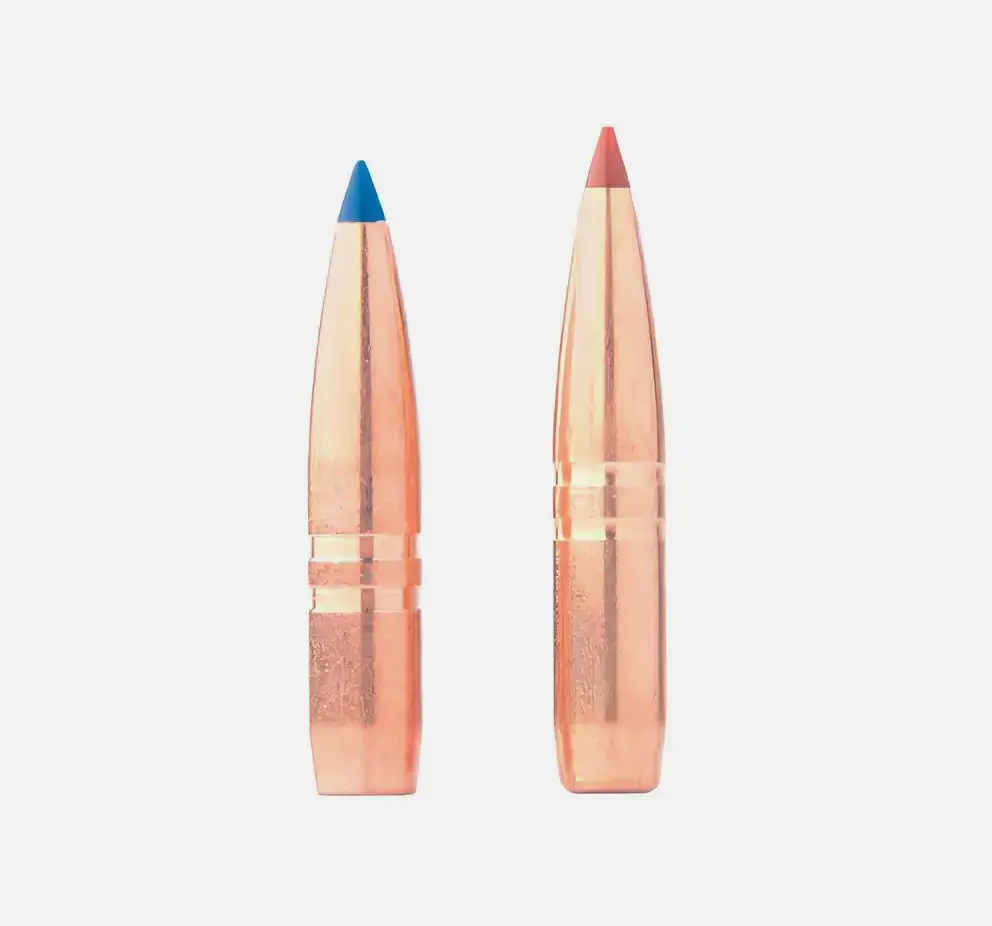
The idea of using a monolithic copper bullet hit the mainstream hunting circuit in the early 1980s. Randy Brooks, owner of Barnes Bullets, first thought of the idea while hunting brown bear. He was dissatisfied with the performance of lead-core bullets available at the time and thought he could make a better bullet. By the end of the ’80s, Randy brought the first Barnes X-Bullet to the American market.
The first all-copper bullets performed well on game, but issues arose that kept the public from jumping onto the monolithic copper bullet bandwagon. Monolithic copper bullet load data was nonexistent, so shooters began using existing lead bullet data. They immediately ran into high-pressure problems. If that wasn’t enough, shooters also noticed extreme copper fouling in their barrels.
During this time, Randy and Coni, his wife and co-owner of Barnes Bullets, were constantly working on improving their all-copper bullets. For a short period, they coated the bullets to reduce fouling and pressure. Shortly after the introduction of the coated bullets, Randy came up with the idea of machining relief grooves in the bullets to reduce bearing area and to give the displaced copper a place to move to. This was the advent of the Barnes Triple-Shock, and that bullet is the model for most monolithic copper bullets on the market.
As the popularity of the Barnes Bullets grew, other companies jumped onto the monolithic copper bullet bandwagon. Cutting Edge, Federal, Hammer, Hornady, Lehigh Defense, Maker, G9 Defense, Nosler, and Winchester all make versions of monolithic copper bullets.
Reloading monolithic copper bullets requires a few extra precautions. Because the bullets are longer than their lead-core counterparts of the same weight, the copper bullets have more bearing surface, which increases pressures. In a 7mm Remington Magnum test that shot four different copper bullets from four different manufacturers against lead-core bullets, the pressures generated by the copper bullets were closer to the pressures generated by lead-core bullets weighing 20 grains more. There wasn’t a significant difference between the four monolithic copper bullets.
Be wary of using lead-free primers when loading copper bullets. In testing for the military, it was found that the lead-free primers significantly increased the copper fouling. The fouling boosted pressures to dangerous levels after as few as 10 shots.
When choosing a propellant, powders that have anti-coppering work extremely well with copper bullets. The CFE spherical powders keep copper fouling to a minimum.
When loading monolithic copper bullets in handguns, be prepared to go with substantially lighter bullets than are normally loaded. In the 9mm Luger, a 115-grain copper bullet is so long that in order to keep the overall length within S.A.A.M.I. specs., the bullet is seated much deeper in the case than its lead-core counterpart, which substantially raises pressures. Choose a lighter bullet that is approximately the same length as the lead-core bullet you have been shooting. Since the monolithic copper bullets don’t shed weight, penetration is still close to that of lead-core bullets. Handgun bullets like those produced by Lehigh Defense use a fluid transfer technology that doesn’t rely on expansion, so even light bullets get deep penetration and impart a significant wound channel.
Monolithic copper bullets are the wave of the future, and they continue to get better and better. Get on the bandwagon and give them a try.