


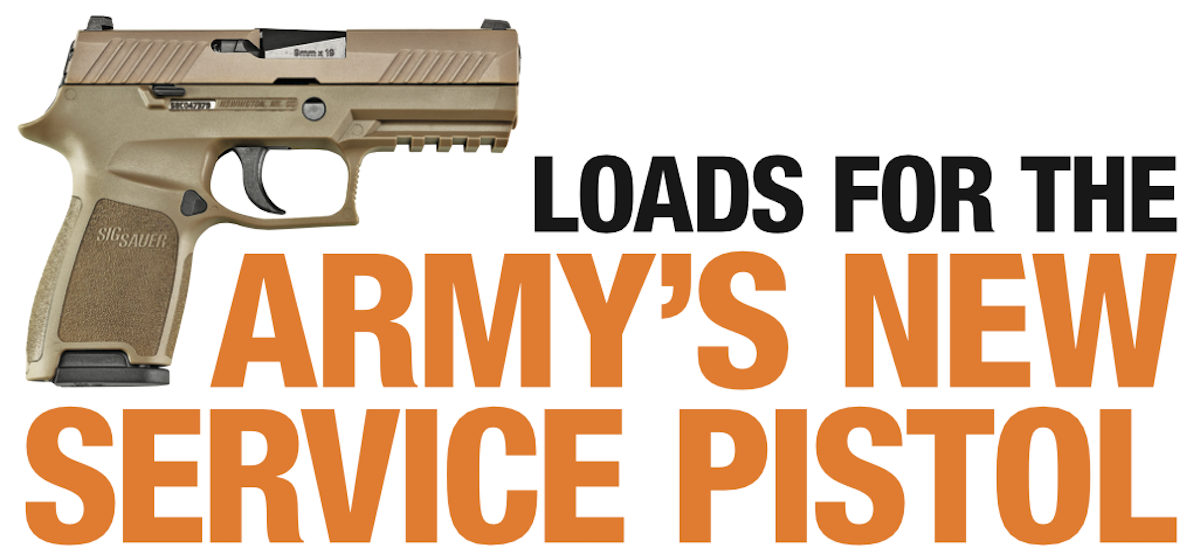
The cat's out of the bag. After a long and tortuous testing process, the Beretta M9 will be replaced by the SIG P320, or XM-17 as the U.S. Army calls it. The M9 replaced the venerable Model 1911 when the United States decided to get in step with NATO's 9mm Luger cartridge a little more than 30 years ago. Some say that led to the 9mm cartridge's tremendous popularity.
So while the firearms press will be largely focused on the new SIG pistol, this is a golden opportunity to investigate several new powders in the 9mm Luger cartridge. That doesn't mean I'll ignore the gun; I'll get to some details about it in a few minutes. It is another in a growing family of striker-fired, polymer-frame, 9mm semiautomatic pistols, and the fact that just about every major handgun company makes pistols of this type in this caliber is proof of concept.
The Cartridge
When the North Atlantic Treaty Organization (NATO) was formed in 1948, one of the goals was to standardize small arms ammunition. Our 45 ACP was out of step with the rest of the 9mm world. It took a while for us to comply—and our aging inventory of Model 1911s was surely a factor—but the change was inevitable.
When the U.S. abandoned the 1911A1 in favor of the M9 in 1985, anguished cries were heard throughout the land. After all, the big .45 had proven itself in two world wars, Korea, Vietnam, and countless skirmishes around the world. The Beretta's service life was shorter, but the 9mm cartridge fights on in the form of the new SIG pistol.
Today, when someone says "nine millimeter," our brains almost always insert "Luger" when, in fact, a bunch of cartridges start with "nine." Cartridges of the World lists seven and has two appellations for the Luger: 9x19 and Parabellum. The 19 refers to the case length, which is 19mm. Parabellum is Latin for "prepare for war," and it has been used in the names of the Parabellum MG14 7.92mm World War I machine gun, the Pistol Parabellum (a.k.a. Luger P08 pistol), the 7.65 Parabellum pistol cartridge, and the 9x19 Parabellum pistol cartridge.
There was a time when I thought the best accuracy one could get from a pistol shooting the 9mm Luger cartridge was MBD (Minute of Barn Door). That was in my youth when trigger control was something of a mystery to me. Back then, surplus Lugers and P38s could be bought for $25 or less, and my opinion of both guns and the cartridge was low. That all changed when I learned how to not jerk the trigger and then shot an accurized 9mm Government Model. It turns out that the cartridge is, with the right components, capable of outstanding accuracy. And with good trigger control, the guns were capable of much better accuracy.
It is virtually impossible to pinpoint an exact time when something in shooting happened. The whole process is evolutionary, and things are developed to meet a demand...real or perceived. In the case of improved 9mm accuracy, law enforcement was the driving force because in the late 1970s and early 1980s law enforcement agencies began a transition from revolvers to semiautomatic pistols, mostly 9mms.
Of at least equal importance was the U.S. military's adoption of the M9. That opened the door for the 9mm to be used in NRA-sanctioned competition, especially for the coveted Distinguished Pistol Shot medal, which previously had been restricted to the 45 ACP.
Service pistols are not intended to be tackdrivers, so I still didn't pay much attention to the 9mm. Two things changed my mind. First, I covered the NRA Police national championship matches in Jackson, Mississippi, in the early 1990s. I saw officers shooting targets at 50 yards with custom Smith & Wesson and Springfield 9mm pistols that would have garnered high scores in 50-yard Bullseye matches. I spoke with Jimmy Rae from the S&W Performance Center and Dave Williams from Springfield Armory's custom shop and came away with new respect for the 9mm and a bad case of "gotta have one." Second, I saw military shooters using gussied-up Berettas at Camp Perry in the National Matches. The Beretta was following the same course as the Model 1911 had years ago. Gunsmiths had learned how to accurize it.
While this report is not concerned with achieving match-winning accuracy—in fact, I didn't even record my accuracy results—the point I'm trying to make is that the 9mm Luger cartridge has evolved considerably.
The New SIG
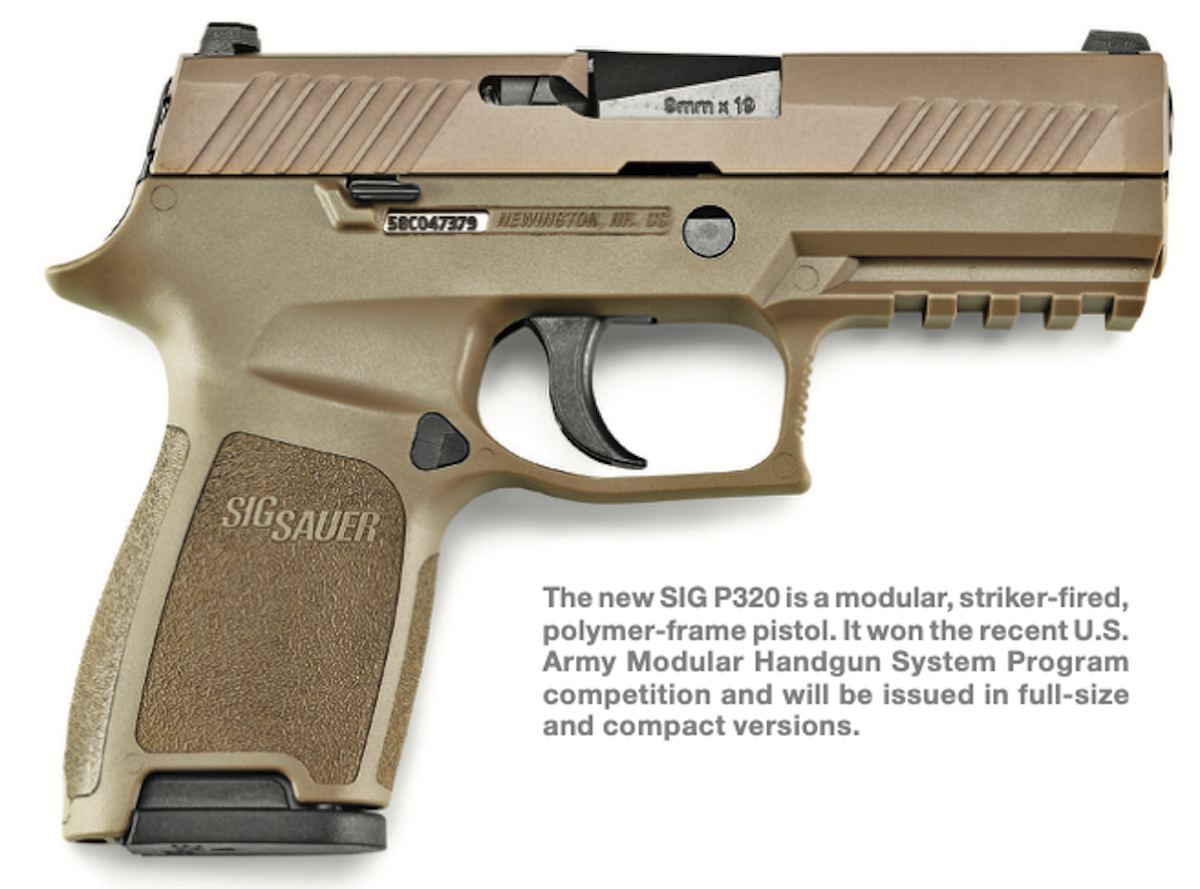
The latest buzzword for military stuff is "modular" (in fact, the Army called the recent trials to select a new sidearm the "Modular Handgun System Program"), and the SIG P320 has it in spades. The P320 has interchangeable grip modules, and it can also be adjusted in caliber (9mm Luger, 357 Sig, 40 S&W, or 45 ACP) by switching out the internal trigger control group and the barrel. All pistols for the military contract will be produced at the SIG SAUER facilities in New Hampshire. The Army's Modular Handgun System Program provides for the delivery of both full-size and compact P320s over a period of 10 years. All pistols will be configurable to receive silencers and will also include both standard- and extended-capacity magazines.
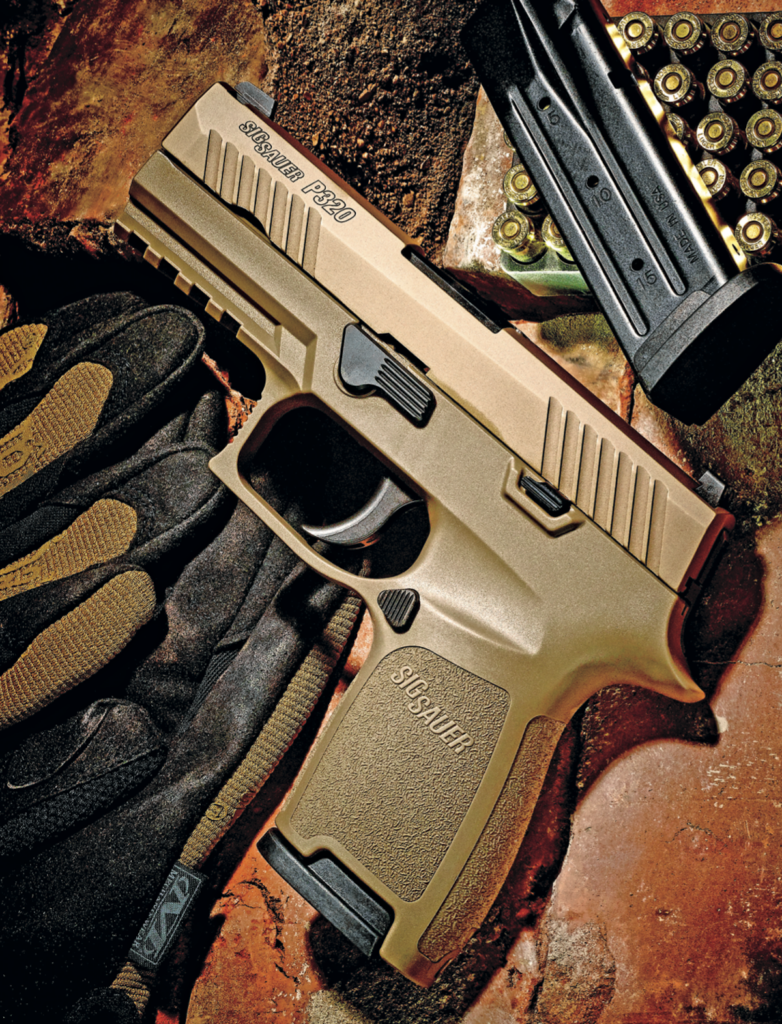
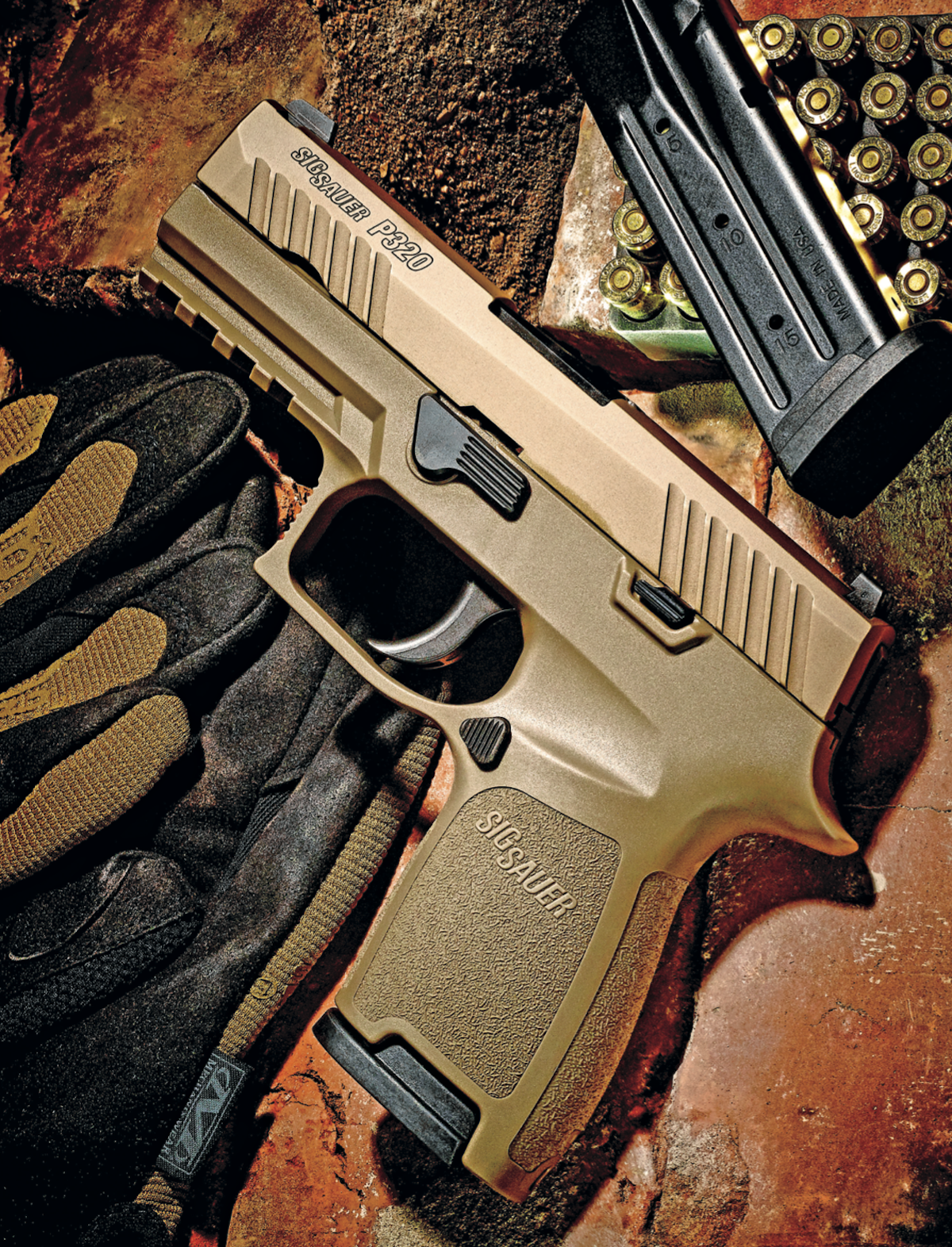
The pistol I obtained for this project is the 9mm P320 Compact FDE, and it has a 3.9-inch barrel, drift-adjustable SIGLITE night sights, and two 15-round steel magazines. It weighs 25.8 ounces and is 7.2 inches long, 1.3 inches wide, and 5.3 inches tall.
Making Good Handloads
Since 1985, we have witnessed explosive growth in the market for 9mm pistols and ammo. Almost all the recent new pistols fall into the polymer-frame, high-capacity, striker-fired category, and they are generally priced considerably less than steel designs. The sales volume of such guns has inevitably multiplied sales of ammo. Some have observed that market forces have made 9mm ammunition easier to obtain than rimfire ammo.
For handloaders of pistol cartridges, the 9mm has replaced the 45 ACP as most popular, and tremendous growth has occurred here, especially where powders are concerned. In this article, I'm going to talk about new powders from IMR and Winchester. Powder manufacturing processes have become very sophisticated, and as a result, some fantastic new propellants have been developed.
IMR Target is one of IMR's new fast-burning pistol powders. It is a fine-grained, small-flake powder that meters well. It was developed to provide top-drawer performance in match cartridges, such as the 45 ACP and the 38 Special, and it's ideal for the reduced loads that Cowboy Action shooters utilize.
IMR Unequal is extremely versatile, and like its IMR Target stablemate, it has small-sized flakes for uniform metering. Its burn speed makes it perfect for a wide range of pistol cartridges (everything from 32 ACP to 44 Magnum) as well as shotgun shells. (Note: See Lane Pearce's article elsewhere in this manual for a detailed study of IMR Unequal's performance in 9mm, 40 S&W, and 45 ACP cartridges.)
The new Winchester 244 Ball pistol powder provides reduced copper fouling, clean burning, and precise metering. It's great for loading 9mm, 45 ACP, and other pistol cartridges as well as the 38 Special and other revolver rounds. As Hodgdon's description states, as one of Winchester's WINCLEAN powders, "244 is a clean winner!" You can read more about W244's performance in four cartridges in my "Handloading and CCW" article in this manual.
I also used Hodgdon CFE Pistol powder in this project. CFE Pistol was introduced only a few years ago (2014), and it is a spherical powder that utilizes Hodgdon's Copper Fouling Eraser formula, which makes it extremely clean burning. It virtually eliminates copper fouling, and it provides top velocities with minimal muzzle flash.
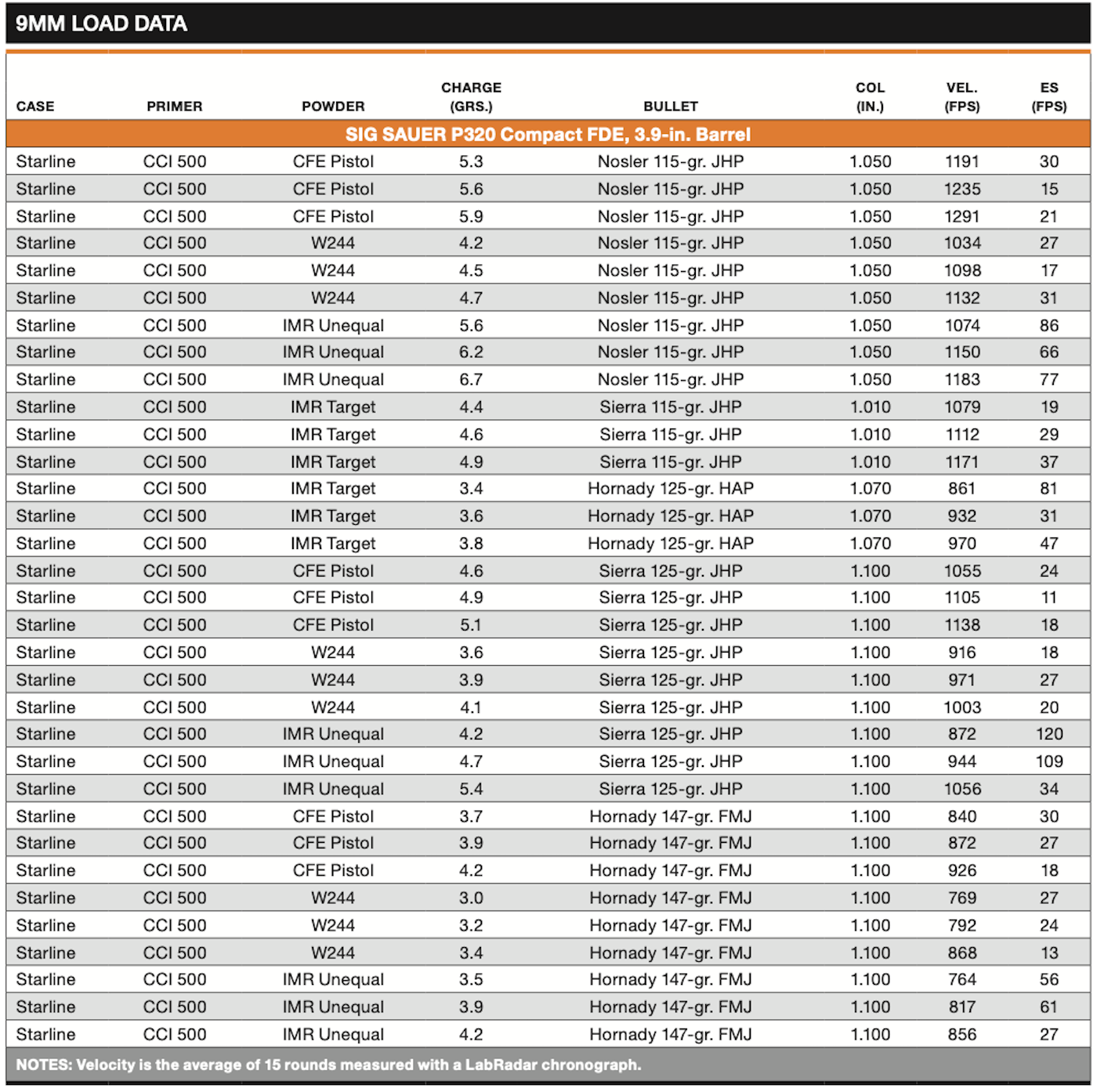
Handloading projects like this can take on monumental proportions, so I narrowed the field to a manageable number of components. Some of that was done based on experience, reputation, and what the U.S. Army shoots. I haven't even tried to count the number of bullets or powders that could be used for the 9mm, so common usage is probably the best starting point. For bullet weights, In the 9mm Luger, the most popular are 115, 124, 125, and 147 grains, and I chose bullets in those weights made by Hornady, Nosler, and Sierra.
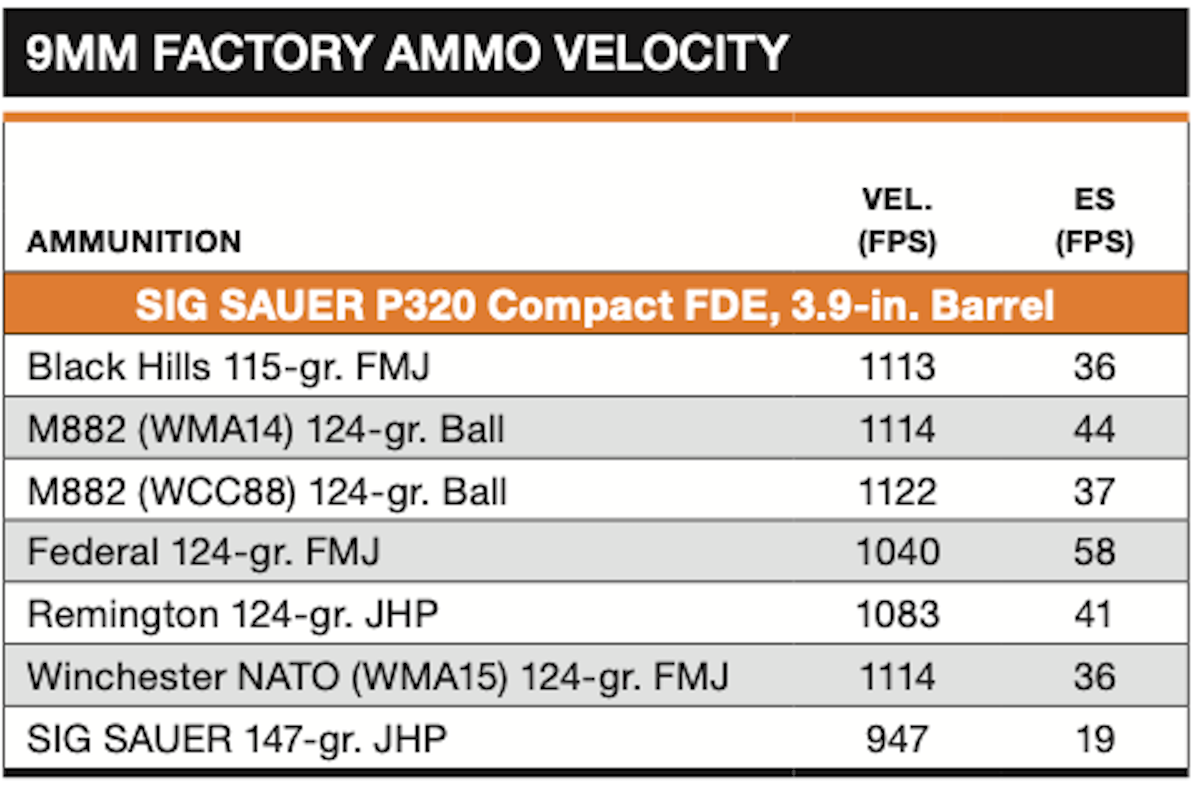
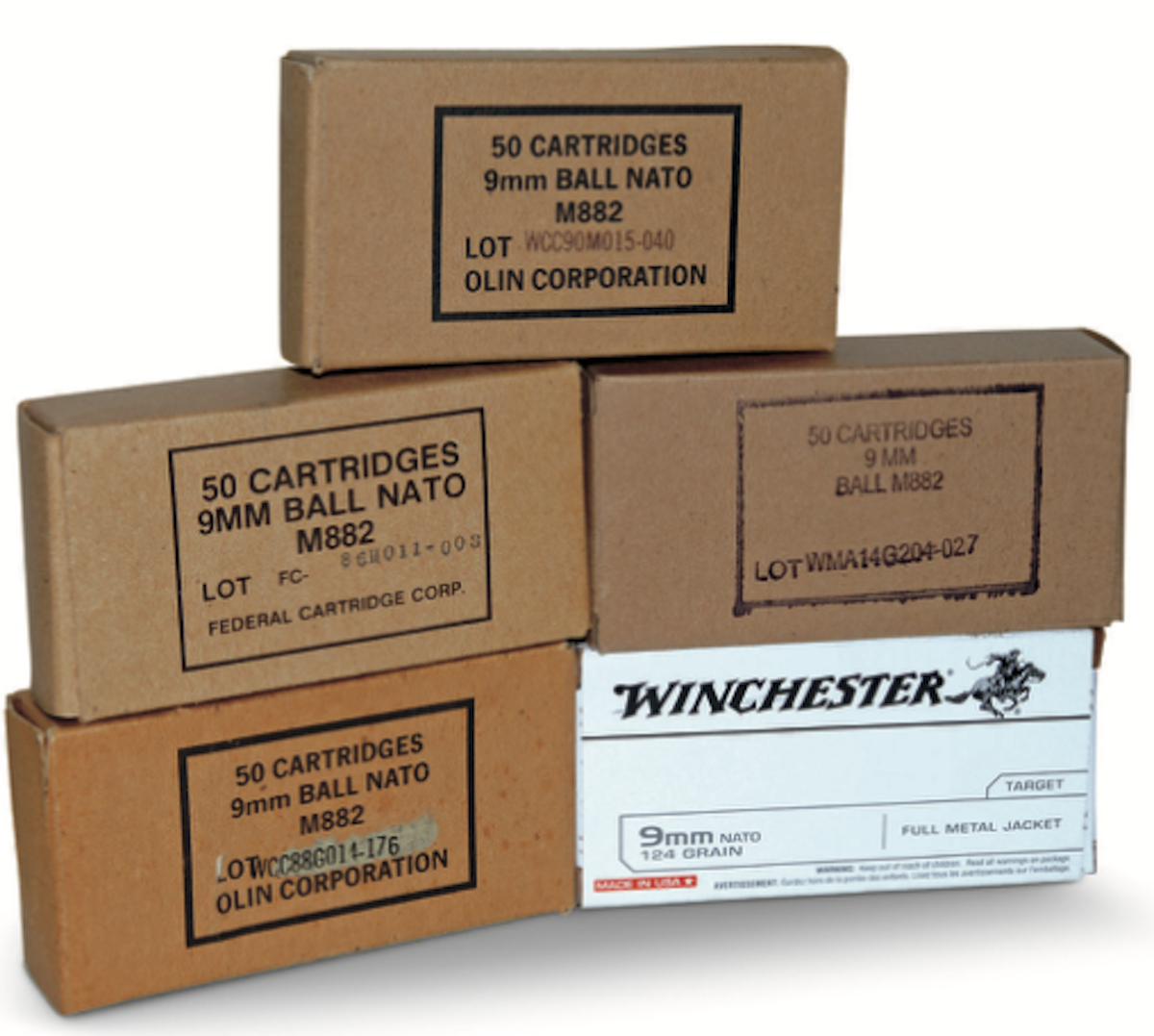
One of my goals in this endeavor was to duplicate the ballistics of the ammunition the military is using. I wanted that to be a baseline for this study. To that end, I obtained two lots of U.S. M882 Ball ammo. This ammo is loaded by Winchester, and the lots were headstamped WMA14 and WCC88. I also obtained some Winchester NATO ammunition (headstamped WMA15) that duplicates the M882 loading and is available to civilians. In addition, I fired Black Hills, Federal, Remington, and SIG factory ammunition to provide more of a baseline for my handloads.
An undertaking such as this requires our utmost attention to detail to ensure that we don't introduce errors in loading that might distort the results or our opinions. Whenever possible, it's best to start with new brass, and I used Starline brass for the 9mm handloads I put together. I used CCI Small Pistol primers for the APS system in all handloads for this report.
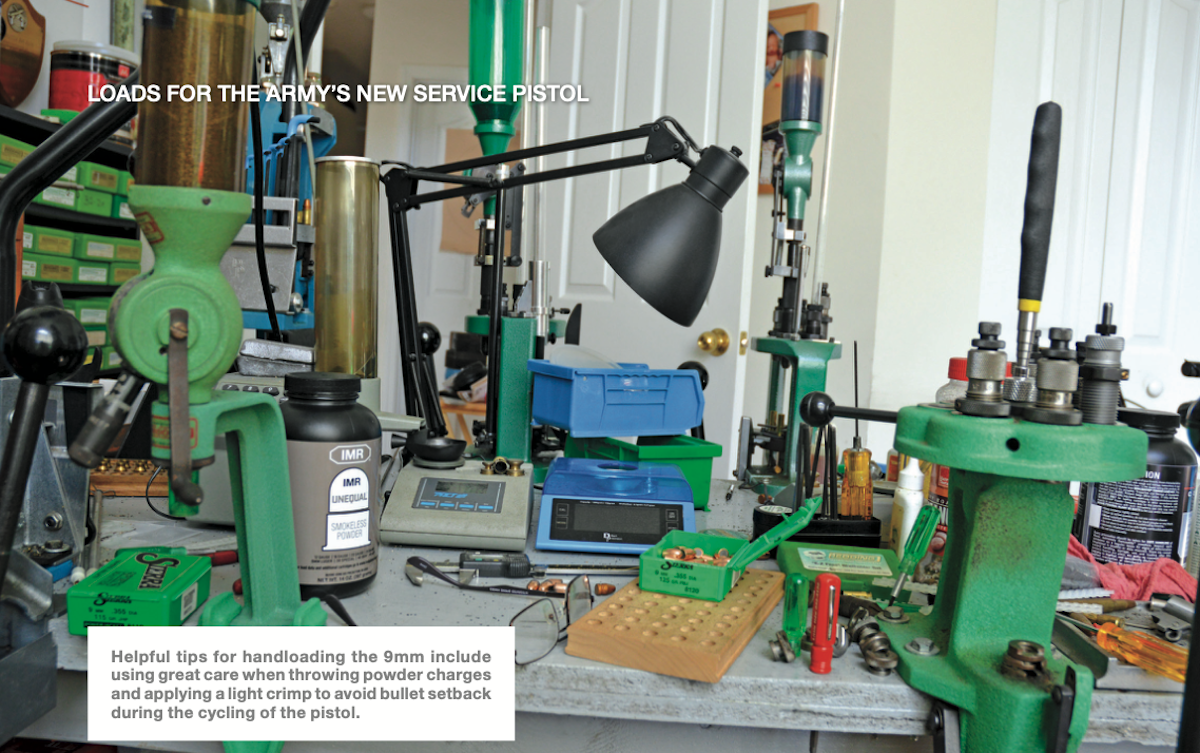
Weighing charges for small pistol cases is a wonderful way to waste time, and good powder measures should be able to hold a tolerance of plus or minus 0.1. But the operator must be very careful. Many studies show that how the user manipulates the powder measure influences the results. Consistent technique is vital.
Bullet seating and crimping can be done separately, but I like to adjust the die so that the case is almost touching the crimp ring and then adjust the seating depth 1/4 to 1/2 turn more to apply a light crimp. At the very least, any expansion applied for seating must be removed, and with pistol rounds, a light crimp is needed just to avoid bullet setback during the feeding cycle.
The Results
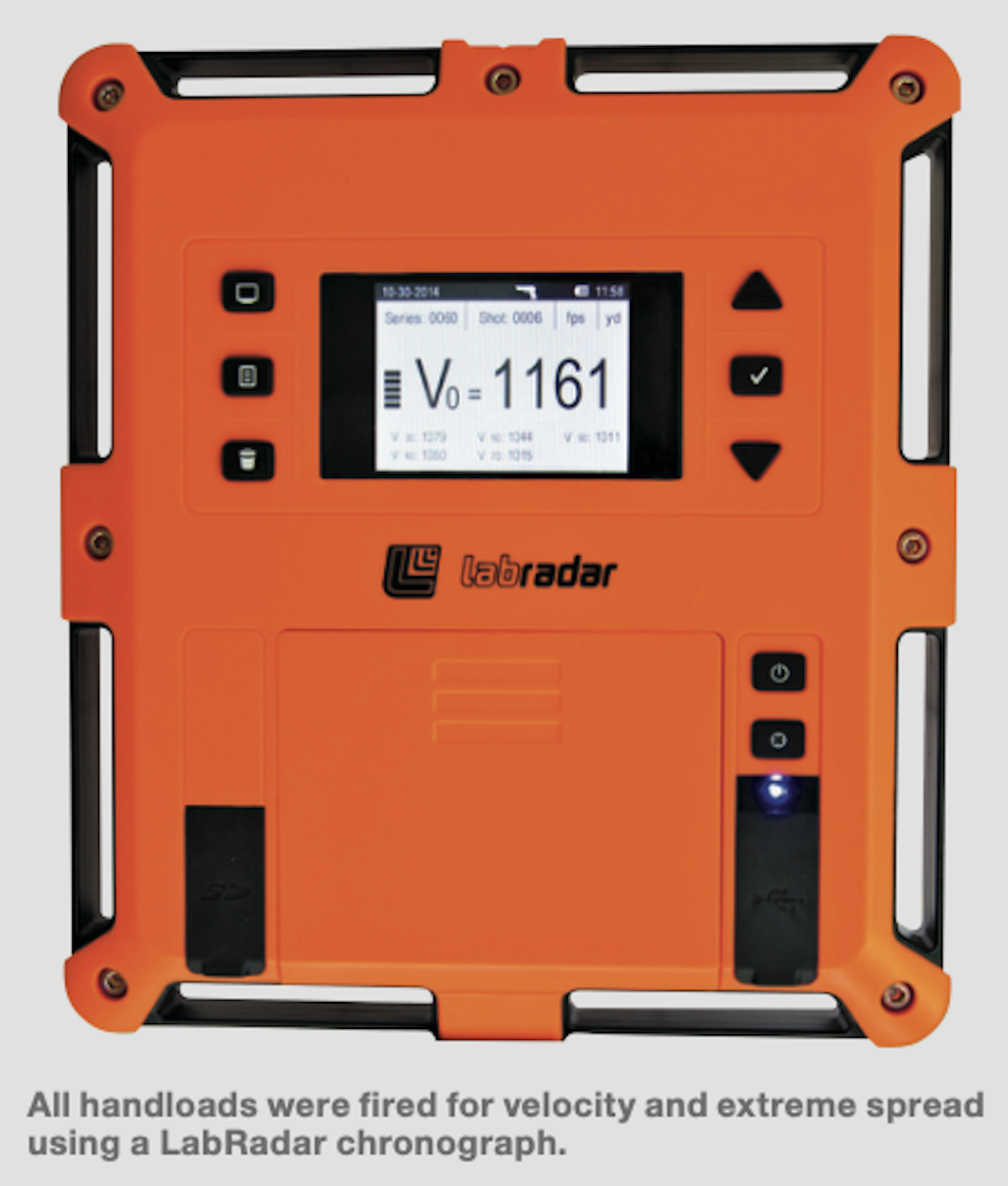
Throughout my tests, the pistol performed flawlessly and was a joy to shoot. As far as the handloads went, I've studied the data gathered from shooting more than 99 five-shot strings, and all except two loads produced double-digit extreme spreads. That is a clear indication the powders produce very consistent velocities. And while I didn't keep the accuracy results, I can tell you that all were well within the established standard for self-defense. All functioned perfectly in the P320. The new powders lived up to their claims, and all I can say is the new W244 and the not-so-old CFE Pistol seem to really love the 9mm. They produced extremely consistent velocity and low muzzle flash.