



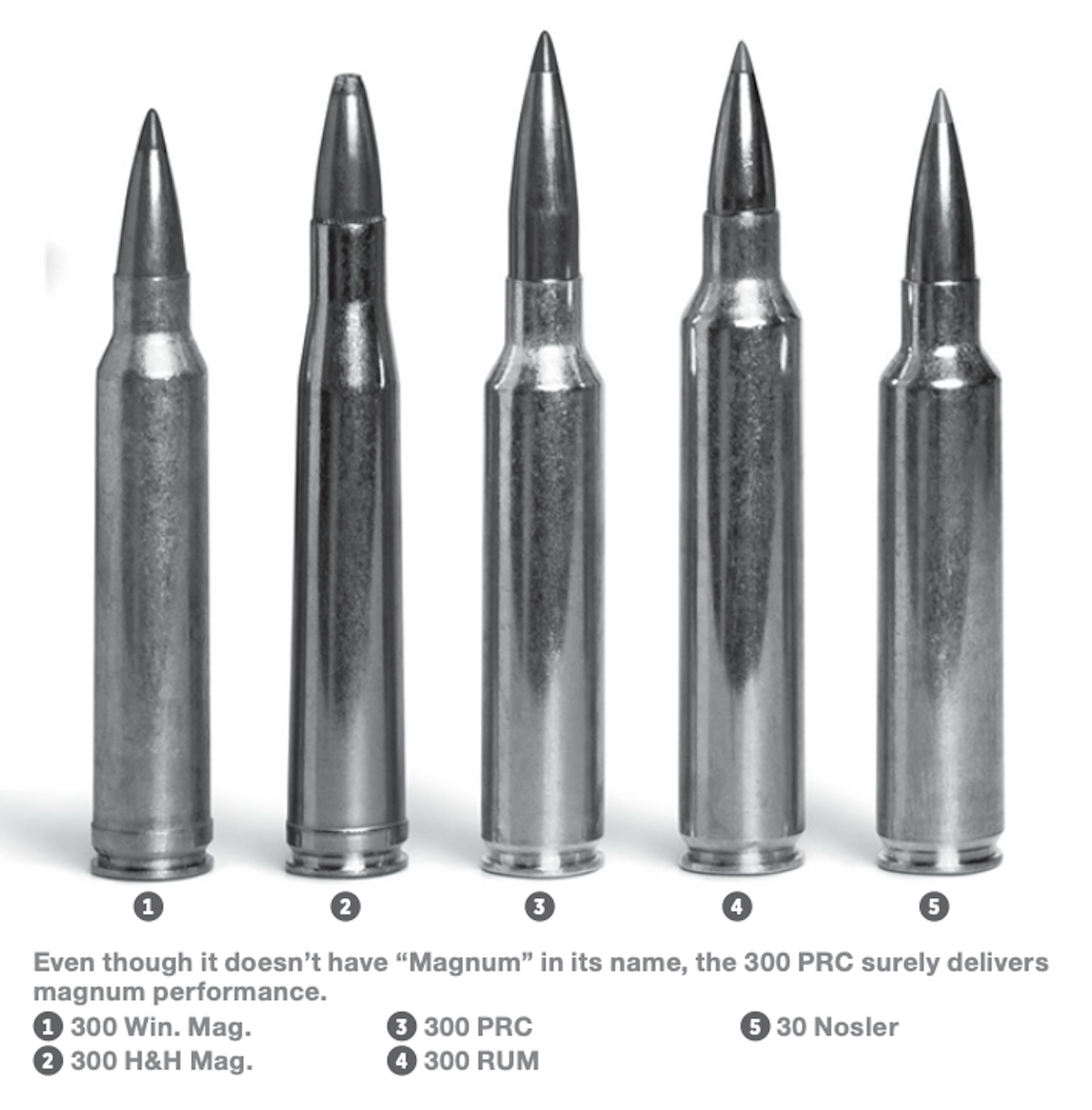
Even though it doesn’t have “Magnum” in its name, the new 300 PRC delivers magnum performance.
With a case capacity of 88 grains of water, Hornady’s recently unveiled 300 PRC (Precision Rifle Cartridge) is sized to launch heavy-for-caliber, 0.308-inch-diameter bullets pushing 3,000 fps in a 26-inch barrel. That kind of performance puts it in the “magnum” classification, even if it is missing the ubiquitous belted case head.
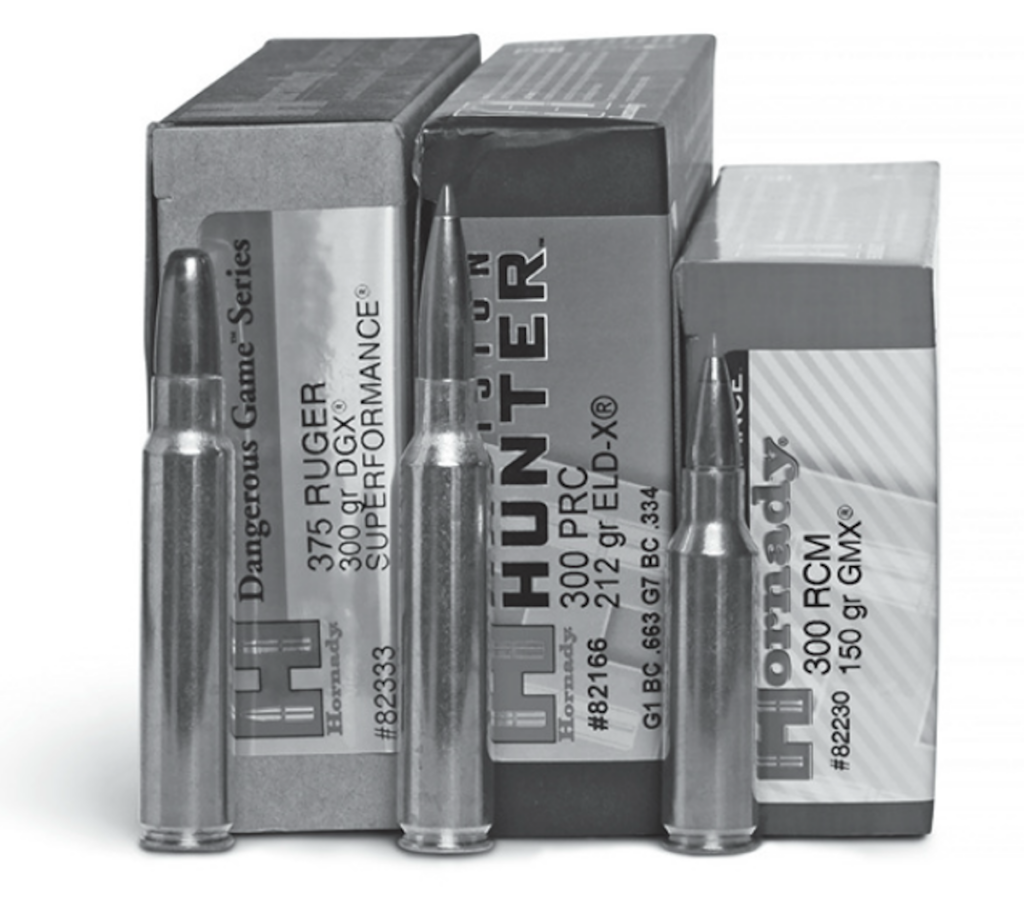
I met Joe Thielen, Hornady’s assistant director of engineering, several years ago at the SHOT Show. He and Dave Emary, Hornady’s former ballistics guru, led the company’s cartridge development programs. Three years ago, I visited Grand Island, Nebraska, to learn about Hornady’s new ELD bullets and shoot 1,000-yard steel targets on the company’s Doppler radar range. On the ride back to the office, Joe and I discussed a wildcat round he had developed based on the 375 Ruger case. He had simply necked it down, retaining the 30-degree shoulder angle and one-caliber neck length of the 300 RCM (Ruger Compact Magnum).
However, the unique feature of Joe’s wildcat was that he designed the cartridge chamber to accommodate sleek, heavy-for-caliber, high ballistic coefficient bullets seated to a cartridge overall length (COL) of up to 3.700 inches. That meant the bullet base stopped at or just below the case neck, maximizing case/propellant capacity. Joe has competed in 1,000-yard competitions with his 30-375R for several years and has had excellent results. The new 300 PRC is essentially a S.A.A.M.I.-certified twin of Joe’s proven wildcat round.
Up until the 1950s, there were only two so-called “magnum” rifle cartridges.
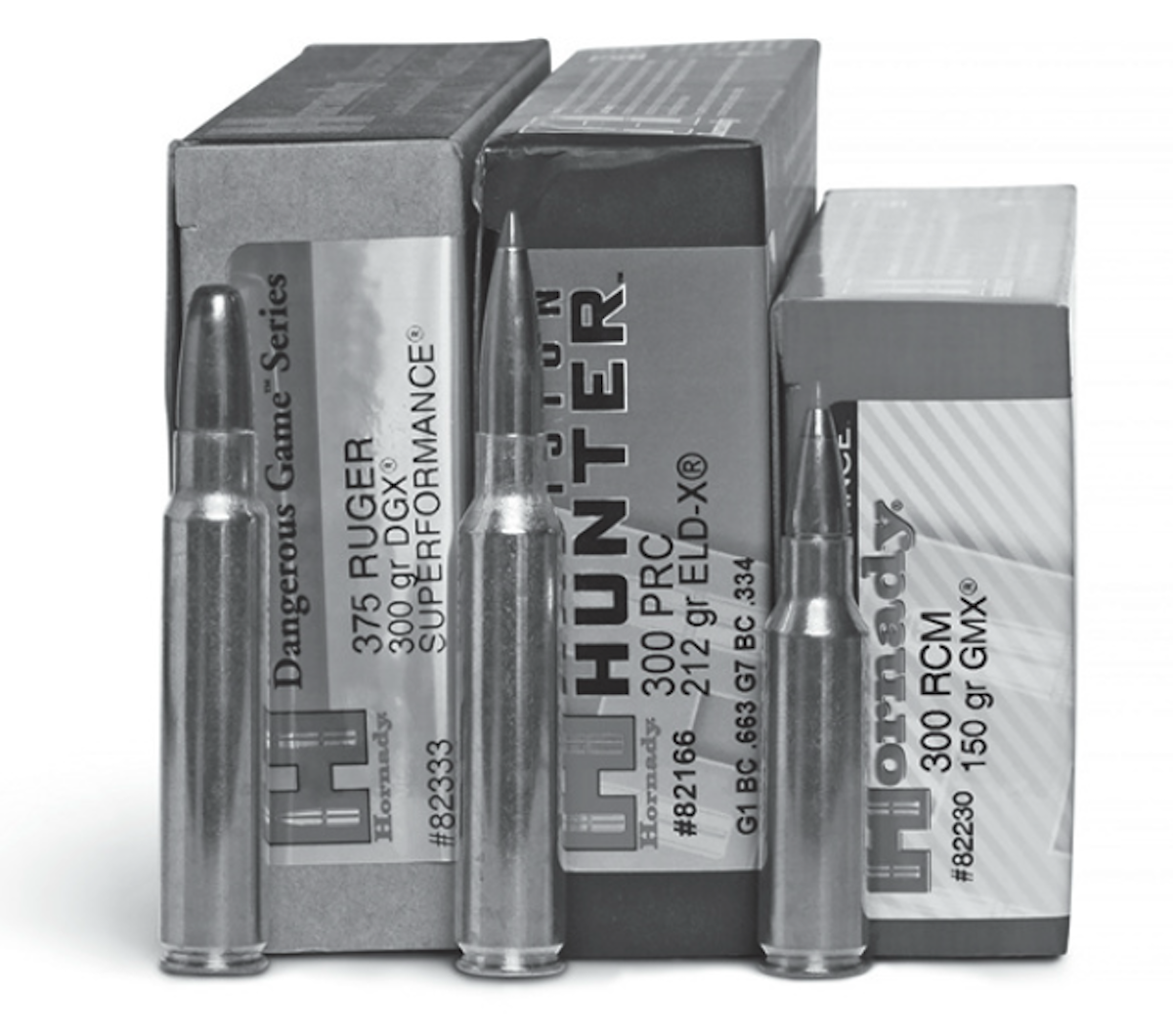
Both were developed by Holland & Holland, and they were readily identified by a prominent belt surrounding the case head. The 375 H&H Magnum debuted in 1912 and soon became the preferred medium-bore choice in the typical African arms battery. In 1925, the Super 30, or 300 H&H Magnum, followed. It gained the attention of U.S. riflemen 10 years later by winning the 1,000-yard Wimbledon Cup at Camp Perry. The classic Winchester Model 70 was introduced soon after, and rifles chambered for both H&H Magnums were offered.
It’s easy to assume the extra band of metal around the case head is required to contain the presumed extraordinary pressures of these two powerful magnums. The belt’s actual purpose is less dramatic and simply provides a positive headspace datum for these cartridge cases that are both severely tapered and nearly shoulderless.
Notwithstanding that fact, belted cartridge cases became the ubiquitous feature of every magnum rifle round introduced in the next 50 years, except for a couple of overly hyped .22-caliber cartridges. Roy Weatherby successfully adapted the H&H case to form his proprietary 257, 270, 7mm, 300, and 375 Magnum rounds during the mid-1940s to the early 1950s.
The first three were formed from shortened 300 H&H brass and blown out to increase case capacity. They featured a uniquely shaped bottleneck shoulder/neck configuration and sized to fit and feed from a standard 30-06-length action. The latter two were similarly fireformed but from full-length 300 and 375 H&H brass with the same matching shoulder radii at the junctions of the case shoulder and neck. Of course, like the original H&H rounds, rifles chambered for the 300 and 375 Weatherby rounds require a longer magnum-length action.
The 458, 264, and 338 Winchester Magnums debuted in the mid- to late-1950s. In 1962, the 308 Norma Magnum (essentially the 338 Winchester Magnum case necked down to .30 caliber) was introduced in the United States. At first, only cartridge cases were offered to custom riflemakers and handloaders. When the 300 Winchester Magnum ammo and factory rifles followed a year later, the 308 Norma Mag. had little hope of survival.
They all copied the H&H belted case rounds, but like the three smaller-caliber Weatherby rounds, the case/cartridge lengths were shortened to fit standard-length actions. Gun scribes of that period soon designated them as “short” magnums. They all had generous case capacities but retained the conventional sharp shoulders at the case and neck junctions.
So let’s consider the obvious question: why? Is there a niche for the 300 PRC to fill? Do we really need another .30-caliber rifle cartridge for hunting and target competition? For many years, knowledgeable riflemen believed the 30-06 Springfield was entirely adequate for hunting most domestic big game. They tuned-up a surplus 1903 Springfield or M1 Garand and dominated all rifle competitions. The 7.62 NATO round and its civilian clone, the 308 Winchester, added a third choice when the military switched from the Garand to the M14 in 1957.
By the mid-1960s, the 30-30, 300 Savage, 308 Win., 30-06, 300 H&H, 300 Win. Mag., and 300 Weatherby were the primary .30-caliber sporting cartridges. Only very peculiar rifle cranks felt constrained as to whether they could efficiently and humanely take any game animal they hunted with those seven factory rounds.
For nearly 40 years, the .30-caliber situation was unchanged except for the arrival of the 307 Winchester in 1982. A rimmed version of the 308 Win., it was chambered in beefed-up lever-action rifles but has achieved very limited interest.
However, long about Y2K, the dam burst. First came the 300 Remington Ultra Mag (RUM). The 300 Winchester Short Mag (WSM) and 300 Remington Short Action Ultra Mag (RSAUM) soon followed. All three new rounds dispensed with the signature belted case head. Talking about filling in the niches, we now have the 30 Thompson Center, 308 Marlin Express, 300 AAC Blackout, 300 RCM, 30 Nosler, and 30-378 Weatherby.
Of course, the Europeans also have several .30-caliber cartridges, including the 303 British, 7.5x55 Swiss, 7.63x53 Belgian Mauser, 7.62x39 Russian, and the 7.62x54R Russian. The 300 Norma Mag., formed by necking down the 338 Norma Magnum case, is another recent option developed for military applications. All told, there’s a plethora of viable domestic and foreign .30-caliber options for shooters to choose from.
So the obvious answer to whether there’s a niche to be filled is: “Not so you can tell!” However, the question as to whether we need another .30-caliber round fortunately remains quite subjective. My wife routinely poses the “need” inquiry when I’m about to procure yet another firearm. Liberal politicians also often lace their insightful, if uninformed, opinions on new gun-control measures that invariably would constrain our perceived needs.
In either case, my needs are not anyone’s business as long as I stay within my financial and legal responsibilities. To me that simply means if I want it and can afford it, the 2nd Amendment in the Bill of Rights guarantees I can have it!
300 PRC Special Features

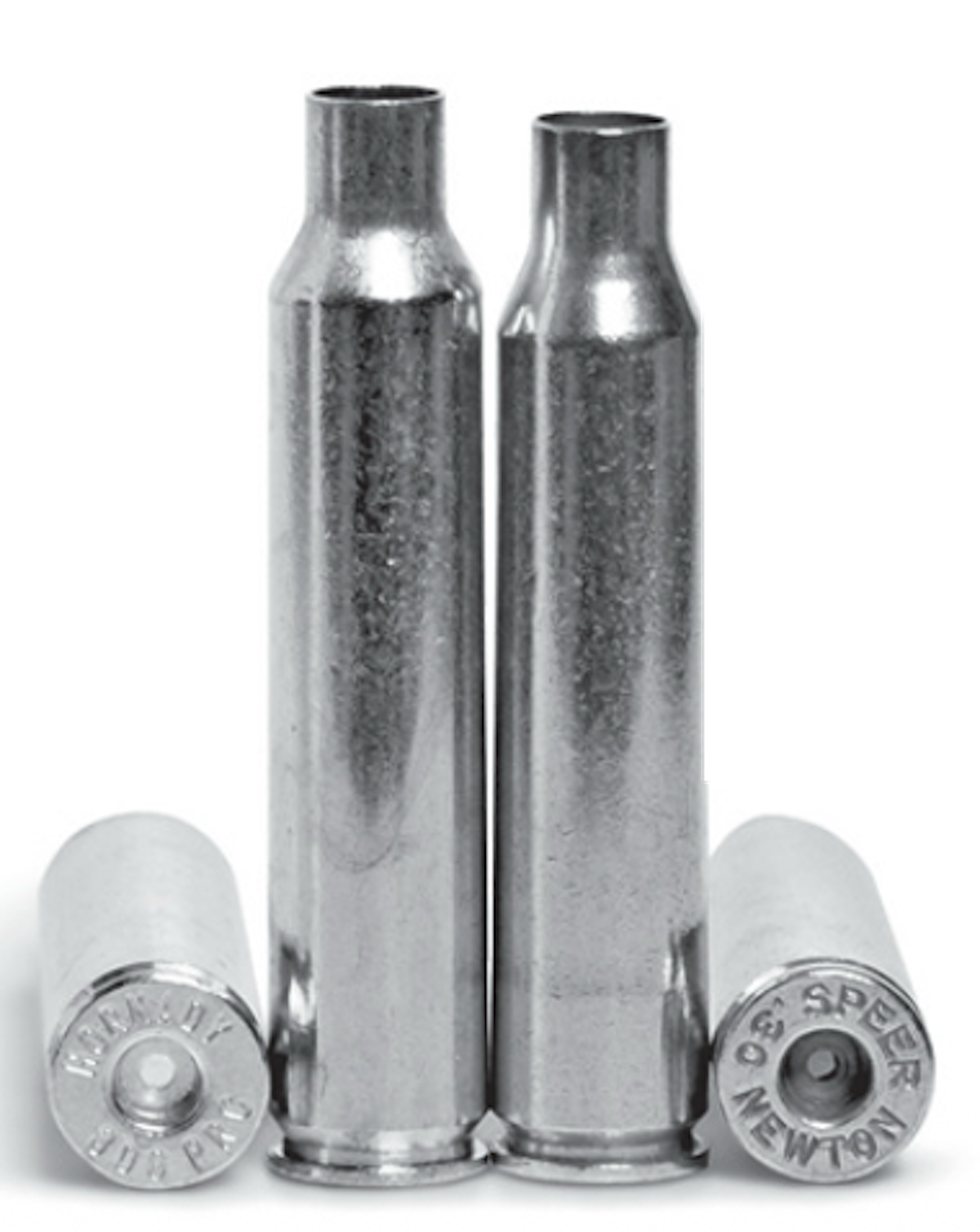
Let’s look at the 300 PRC design features. First, the new 300 PRC is pretty darn close to the century-old 30 Newton. The 300 PRC’s beltless case head retains the typical magnum cartridge rim and belt diameter (0.532 inch). The case length is only a bit longer (0.040 inch) than the 270 Winchester. The beltless case tapers to 0.515 inch in diameter before the 30-degree shoulder angle. As stated earlier, the 300 PRC was formed by necking down the 375 Ruger case and pushing the shoulder back nearly 0.0625 inch. Neck length is nominally one bullet diameter.
However, this is where the 300 PRC design differs from most other cartridges. Like with the popular 6.5 Creedmoor and 6.5 PRC, Hornady chose to shorten the case length and seat the bullet “long” so the flat base or top of the boattail is closely aligned with the bottom of the case neck. In other words, the bullet doesn’t intrude into the case volume, so there’s room for more powder.
The S.A.A.M.I. chamber drawing shown on page 52 shows how this was accomplished. The throat in front of the neck has nearly a quarter-inch of freebore that’s only 0.0008 inch larger than the nominal diameter of a .30-caliber bullet. The leade angle is also a generous 1.5 degrees. Regardless of how you seat the bullet, if the round will chamber, the effective total indicated runout (TIR) will be nil, meaning the bullet will be perfectly aligned to engage the rifling.
The S.A.A.M.I. maximum COL for the 300 PRC is 3.700 inches. Almost every other magnum rifle cartridge based on the full-length 300 H&H has a maximum COL of 3.600 inches. Hence the dearth of “standard” factory actions/rifles that can accommodate this round.
Reloading Tips & Techniques
Preparing the cases and assembling 300 PRC handloads is no different than what is typically required for any other rimless, bottleneck rifle cartridge. You start with carefully inspecting both new and fired brass before doing anything else. I’ve discovered split necks, creased shoulders, out-of-round case mouths, and other defects in bulk-packed new brass. Fired brass can also exhibit split necks, insipient or partial case head separations, and loose or otherwise defective primer pockets. They can also exceed maximum case length.
While new cases are relatively easy to inspect, fired brass should be cleaned in dry or wet media to ensure you don’t miss something. You can choose to punch out the primers with a dedicated decapping die before tumbling the cases. Although many reloaders skip this step, I always clean and uniform the primer pockets.
Next comes the sizing process. You can full-length or neck-size-only if you’re reloading for the same rifle. Since I intended to fire my test loads in two rifles, I chose to full-length size every case. I usually use Redding’s Imperial lube and apply it lightly with my fingertips before sizing. Be sure to use a case neck brush to lube/clean inside the case mouth.
Hornady’s Custom precision-machined full-length sizer die easily reformed each fired case. There are also premium die sets with interchangeable neck-sizing bushings made in several different diameters. You must select the bushing that matches the case neck thickness so the sizing step reduces the neck diameter just enough to ensure adequate bullet retention.
Competition shooters often also turn each case neck to a uniform wall thickness. This requires special equipment and procedures to ensure the desired results are achieved, but if you use good-quality brass like Hornady makes, this extra step is often not necessary.
After resizing, check case length and trim if required to the specified recommended length. Always deburr and chamfer the case mouths so you avoid damaging the bullet later during seating. Because the 300 PRC has a nominal one-bullet-diameter neck length, crimping the bullets in place is not necessary or recommended.
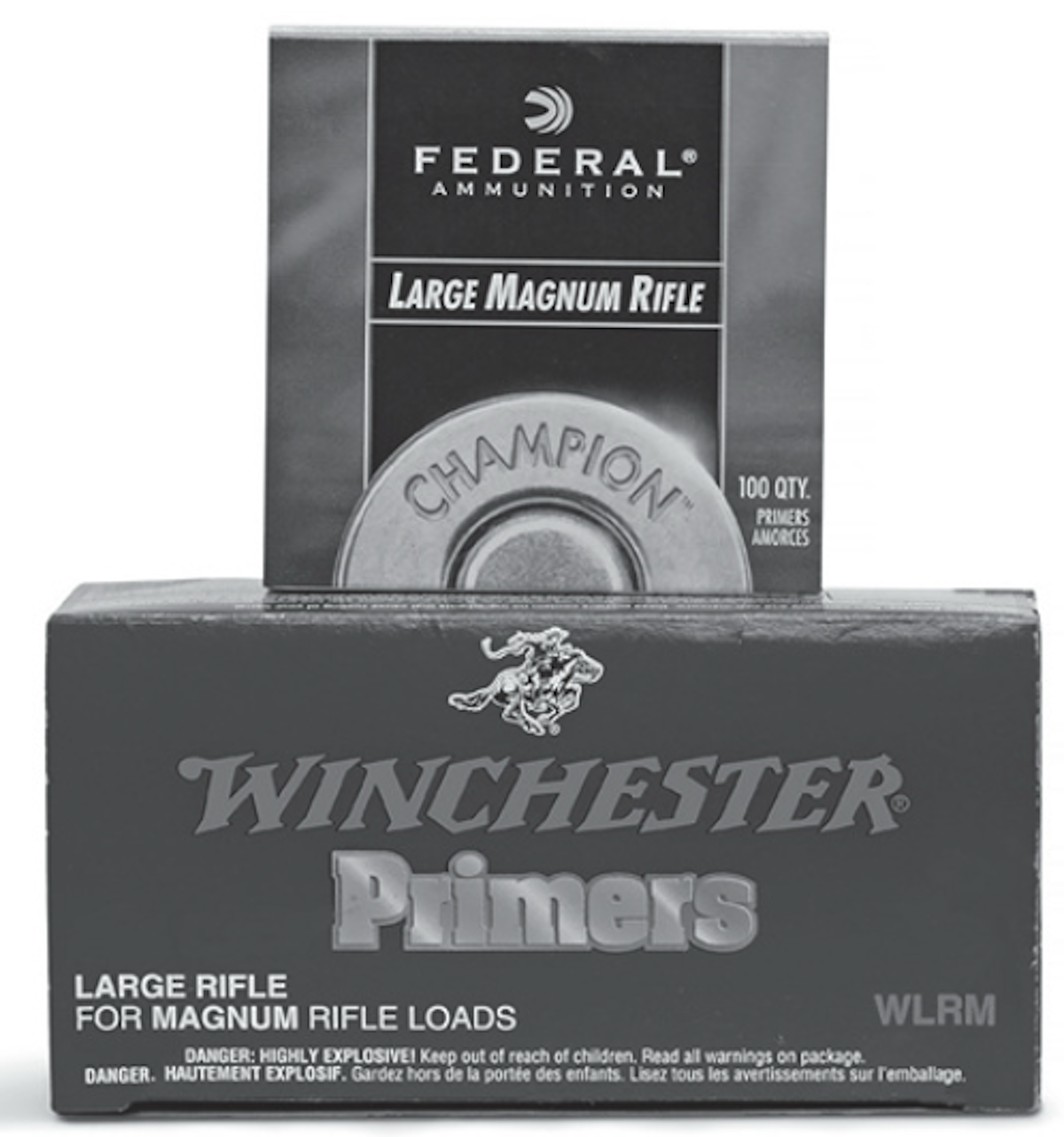
Magnum rifle primers are recommended in 300 PRC handloads to ensure igniting the generous (up to 80+ grains) charge of single-base or double-base powder. Federal 215 and Winchester Large Rifle Magnum primers will provide reliable and consistent ignition of the relatively slow-burn-rate propellants suitable for this cartridge.
Next is the most important consideration before you continue the reloading process. What is the purpose of the ammo you’re about to assemble? If you’re reloading to shoot matches, you’ll not likely select Hornady GMX, Barnes TTSX, Nosler AccuBond, Speer Impact, or Swift Scirocco II bullets. They are, of course, precisely made and surely accurate enough to consistently strike the kill zone when hunting. In fact, their primary purpose is effective terminal ballistic performance up close and out to extreme range.
Bullets designed for competition must deliver optimal external ballistics—flat trajectory, minimum wind drift, and ultimate accuracy. That means they’re precisely made and, as closely as possible, exactly alike. The bullet’s shape and construction are designed to provide and retain the highest ballistic coefficient at both muzzle and downrange velocities. Hornady ELD Match and A-Tip, Sierra Tipped MatchKing (TMK), Berger VLD Target, Nosler RDF Long Range, and other similar bullets are designed to do just that with sub-MOA or better accuracy.
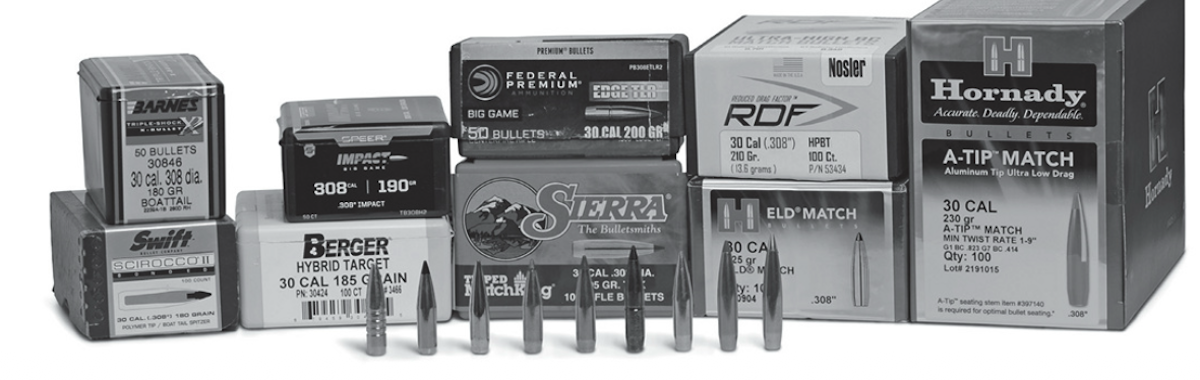
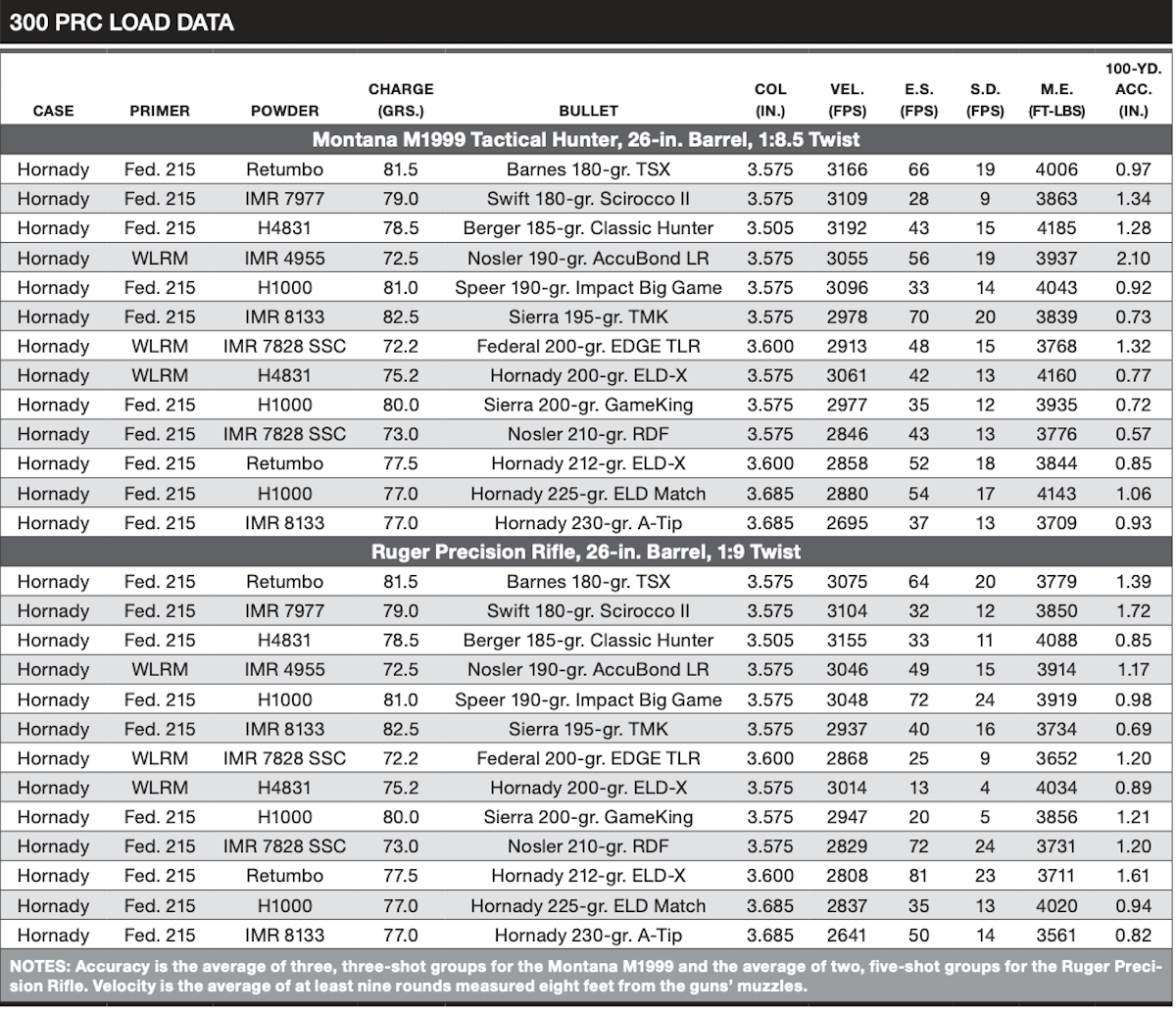
I included both competition and hunting bullets in my handloads, and I used every Hodgdon and IMR propellant in the appropriate burn rate range, from H4831 (fastest) to IMR 8133 (slowest). Most of the listed test loads are near-maximum recommended charges, so I carefully weighed every one. The results are listed in the chart on page 53.
Before I get to them, however, I’d like to say a few words about the rifles I used. When I was issued this assignment, I found myself in a similar situation John Barsness was in last year when he wrote up the Hornady 6.5 PRC for last year’s Annual Manual. There were no factory options, so he had a custom rifle built. Pursuing the same plan of action, I ordered a Montana Rifle Co. M1999 from my friend Ron Petty. The action is essentially a Pre-’64 Winchester Model 70 with a Sako-style bolt release.
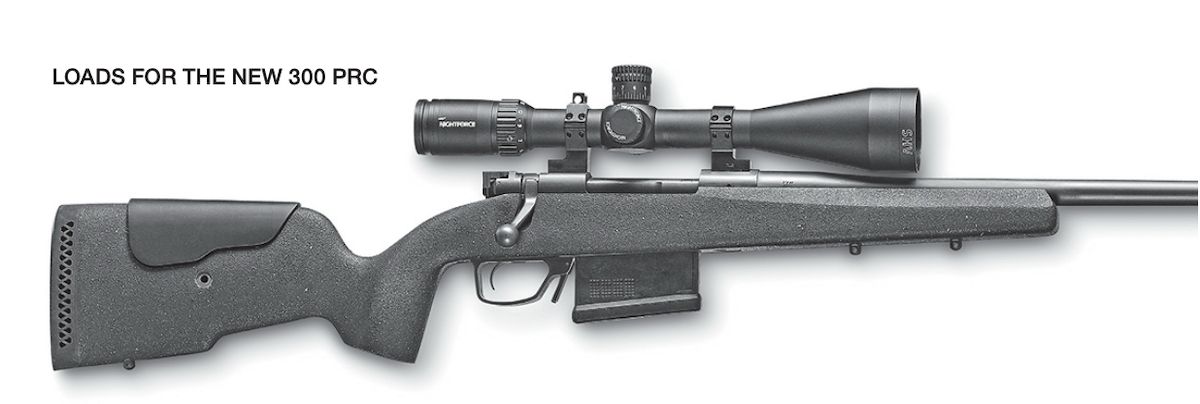
Montana Rifle Co. borrowed a chambering reamer from Joe Thielen, and six weeks later I received a modified Xtreme Tactical Hunter model with a detachable Magpul, five-round, vertical stack magazine. The straight-grip composite stock features an adjustable cheekrest. I installed a Nightforce SHV 5-20X 56mm scope in Talley mounts. The rifle/scope combo weighs about 9.75 pounds.
The 26-inch, #3 medium sporter-weight barrel is free-floating and fitted with a very effective muzzle brake. The magazine is sized for the 300 Win. Mag. which, unfortunately, is too short for the two Hornady factory loads. It is also too narrow internally to handle more than two 300 PRC rounds with the COL no longer than 3.540 inches.
A few weeks after I got my custom rifle, Ruger came out with its Magnum Precision Rifle chambered in 300 PRC, so I immediately called Mark Gurney, director of product development, and asked specifically about the rifle’s magazine. He assured me it would accommodate Hornady’s factory ammo and any handload with a COL up to 3.850 inches.
I thought, “Why not include both rifles and double the fun!”
The Ruger Magnum Precision Rifle features a tactical-style chassis with a folding, fully adjustable buttstock and an 18-inch Magpul M-LOK compatible free-float handguard. The stout (0.875-inch muzzle diameter) 26-inch barrel is fitted with what appears to be a scaled-down howitzer muzzle brake. I mounted a Weaver tactical 5-20X 56mm tactical optic in a Weaver AR-style mount. The Ruger rig weighs nearly twice as much as the Montana rifle/scope outfit.
The M1999’s Model 70-style trigger pull felt a bit heavy, so my gunsmith adjusted it to release at 3 pounds. The Ruger Precision’s trigger pull consistently measured 2.25 pounds, so I left it alone.
300 PRC Performance
After cleaning the rifles, I fired a box of both types of Hornady factory-loaded ammo in each rifle to sight-in the optics and to get acquainted with the guns and the cartridge. I quickly discovered that trying to fire more than three rounds at a time in the Montana’s medium-sporter barrel was futile. However, the Ruger’s extra-heavy barrel (it reminds me of a car’s axle) easily tolerated firing five rounds about as fast as I could cycle the action and realign the reticle on target. Based on that shooting, I elected to load a box of each test load and fire three, three-shot groups in the Montana rifle and two, five-shot groups in the Ruger rifle for record.
Of the 13 handloads I tested, the Sierra 195-grain TMK bullets ran best in the Ruger Precision Rifle while the Nosler 210-grain RDF scored even better in the Montana Xtreme Tactical Hunter.
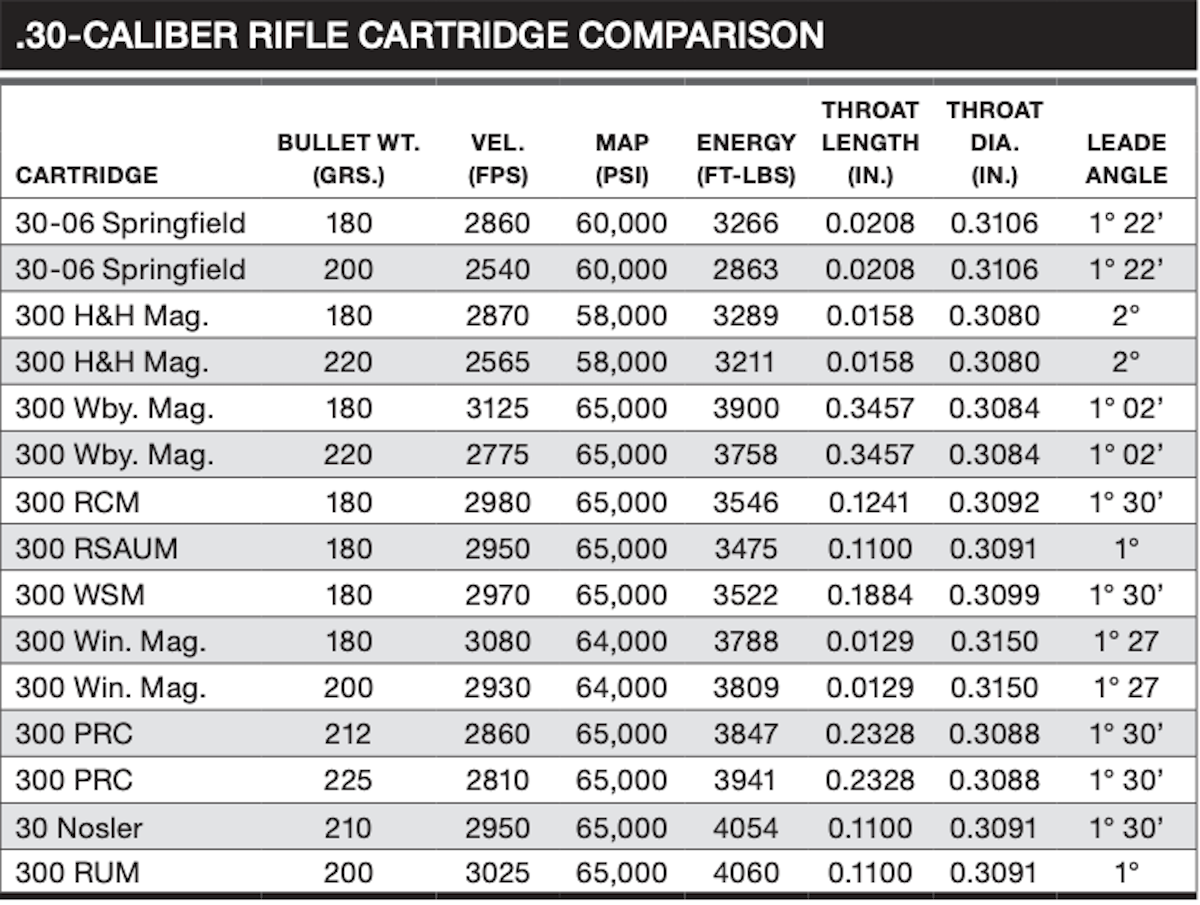
It’s a given that the 300 Win. Mag. is recognized as the most popular .30-caliber magnum rifle cartridge. No doubt, its ballistic performance stands tall with all of them. However, it was introduced nearly 60 years ago, and there have been myriad new developments in munitions technology since then, a few of which could be implemented to improve the 300 Win. Mag.
The obvious two are doing away with the belt and the noticeably short neck. Eliminating the belt, increasing the case head diameter to at least the same size as a standard magnum rim diameter, and reducing body taper to maximize case capacity are factors that significantly increase the ballistic performance of modern .30-caliber magnums.
However, the real difference in the 300 PRC is the chamber throat criteria so long, sleek, heavy bullets with maximum ballistic coefficients can be seated to extended COLs. They may start out a little slower, but at extreme range, velocities soon catch up, and they fly flatter and drift less than the others.
The 300 RUM and 30 Nosler are both based on the 404 Jeffery parent case. They also meet the criteria mentioned, and both have at least one-caliber necks. The 300 RUM’s COL requires a magnum-length action, while the 30 Nosler will fit in a standard 30-06-length action. However, they both require seating heavy-for-caliber bullets rather deeply, thereby reducing effective case capacity.
I have rifles chambered for both rounds and have some knowledge of their ballistic performance. A favorite 300 RUM handload comprises 95 grains of powder under a 180-grain bullet. That load fired in my McMillan-stocked Savage bolt action will routinely put three bullets into a half-inch cluster if I do my part. My Steyr Pro Hunter 300 Win. Mag. is not quite as accurate, but 0.75-inch groups are the norm.
The 300 PRC will easily match, and usually exceed, the 300 Win. Mag.’s ballistics—especially when comparing 200-grain and heavier bullets. So, on paper, it clearly wins the contest. However, considering the number of 300 Win. Mag. rifles out there, the 300 PRC has little chance of supplanting the well-established cartridge.
Hey, but that’s why folks pick a Ford, a Chevy, a GMC, or a Ram truck even though they’ll all get you from point A to point B. The same analogy applies to rifle/cartridge selection. You can choose your favorite.
The 300 PRC will easily match, and usually exceed, the 300 Win. Mag.’s ballistics—especially when comparing 200-grain and heavier bullets.
Load Data Charts