




I got into benchrest shooting during the 1970s, soon after the 6mm PPC started winning all the matches. I learned many important things from competitors who had already been in the game for quite a few years and who were gracious enough to share their knowledge. One bit of information was how to deal with wind and mirage. Something else I learned was what had to be done when building a rifle to make it accurate enough to consistently shoot uncommonly small groups. Just as important as everything else were the steps that had to be taken in order to load ammunition capable of equaling the accuracy of an extremely accurate rifle. Last but not least in importance was the ability to fine-tune a rifle to its true accuracy potential.
When handloading for a super-accurate rifle, achieving half-minute-of-angle accuracy comes easily with nothing more than standard reloading tools and unmodified, off-the-shelf components. From that point on, though, improvements in accuracy come slowly and usually in very small increments. Some things we do will prove to be more important than others, but each and every one can contribute to minor improvements in group size. A bit here and a bit there, and groups smaller than you thought possible will eventually begin to appear on your targets. Some rifles respond nicely to some things we do, while others appear not to notice. Try hard enough with the right equipment and suddenly you are approaching—or are perhaps even inside—the elusive quarter-minute barrier.
When asked to write an article on precision loading the 6mm Creedmoor and 6.5 Creedmoor cartridges, I immediately knew which of my rifles was up to the task. It was built by Lex Webernick of Rifles Inc. on a blueprinted Remington 700 action, and it was his idea of the perfect rifle for sitting at a portable benchrest and surprising rockchucks at extremely long distances. With a Nightforce 12-42X 56mm scope in Talley 30mm tactical rings and a 20-MOA Picatinny rail, it weighs a "feathery" 20.5 pounds. The rifle has a McMillan benchrest stock and a Jewell 2-ounce trigger. Its original 28-inch Shilen barrel measures an inch in diameter at the muzzle, and it is chambered for the old 6mm-284 wildcat. When the barrel was new, it consistently shot five bullets inside 0.300 inch, and occasional groups in the low 0.2s and high 0.1s never surprised me. I eventually converted the outfit into a switch-barrel rifle with barrels in various calibers, and the two Creedmoor chamberings are a couple of its latest additions.
The Bartlein barrels in 6mm Creedmoor and 6.5 Creedmoor are also 28 inches long, but to keep total weight of the rifle just under 17 pounds, they are the lighter Heavy Varmint contour.
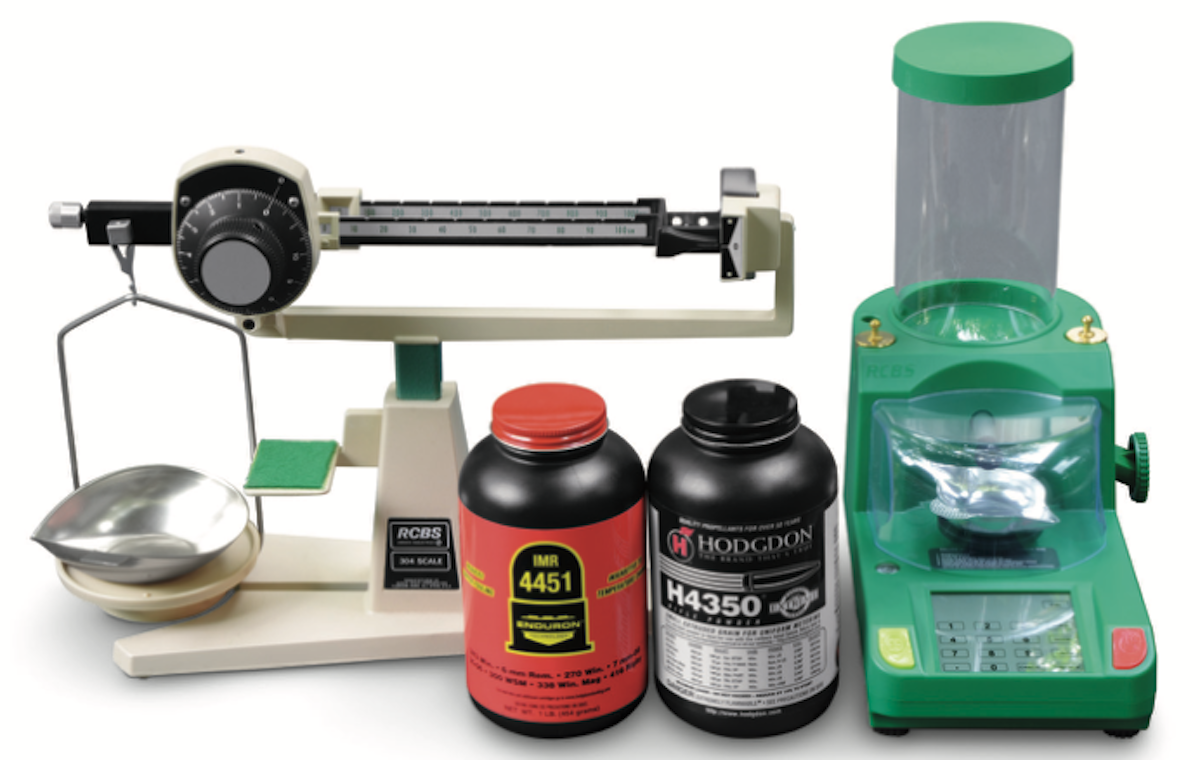
The ideal powder for the two Creedmoor cartridges fills the case to the base of a seated bullet with a bit of compaction and no unfilled space. It reduces bullet jacket fouling in all barrels, and it virtually eliminates it in a barrel with an extremely smooth bore. The ideal propellant is also less sensitive to extremes in ambient temperature than many other powders. All of those characteristics are great contributors to achieving velocity spreads inside 10 fps, which is absolutely essential for minimal vertical shot distribution at extremely long range. The fact that H4350 meets those criteria explains why it is probably the single most popular powder among competitors who shoot the Creedmoor pair.
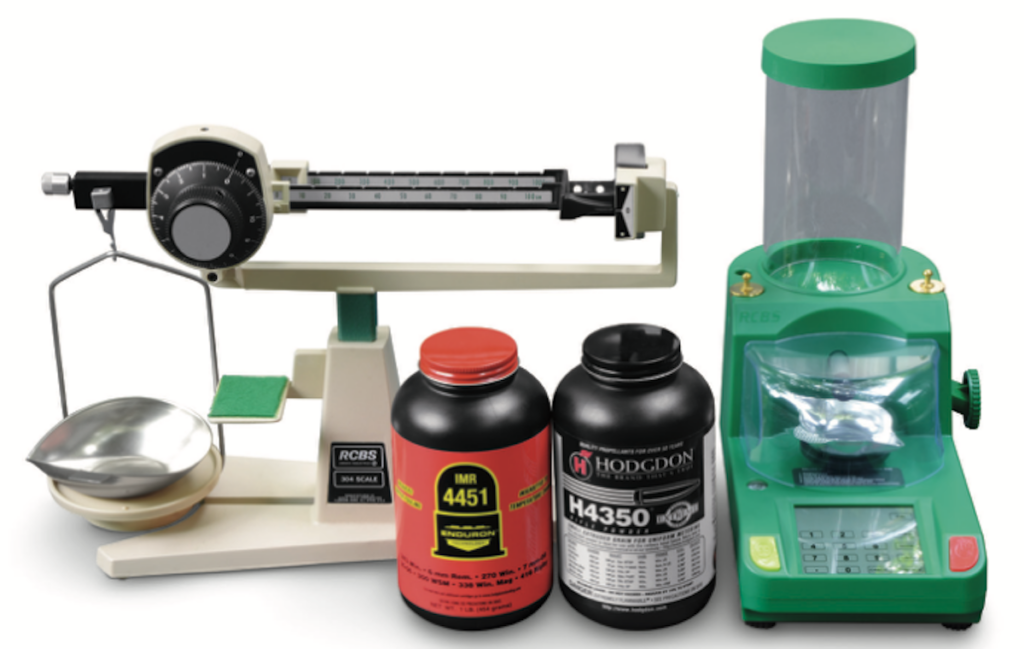
But IMR 4451 is nipping at its heels. While load data between the two powders is not interchangeable, their burn rates are quite close, and their bulk densities are virtually the same. Like H4350, IMR 4451 also reduces bullet jacket fouling and is minimally sensitive to changes in temperature. If a rifle fails to deliver top accuracy with one of those, it probably won't do so with any propellant. An RCBS ChargeMaster Lite dispenses my powder charges, and each is checked on a laboratory-grade 304 scale that was made by Ohaus for RCBS during the 1980s.
The inside of the case neck. The easiest way to achieve such precision is to run each case through a Sinclair expander die. Its 7/8-14 threads work with any reloading press. And don't forget to lightly lube the turner mandrel and outside of the case neck with Imperial sizing die wax prior to turning each case.
Fit between case and chamber is closest after the case has been fired, and I prefer to leave it that way as long as possible by neck sizing only with a Redding Competition die with interchangeable bushings of various sizes. When cases are new, I start with a bushing 0.001 inch smaller than the neck diameter of the case with bullet seated, and if velocity spread is not as low as I think it should be, I try 0.002- and 0.003-inch bushings. After a number of firings, a slight resistance to bolt closure tells me that putting the squeeze on cases is needed, and for that I use a Redding body die that full-length resizes and bumps back the shoulder of the case without disturbing its neck. Moving the shoulder back 0.002 inch is usually plenty, and caliper-attached tools like the RCBS Precision Mic, Hornady's Headspace Comparator, the Instant Headspace Indicator from Redding, and Sinclair's Bump Gauge make doing so easy. If you'd rather not use one of those, a set of Shoulder Bump Shellholders from Redding vary 0.002 inch in thickness, and they work well.
Some believe in weight-sorting cases, while others consider it to be a waste of time. As popular opinion among the former group has it, a heavier case has less capacity than a lighter case due to more material retained during the forming process. To see if weight differences are accurate indications of capacity differences, I weighed each of a batch of fired cases and then weighed each of them again when filled to the brim with water. Cases weighing precisely the same when empty varied in weight up to a full grain when filled with water. That makes capacity-sorting much more beneficial. Water can be used, and after the cases are emptied, they are placed in an electric dryer that most of us who use a sonic cleaner already have. For those who prefer to capacity-sort primed virgin brass, using an extremely dense powder, such as BLC-(2) instead of water, works equally well. I use an MTM Universal Powder Funnel Set with its 4-inch drop tube to fill a case to overflow with powder and then slide the mouth of the funnel across the mouth of the case to scrape the overflow into a small container.
Repeatedly firing and resizing the neck of a case work-hardens it, and the harder it becomes, the more neck tension will vary among a batch of cases. Variations in the amount of tension applied to bullets will cause velocity spread to increase. Annealing the necks of cases is the answer, and some competitors do so after each firing. Machines, such as the Annealeez and Anneal-Rite, use propane torches, while the Annealing Made Perfect unit from Brownells heats case necks by electrical induction. My home-built process works as well but is a bit slower. Regardless of which method is used, it is important to remember that allowing anything but the neck of a case to become extremely hot is an easy way to blow a rifle to smithereens.
All the effort involved in achieving perfect concentricity in a rifle and its cases is wasted if bullets are seated out of alignment with the bore of the barrel. The goal to shoot for is less than 0.002 inch of runout on loaded rounds, and less than 0.001 inch is possible. This can only be accomplished on a consistent basis with precision bullet-seating dies. The Wilson inline die from Brownells is quite good, and most short-range benchrest shooters use it or something similar. But it is used with an arbor press, and that makes it slower than dies used in a bench press. Among those, the Redding Competition Seating dies I am using with the two Creedmoor cartridges are working very well for me. Dies of similar design are available from Forster, RCBS, and Hornady. The Corbin CSP-1 bullet-swaging press can be used to load ammunition, and it is far more precisely built than a standard single-stage press—as it should be at $700. Precision ammo loaded on mine has less runout, and that makes it a bargain.
Hollowpoint bullets of the same caliber and weight from the same company vary slightly in length, and that makes recording overall cartridge length less accurate than recording a measurement from the head of the cartridge case to an arbitrary point on the ogive of the bullet (CHTO). Hornady's Lock-N-Load bullet comparator attached to a digital caliper handles that job nicely.
Universal bullet-seating stems that come in dies from various companies work fine with a variety of bullet profiles, but some are unsuitable for use with match bullets having extremely long ogives. Redding began offering stems shaped specifically for that type of bullet not long after ballistician Bill Davis came up with the VLD (very low drag) design. Hornady offers stems for ELD Match bullets of various calibers, and they are also compatible with the A-Max design, as well as some of the match bullets from other companies. RCBS and Forster offer special stems on request. If your seater die is leaving a ring on bullets, 400-grit emery cloth on the end of a sharpened wooden pencil will smooth the transition edge of its stem.
Due to slight dimensional variations in the ogives of a batch of bullets of the same caliber and weight from the same manufacturer, their free-travel distances will vary slightly during firing. Measurements taken from the base to an arbitrary point on the ogive of match bullets will vary as much as 0.005 inch, and that can increase velocity spread. Sorting bullets into batches with each batch having the same base-to-ogive dimension eliminates that variation, and the Sinclair Quick Bullet Sorting Stand is absolutely the best tool I have tried for accomplishing that.
When setting up the device, simply drop a bullet nose first into the holder and adjust the dial indicator up and down on its support post until it reads close to zero and then rotate the dial to exact zero. Small containers are used to sort bullets into groups that vary 0.0005 inch, and the groups of bullets are kept separate throughout the loading and firing processes. Bryan Litz of Berger Bullets considers this type of sorting to be the most beneficial thing that can be done to a bullet. Some folks incorrectly describe this as sorting by bearing surface length, but regardless of what it is called, it shrinks long-distance group size.
Match-grade barrels don't come cheap, so rather than trying every bullet on the planet for this project, I chose four in each of the two calibers. As can be seen from the accompanying charts, all are accurate enough to win matches. In the precision-shooting games, shooter ability is far more important than the mechanical accuracy of a rifle, but having an accurate rifle and load are essential ingredients in the pie. And even if you don't shoot competitively, your life will never again be the same after that incredibly small group appears on your 500- or 1,000-yard target.
Try hard enough with the right equipment and suddenly you are approaching—or are perhaps even inside—the elusive quarter-minute barrier.

