


Who says you can’t have everything?

Handloaders have never had it so good. Not only are there all manner of high-tech bullets, cases, tools, and scads of specialized components from which to choose, but also there seems to be a never-ending font of new powders to make reloading even better.
A few years ago Hodgdon introduced the Extreme series of extruded powders that are insensitive to temperature changes, so the prairie dog load you worked up in February isn’t going to pop primers in Wyoming in July.
Next up are the IMR Enduron powders that have chemicals to reduce copper fouling and that cover a rather wide burning rate, so there is a powder (or two) for just about any cartridge around. The Endurons are great powders that fill a lot of needs, but they are stick powders, and as such, uniform metering can be a problem.
In 2012 Hodgdon introduced CFE 223, a spherical propellant that incorporates chemical ingredients that retard jacket fouling, allowing shooters to shoot more and clean less. CFE 223 is made in Florida by St. Marks Powder, and its use actually helps remove copper fouling, too. This stuff really works, and such additives had been quietly incorporated into specialized loads for some time, e.g., the 204 Ruger and military rounds.
Like most spherical powders, the itty-bitty flakes of CFE 223 meter through a powder measure like water, further enhancing uniformity, and it produces top velocities and pinpoint accuracy. But there was still that pesky problem of sensitivity to temperature.
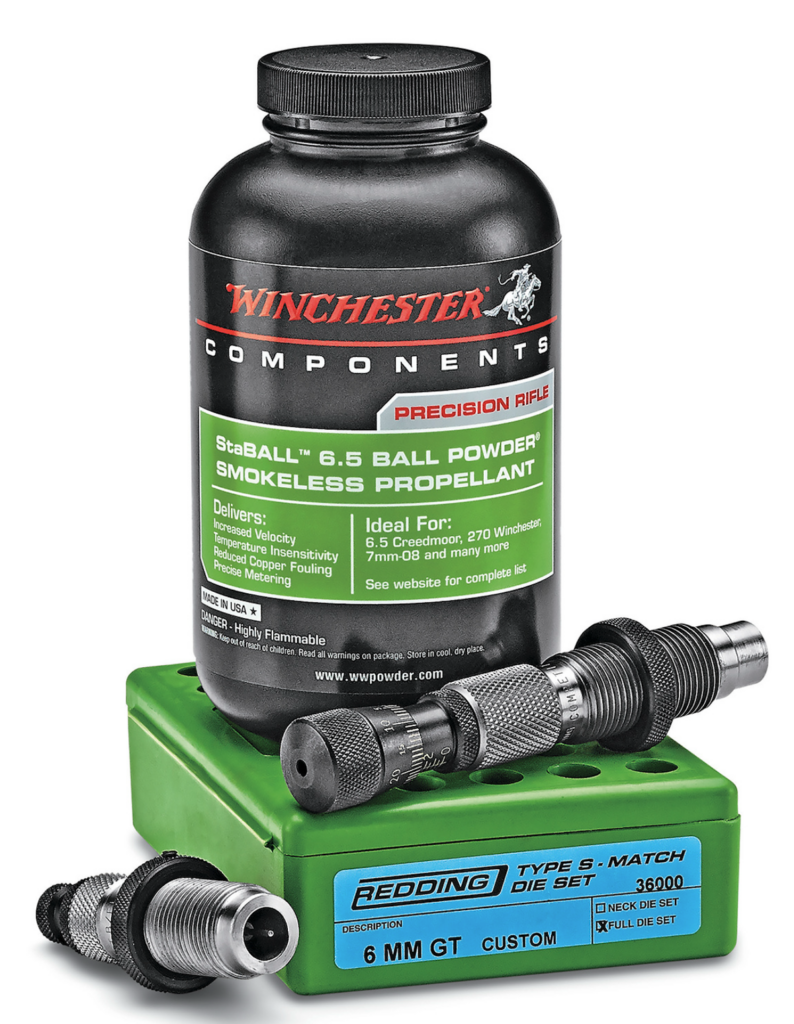
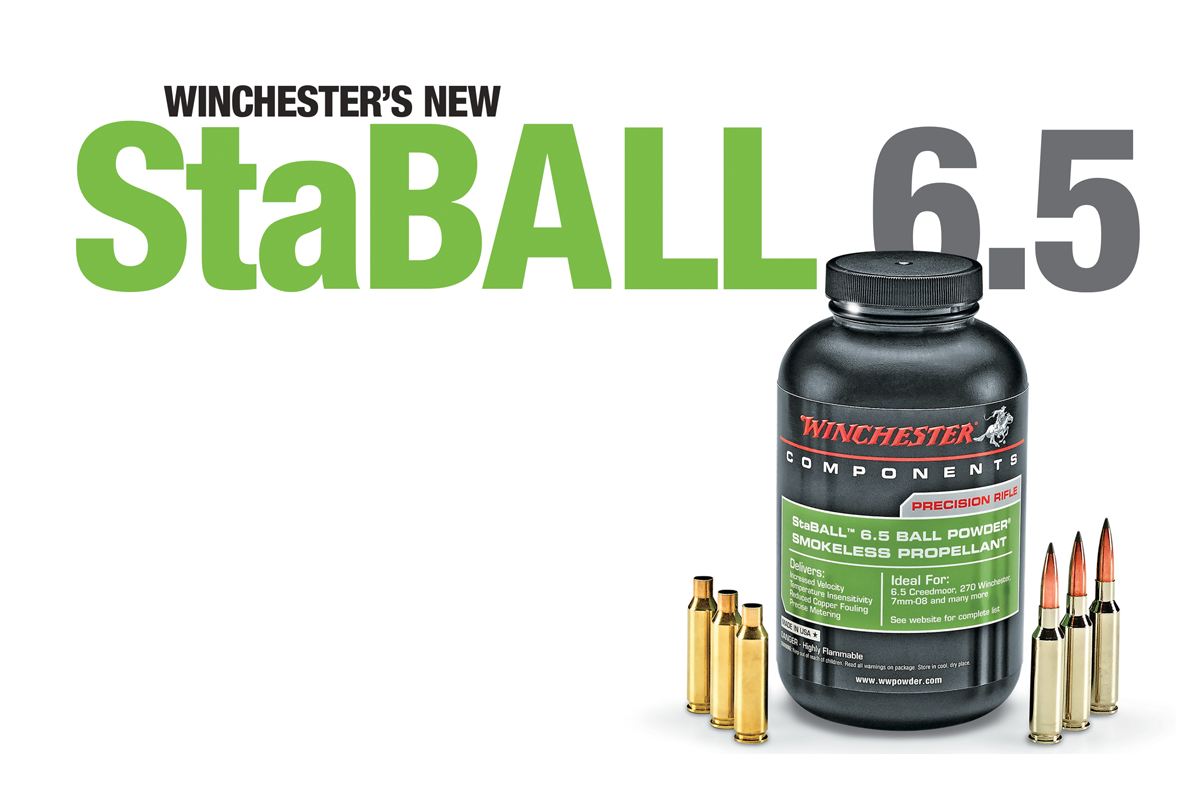
Well, fellow hull stuffers, wait no more. New for this year is a Ball powder in the Winchester line called StaBALL 6.5, also from St. Marks. What sets StaBALL 6.5 apart is that it incorporates several highly desirable features in one propellant. StaBALL 6.5 has the uniform metering of other spherical powders, the chemical ingredients that retard copper fouling, and temperature insensitivity. This is the first Ball powder to include all of these qualities. Another great feature of StaBALL 6.5 is that it produces velocities a bit higher and standard deviations a bit lower than most other powders, contributing to pinpoint accuracy.
Let’s see…uniform metering, copper fouling reduction, temperature insensitivity, uniform ballistics, higher velocities, and better accuracy. StaBALL’s got ’em all.
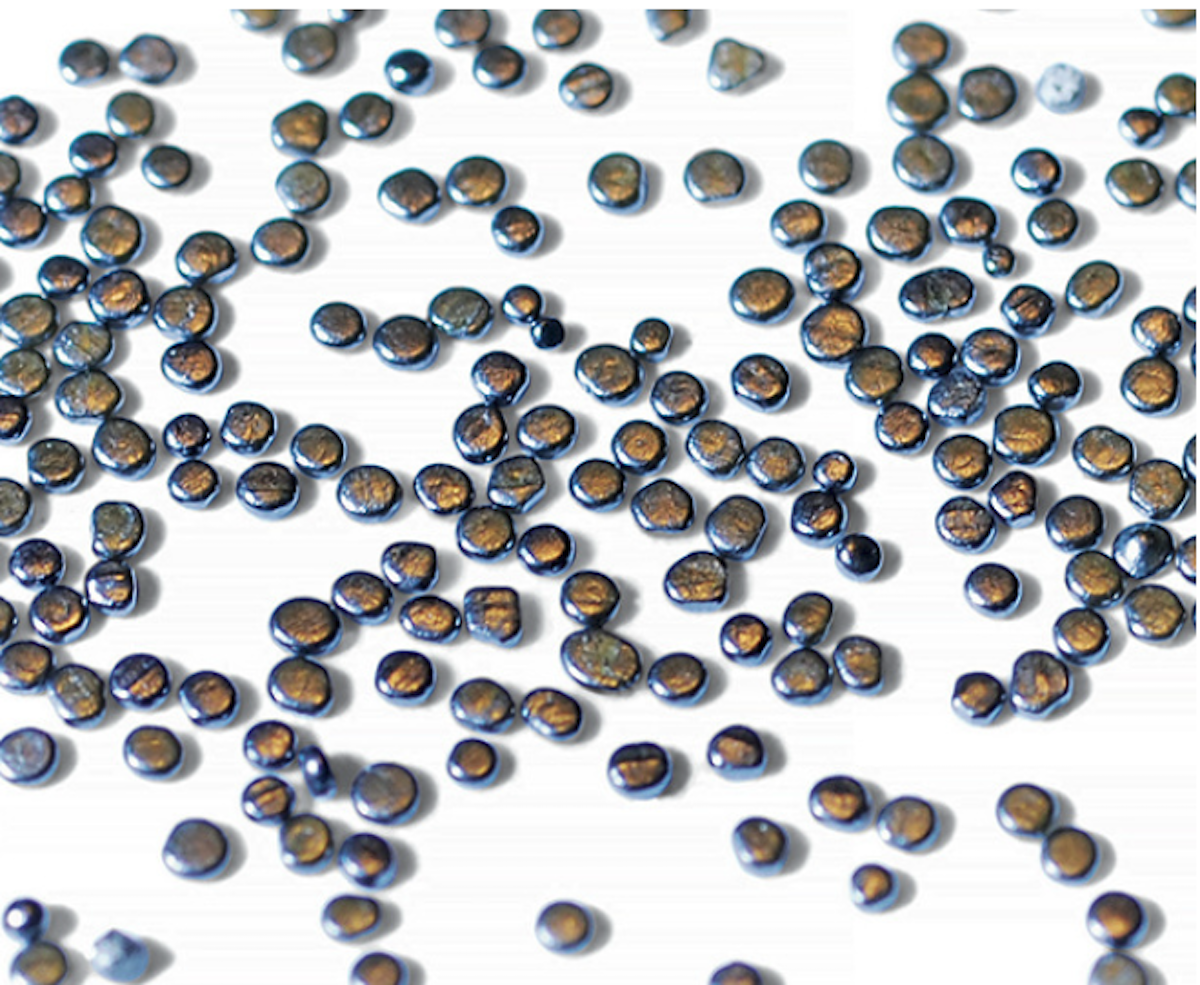
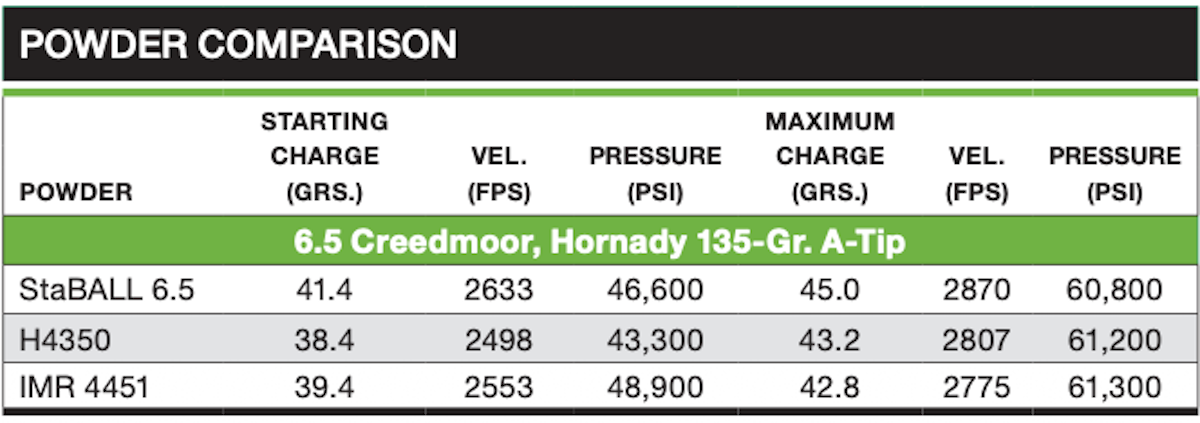
So let’s look at some particulars of this new powder. (Take good notes, there’ll be a quiz later.) Its burn speed is slightly slower than H4350. On Hodgdon’s burn rate chart, StaBALL 6.5 fits in between Hybrid 100V and VihtaVuori N550. Data from the Hodgdon Ballistics Lab compared the new powder with H4350 and IMR 4451 in the 6.5 Creedmoor, and the results are shown in the accompanying Powder Comparison chart. Basically, the new Ball powder bested the velocities of the two extruded powders by a slight margin, at about the same pressures.
The grain size of StaBALL 6.5 is small, with 95 percent passing through a 0.0331-inch hole, and only 5 percent passing through a 0.0139-inch hole. The bulk density varies from 0.980 to 1.035 grams per cubic centimeter (g/cc). By comparison, Hodgdon Benchmark and IMR 8208 XBR both have a density of 0.925 g/cc, and Winchester AutoComp comes in at 0.850 g/cc.
StaBALL 6.5 has the same special copper fouling reducing ingredients as CFE 223 and is designed to work in most of the same cartridges as H4350 but with the attendant higher velocities, lower standard deviations, and excellent accuracy. Load densities for the new powder are 93 to 100 percent, which also helps out with uniform performance. All in all, it shows great potential for the long-range crowd and persnickety hunters who handload.
And I must point out StaBALL 6.5 is “REACH compliant,” meaning it’s “green to the environment.” REACH stands for the “Registration, Revaluation, Authorisation, and Restriction” of substances and is administered by the European Chemicals Agency (ECHA) of the European Union (EU). REACH is a comprehensive regulatory program for virtually all “chemicals.” Many Americans have never heard of REACH, but companies in the EU sure have. Suffice it to say that if EU companies are not REACH compliant, well, they’re toast. Fortunately, StaBALL 6.5 meets this standard, which is very important for sales in the EU.
Hodgdon notes that in tests StaBALL 6.5 showed great results in the 22-250, 22 Nosler, 6mm GT, 260 Remington, 6.5x47 Lapua, 7mm-08, 7x57mm Mauser, 270 Winchester, 30-06, 375 Ruger, and 375 H&H. The 300 WSM is a good candidate for it, and no doubt there will be others. For example, in the 7mm-08 with 145- through 168-grain bullets, StaBALL 6.5 averaged 106 to 167 fps faster. However, the powder is a bit too fast for most magnum cartridges. Sure, there will be some applications, but it’s at its best in cases with midrange capacities.
Probably the best two candidates for the new fuel are the 6mm and 6.5 Creedmoors. StaBALL 6.5 gives velocities 50 fps or faster in both of them with most bullets, but in the 6.5 Creedmoor with 140- and 143-grain bullets, it registered over 100 fps faster than all of Hodgdon’s other powders.
Putting StaBALL 6.5 to a Test
Hodgdon has quite a bit of load data for StaBALL 6.5 already on its load data website, with more added as it is developed, and I was itching to try the new powder in a slew of suitable cartridges. However, a quick glance at the mass of data made it clear that I’d have to pick and choose carefully; there are just too many good load combinations.
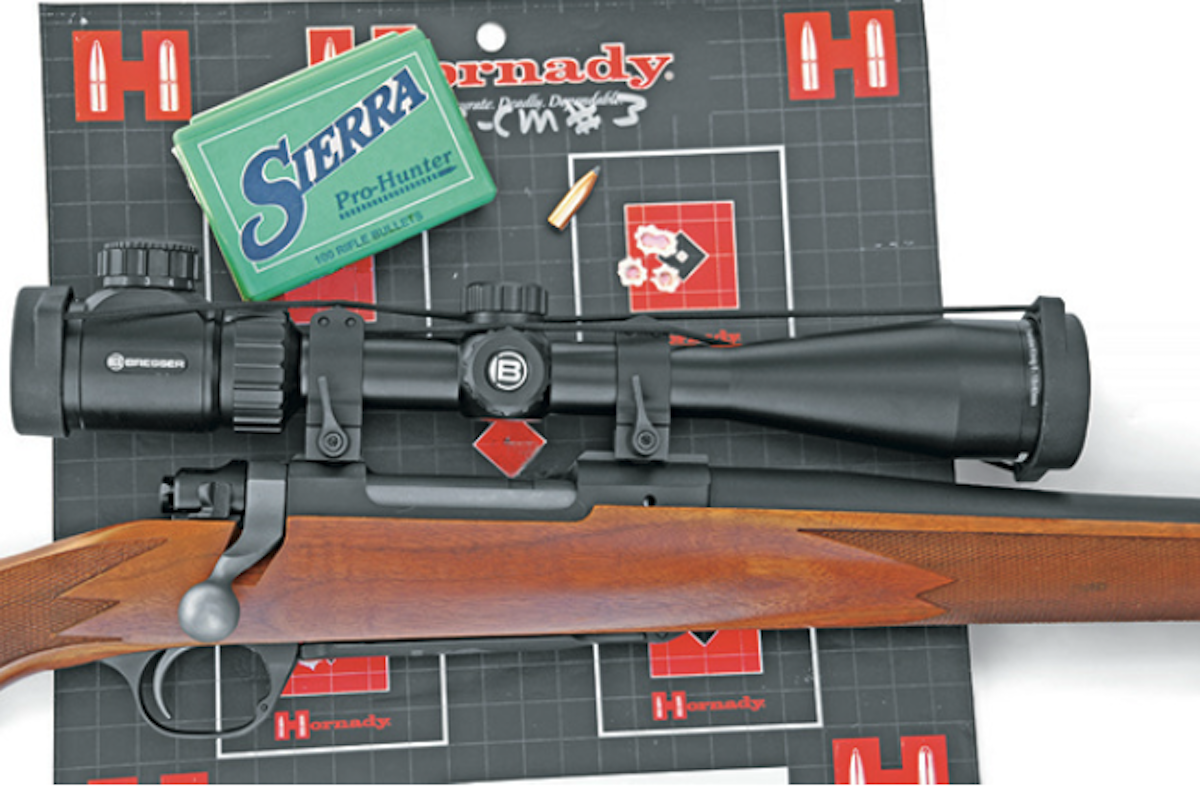
As noted, a main reason for this powder are the Creedmoor rounds, so I fetched my wife’s Ruger American Predator 6mm Creedmoor and my Ruger Hawkeye in 6.5 Creedmoor out of the safe for some extensive testing. To this pair of rounds, I added a couple of varmint calibers, plus a representative cross-section of my hunting guns—some old, some new, but all proven performers.
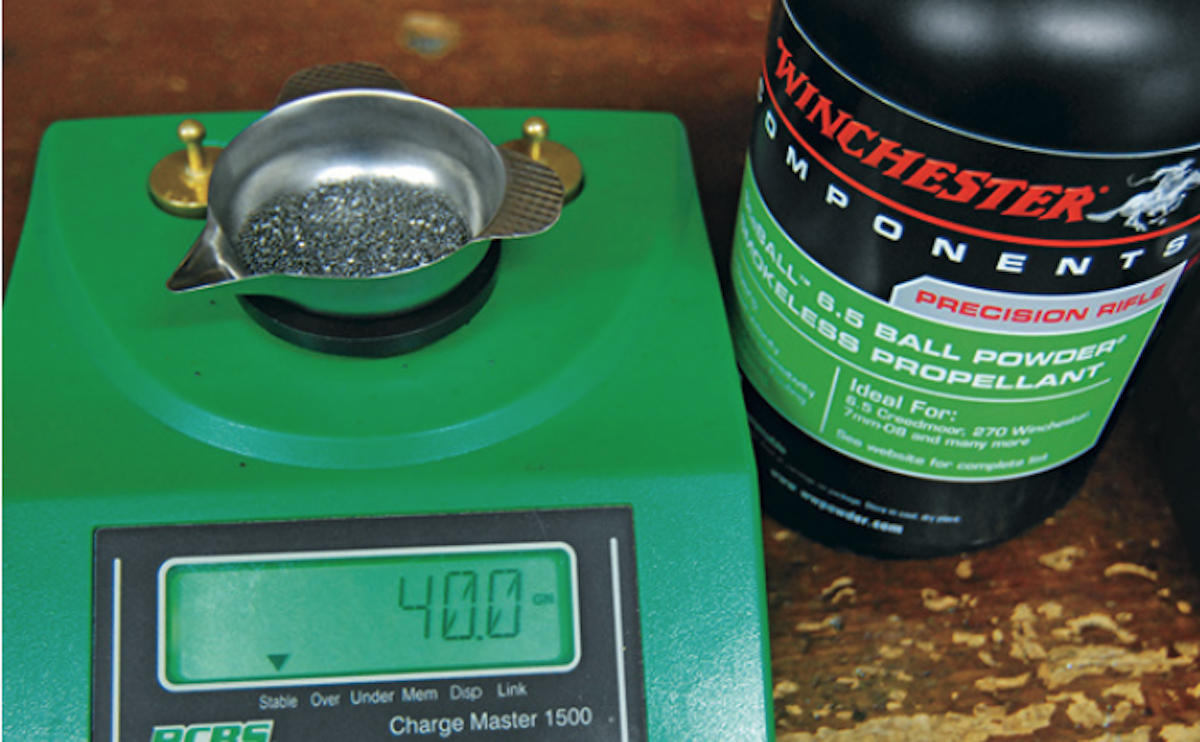
The first thing I did to evaluate StaBALL 6.5 was to fill my RCBS powder measure with it and check thrown charges for uniformity. I set it to throw 40 grains, and then I carefully weighed the charges. The average of 10 charges was 40.1 grains, with a range of 40.0 to 40.2 grains, and the standard deviation was a miserly 0.07 grain. Consequently, I used the powder measure for test loads, checking weights along the way.
All loads were assembled in RCBS, Redding, and Hornady dies in my Redding T-7 Turret press. Cartridge overall lengths (COL) were determined with Hornady’s Lock-N-Load gauge (one of the handiest little gadgets I’ve ever used). I fired three, five-shot groups at 100 yards from a benchrest inside my shooting building. Velocities were measured with an Oehler Model 35P chronograph with the midpoint of the skyscreens 12 feet from the guns’ muzzles.
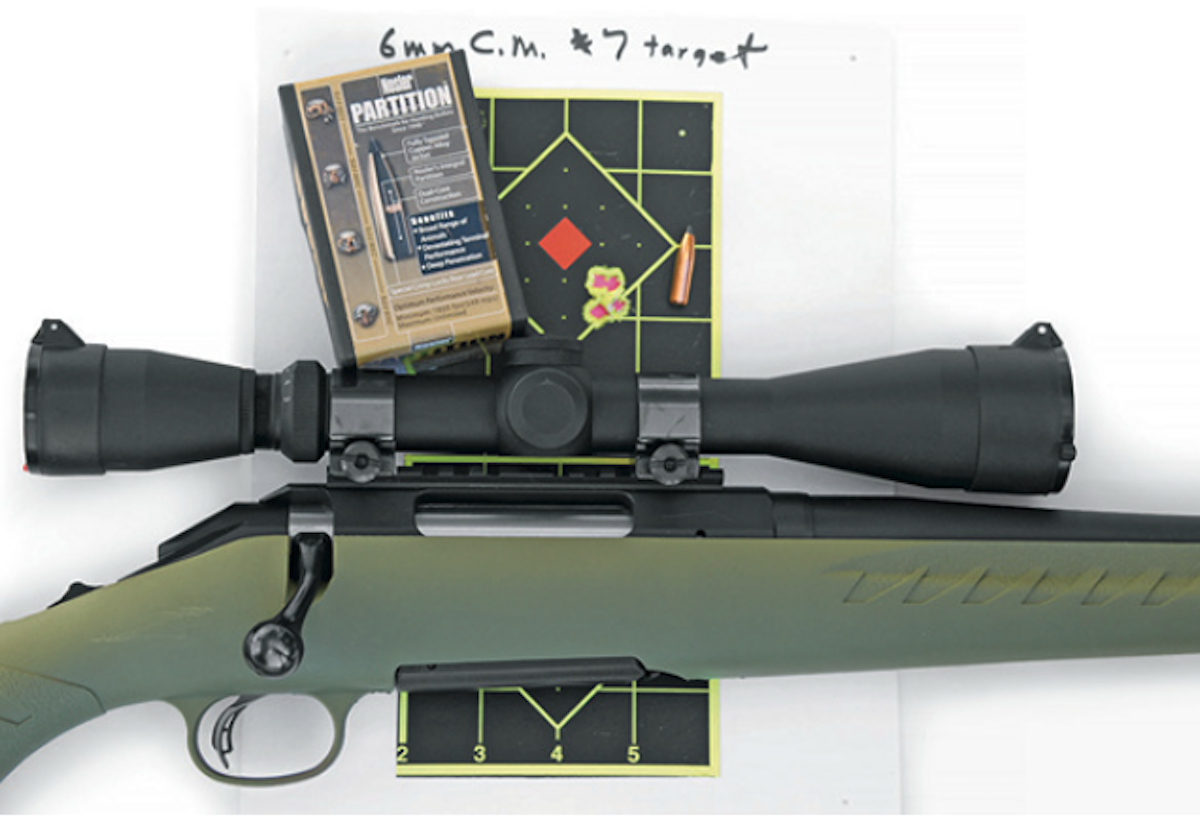
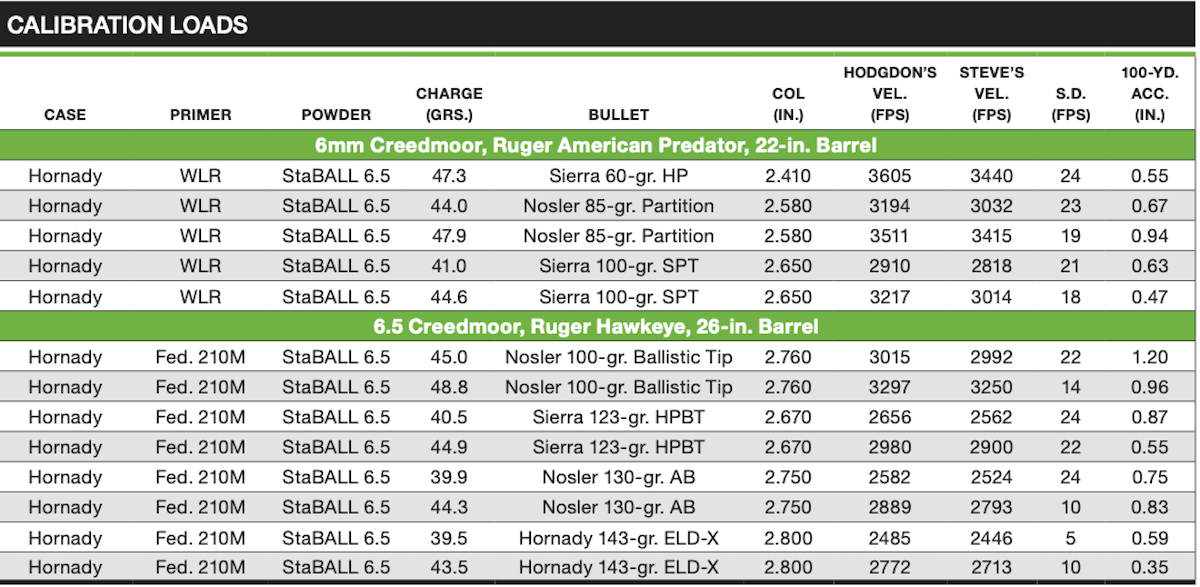
My next test was with what I call “calibration loads.” For these, I found the powder that gave the highest velocity for each of bullets in Hodgdon’s pressure-tested load data for the 6mm and 6.5 Creedmoors. I duplicated Hodgdon’s test conditions with as many of the same bullets as I had with the starting and maximum loads and compared my results to Hodgdon’s. This provided a good frame of reference for subsequent handloads and showed how much, if any, difference in velocities there might be between the minimum-spec S.A.A.M.I. pressure barrels Hodgdon used and the barrels of typical field guns.
The results of the calibration loads are listed in the chart on the next page. Overall, there were only very modest differences in velocities in both cartridges. The 6mm lost an average of 4.37 percent, and the group sizes of those five loads averaged 0.65 inch. In the 6.5 Creedmoor, the velocity difference was only 2.21 percent, and its eight groups averaged 0.76 inch. Things were looking good.
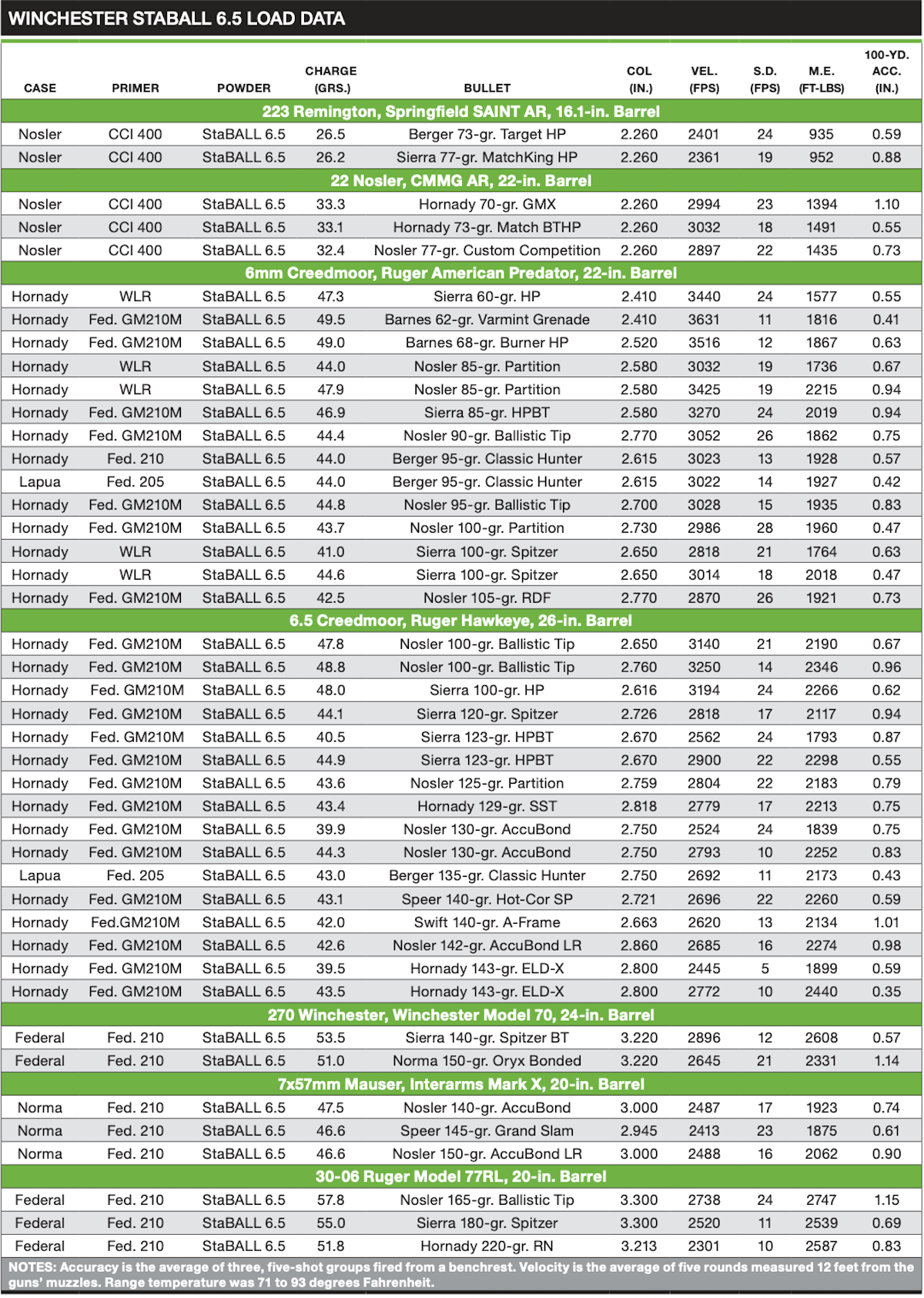
The other cartridges I selected pretty much cover the bases from prairie dogs to various big-game critters. For varmints, I used the ever-popular 223 Remington and the spectacular 22 Nosler. For big-game loads, I loaded StaBALL 6.5 in the 270 Winchester, 7x57mm Mauser, and 30-06 Springfield. It did well in all of them. My load development produced more than 40 loads for the seven test guns, and the average group size for all of them was an impressive 0.72 inch. The average standard deviation (S.D.) was 18 fps. These data are shown in the StaBALL 6.5 Load Data chart on page 16.
Let’s look at the results cartridge by cartridge, starting with the immensely popular Creedmoors. For these, I worked up close to or at Hodgdon’s maximum charges, unless a slightly lower charge showed better accuracy.
Overall, the Ruger American in 6mm Creedmoor liked just about every load I tried. I fired 14 different loads, and the group average was just 0.64 inch (the average S.D. was 19 fps). The largest group averages were 0.94 inch, hardly “bad,” and the smallest was a spectacular 0.41 inch. This was with a charge of 49.5 grains and the Barnes 62-grain Varmint Grenade bullet. Velocity was a sizzling 3,631 fps. Right on the heels of that load was the Berger 95-grain Classic Hunter with a dose of 44.0 grains. The velocity was 3,022 fps, and group average was 0.42 inch. Varmints beware.
For deer and such, 85-, 95-, and 100-grain bullets performed well. The Nosler 85-grain Partition over 47.9 grains averaged 3,425 fps (with an S.D. of 19 fps) and 0.94 inch. With the 95-grain Ballistic Tip, a dose of 44.8 grains gave 3,028 fps and a 0.83-inch group average. The reliable Sierra 100-grain Spitzer favored 44.6 grains for a speed of 3,014 fps (S.D. was 18 fps) and groups under 0.5 inch. There were plenty of other good loads, too.
If there is a cartridge that’s taken the shooting world by storm since its introduction, it’s the 6.5 Creedmoor—and for good reason. Its careful case and chamber design, case size, powder efficiency, and mild recoil make it the go-to round for long-range target shooting and for hunting medium-size big game. I have used rifles chambered for the round on several hunts, and it has simply flattened critters up to the size of a 186-pound axis buck.
Test data show that StaBALL 6.5 is a perfect fit for the 6.5 Creedmoor, so I fired 16 different handloads. They averaged 0.73 inch, and the S.D. was only 17 fps. Several groups measured about 0.5 inch; acceptable accuracy was obtained with all bullets tested. The velocities of 129- to 143-grain hunting bullets is right in the “sweet spot” that delivers reliable expansion, deep penetration, and great accuracy, all with modest recoil.
The Nosler Partition is always a good choice, and the 6.5mm 125-grain version registered 2,804 fps with 0.79-inch groups over 43.6 grains of StaBALL 6.5. Not to be outdone, the 100-grain Ballistic Tip, the Nosler 130-grain AccuBond, the ever-reliable Sierra 120-grain Spitzer, and the Speer 140-grain Hot-Cor SP game bullets also shot well.
A bevy of new high-tech bullets have been developed by the 6.5 Creedmoor’s huge following. A good example is Hornady’s new 143-grain ELD-X. It has earned its stripes on game, and in my test with a charge of 43.5 grains it came in at 0.35 inch, 2,772 fps, with an S.D. of 10 fps. Also excellent was the Nosler 142-grain AccuBond Long Range with 42.6 grains, averaging 0.98 inch at 2,685 fps and with an S.D. of 16 fps. The tough Swift 140-grain A-Frame over 42.0 grains had a speed of 2,620 fps and averaged just a hair over an inch.
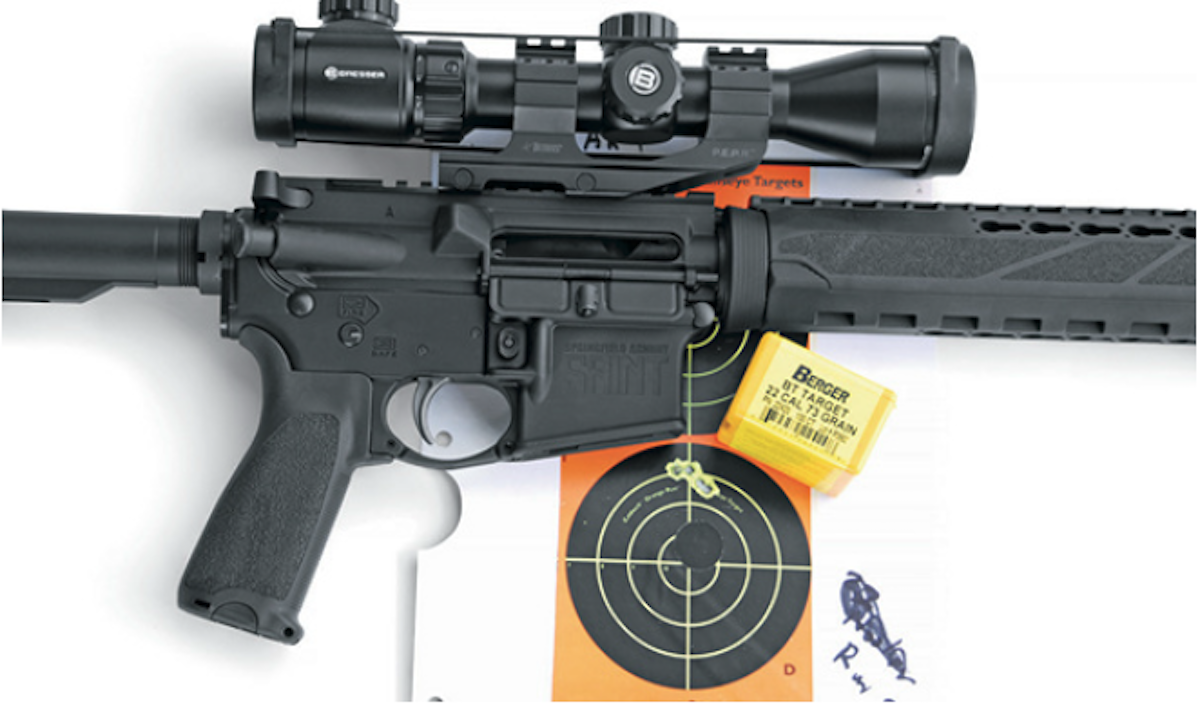
But there are many “winners” in this race. In the ubiquitous 223 Remington, StaBALL 6.5 is best with heavier bullets, so I tried the Berger 73-grain Target HP and the Sierra 77-grain MatchKing HP in my Springfield SAINT AR with its 16.1-inch barrel and a 1:8-inch twist, making it suitable for longer bullets. Powder charges were 26.5 and 26.2 grains respectively. Velocities were around 2,400 fps for each load, and accuracy was 0.59 and 0.88 inch respectively.
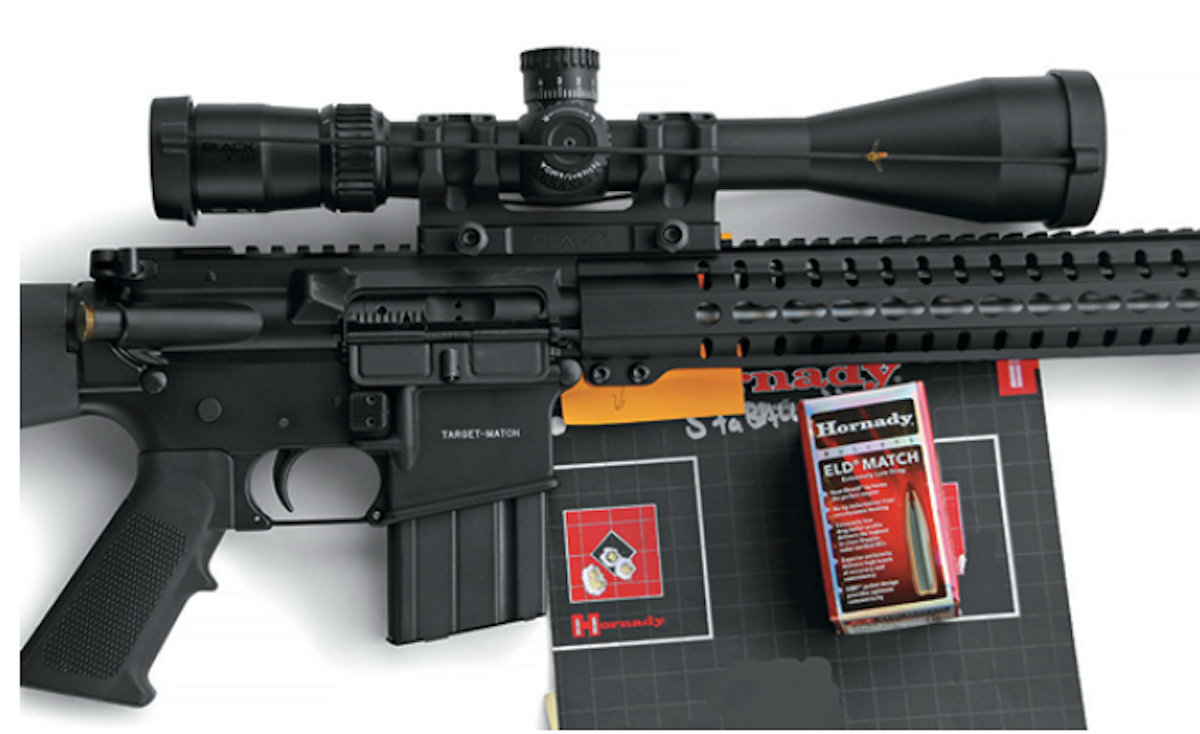
I really like the 22 Nosler; it gives .22-caliber bullets a real boost in speed. My CMMG AR has a 22-inch barrel, which also contributes to higher velocities. Again, I stuck with heavier bullets for the rifle’s 1:8-inch twist. The Hornady 70-grain GMX hunting bullet showed minute-of-deer accuracy at almost 3,000 fps with 33.3 grains of powder. The company’s 73-grain Match BTHP and 33.1 grains was chronographed at 3,032 fps (S.D. was 18 fps) and shot a little over 0.5 inch. For long-range paper punchers, the Nosler 77-grain with 32.4 grains of StaBALL 6.5 gave a velocity of 2,897 fps and a group average of 0.73 inch.
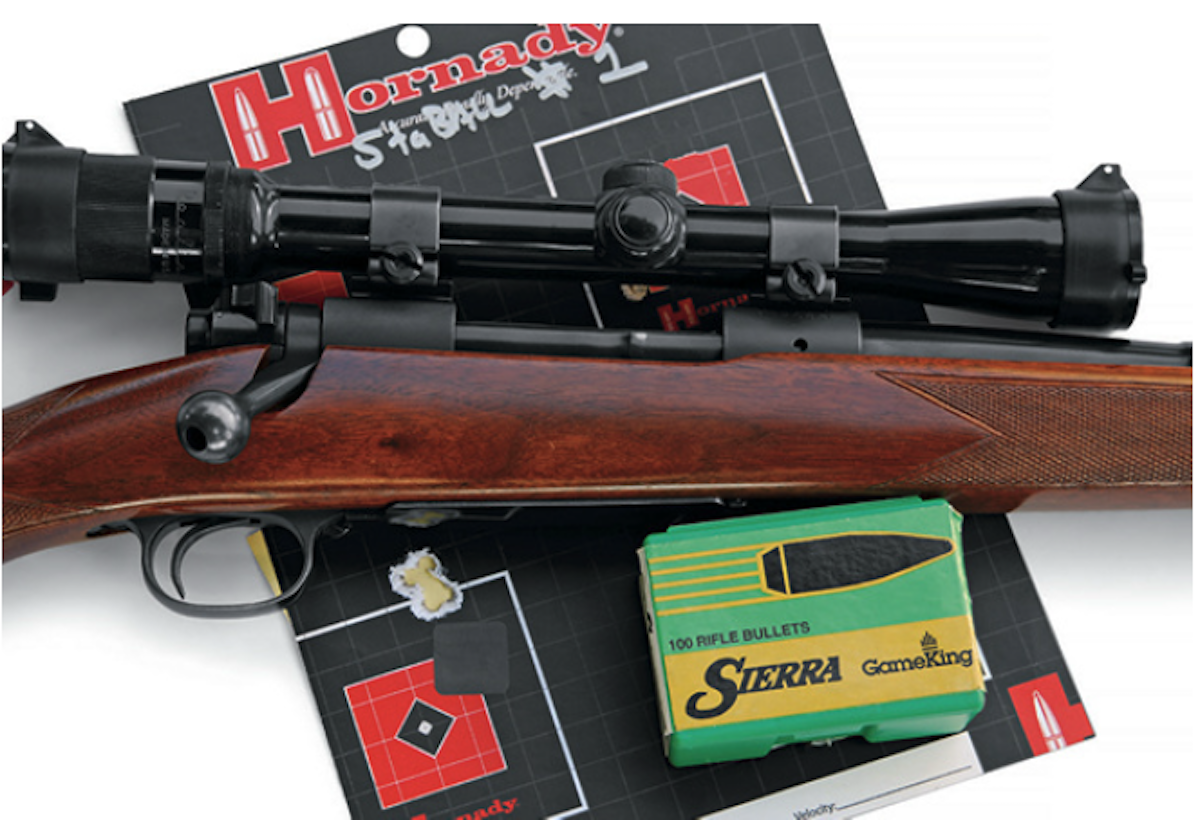
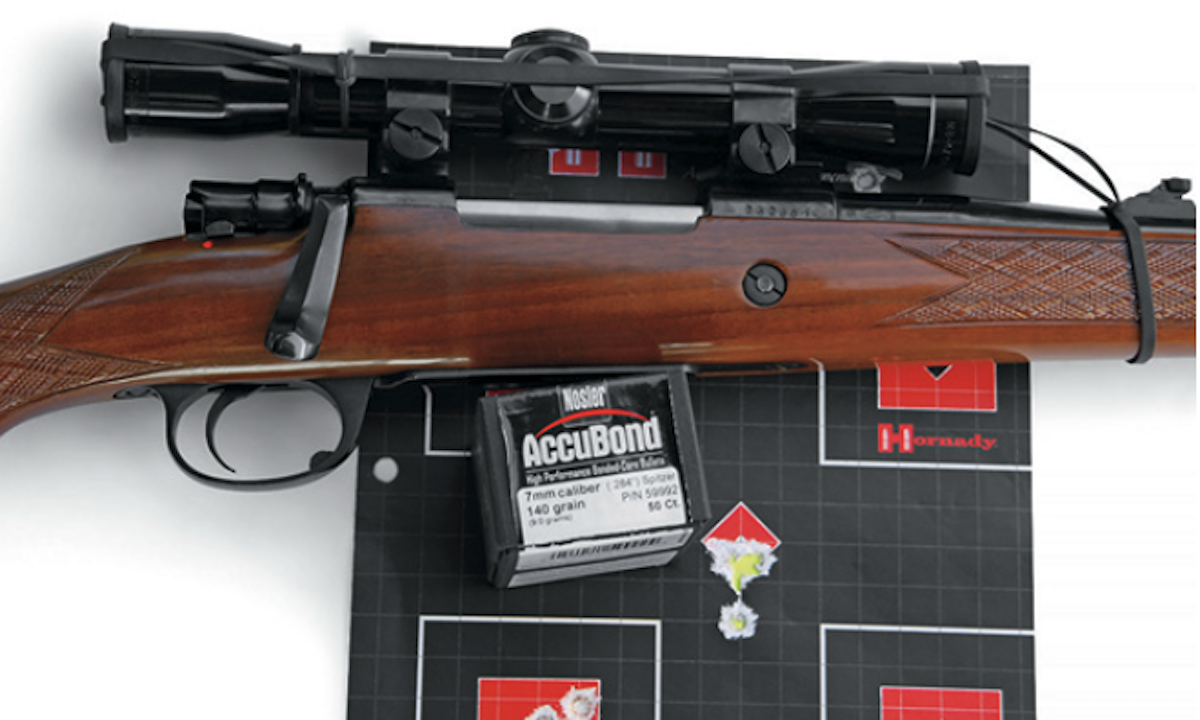
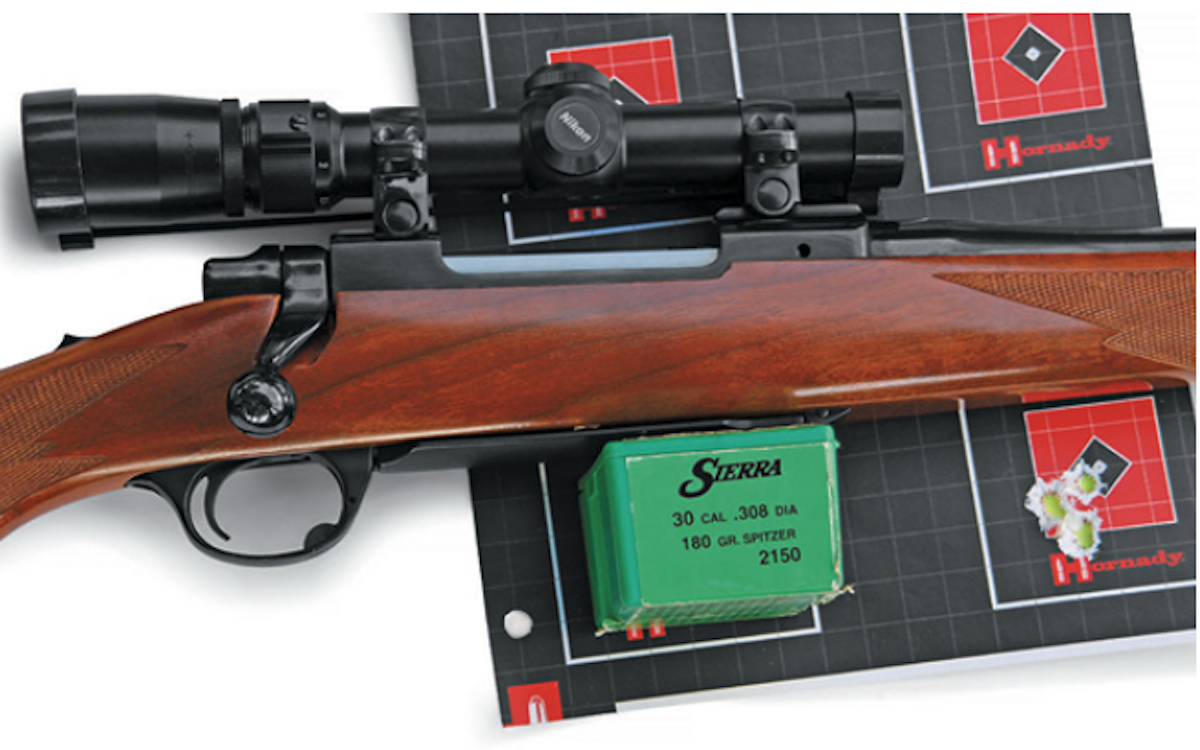
The 270 Winchester needs little fanfare as a game cartridge. In my Winchester Pre-’64 Model 70, the Sierra 140-grain Spitzer Boat Tail and 53.5 grains gave an average velocity of 2,896 fps and grouped into 0.57 inch. The S.D. was 12 fps. But alas, my Pre-’64 Model 70 didn’t cotton to the Norma 150-grain Oryx Bonded and averaged 1.14 inches.
My 7x57mm Mauser rifle is an Interarms Mark X Continental with a 20-inch barrel, and it has slain a lot of deer and elk in its lifetime. My favorite bullet weight for this cartridge is 145 grains, and the Speer Grand Slam liked 46.6 grains of StaBALL 6.5 for an average velocity of 2,413 fps and an accuracy average of 0.61. Not far behind, Nosler’s 140-grain AccuBond with 47.5 grains and the company’s 140-grain AccuBond Long Range with 46.6 grains averaged under an inch. The S.D.s of these last two loads were 17 and 16 fps respectively.
We cannot overlook the 30-06, “America’s cartridge,” and StaBALL 6.5 did this veteran proud. With 57.8 grains, the Nosler 165-grain Ballistic Tip deer bullet registered 2,738 fps and slightly over an inch out of my Ruger Model 77RL with its skinny 20-inch barrel. Bullets weighing 180 grains are almost the de facto standard .30-caliber bullet, and the Sierra Spitzer averaged 0.69 inch with an S.D. of 11 fps. For elk in the black timber, the good old 220-grain roundnose is tough to beat. Hornady’s version and 51.8 grains of powder shot under an inch. Velocity was modest (2,301 fps), S.D. was great (10 fps), but recoil in the lightweight Ruger rifle made my eyes cross!
Okay, how about copper fouling? At first, I cleaned the rifles’ bores after every 15 rounds, but inspection with my Gradient Lens Hawkeye borescope showed so little fouling that I just blazed away, with no discernible degradation in accuracy. For example, in one session with the 6mm Creedmoor I fired 55 rounds without cleaning, and the group sizes of the last few groups were every bit as good the first ones. After this marathon, there was very little copper fouling in the bore. Pretty impressive, I’d say. I loathe cleaning out copper fouling, so this is a major bonus for me.
Based on my preliminary results, it appears that this new powder is geared toward the heavier bullets in a given caliber, delivering good velocities and excellent accuracy across a broad spectrum of cartridges, from varmints to large-hoofed critters.
It’s easy to whip up great handloads with StaBALL 6.5, as it flows through a powder measure with great uniformity, and the powder’s density helps out a lot, leaving plenty of room in most cases to seat long-for-caliber bullets without compressing the powder charges. Accuracy was excellent for selected loads in every cartridge I fired, and there was very little, if any copper fouling in any of my test rifles, a boon for all shooters. Overall, StaBALL 6.5 delivered the goods across the board, and I predict it will become the darling of both long-range shooters and big-game hunters alike.
Okay, here’s the quiz I promised. What’s the only Ball powder that has uniform metering, produces low standard deviations, is temperature insensitive, has additives to limit copper fouling, gives higher velocities in its burn-speed class, and produces superb accuracy across a broad range of cartridges? If you answered “StaBALL 6.5,” go to the head of the class.
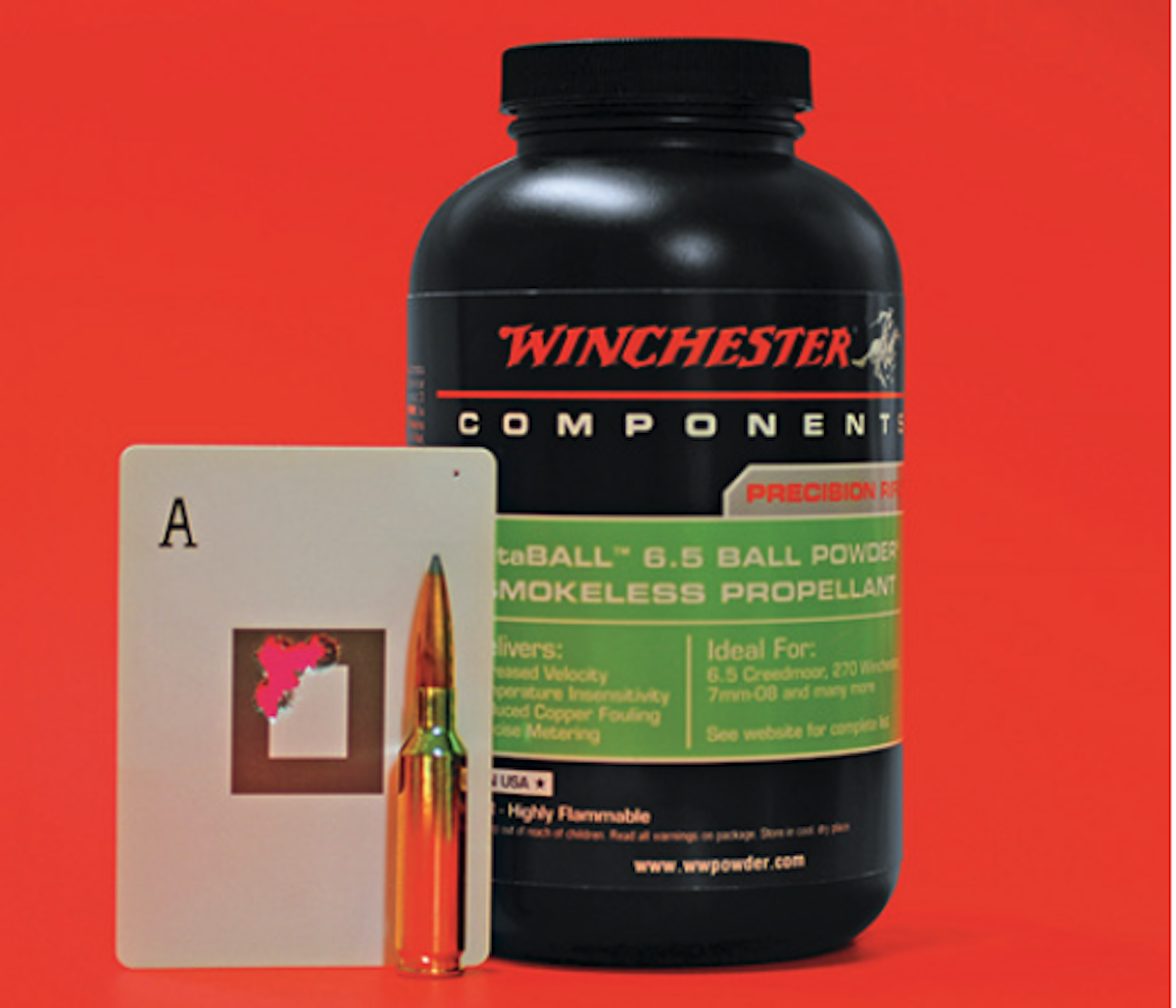
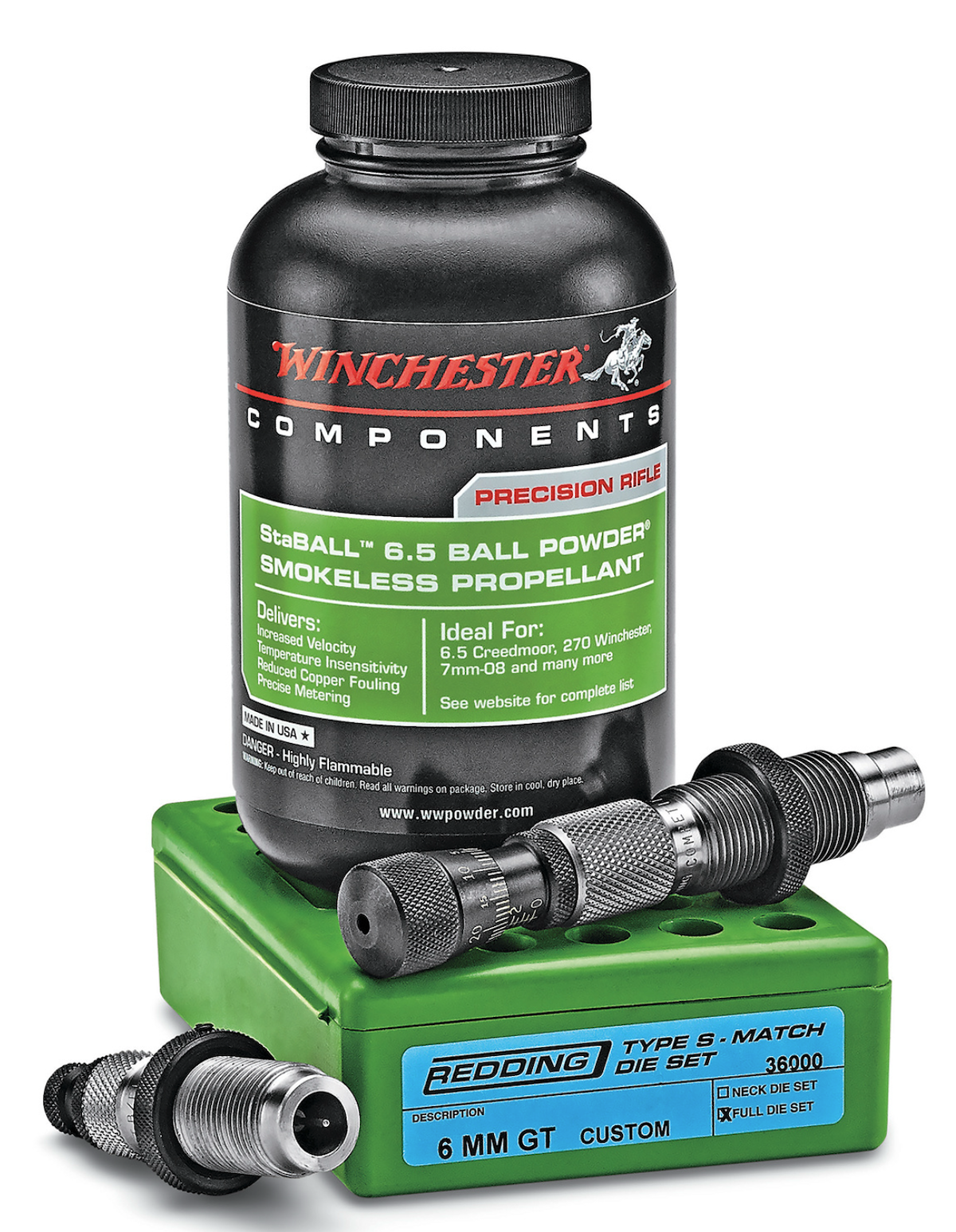
StaBALL 6.5 delivered the goods across the board, and I predict it will become the darling of both long-range shooters and big-game hunters alike.
Load Data Charts