


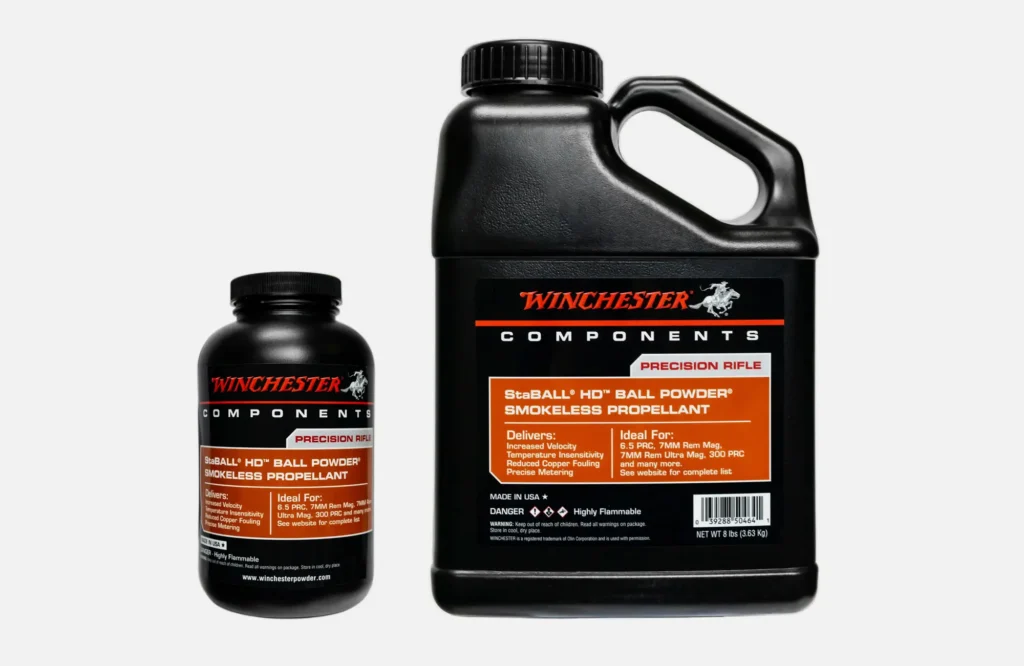
The evolution of specialty propellant powders has accelerated lately, thanks to innovative chemistry and super-efficient cartridge designs, such as the 6.5 Creedmoor, 6.5 PRC, 224 Valkyrie, and 6.8 Western. But propellants have a lot of roles to fill, what with copper fouling, flow characteristics, and temperature sensitivity. In the past, a single powder could not solve all these problems—some, maybe, but not all.
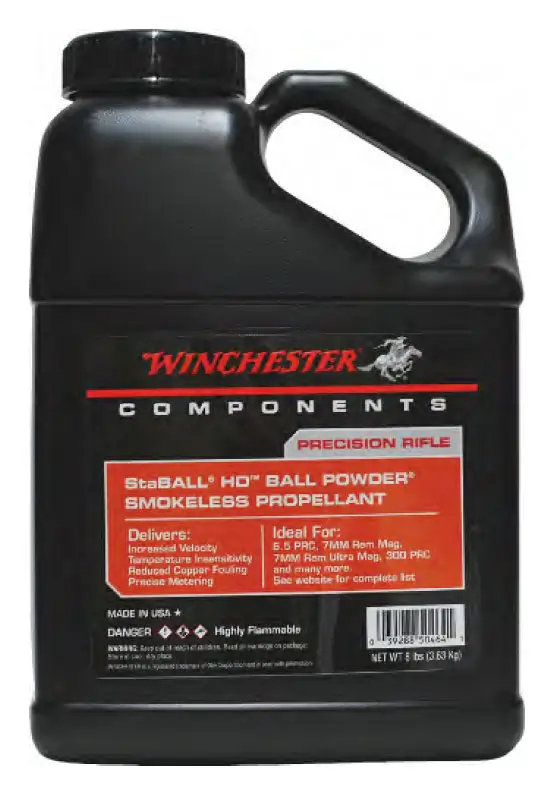
Those clever folks at Hodgdon Powder Company have been working on this cluster of problems for many years, and it has born tantalizing fruit. The latest powder from Hodgdon to address these issues is StaBALL HD. This is the second member of the StaBALL family, and it looks to be just what the doctor ordered for new high-performance cartridges.
In 2020 StaBALL 6.5 was introduced with a specific burn rate for smaller cases. The new StaBALL HD is much slower burning and is applicable to a host of short, fat cartridges meant for long-range shooting, either targets or big game. (Another important part of this evolutionary saga is the many new super-bullets designed especially for long-range shooting.) StaBALL HD is perfectly suited for such work in these cartridges. A short history of these rewarding developments is illustrative.
First was the Extreme line of extruded propellants that worked very well and were insensitive to temperature change, important if you work up an elk load at 500 feet and 75 degrees but end up shooting at a bull elk at 10,000 feet in the snow. It was an auspicious start.
Next came the Enduron series of extruded powders that had special ingredients in them to reduce copper jacket fouling. The Enduron family eventually had five powders that made their virtues available to a multitude of cartridges.
Next to enter the arena was CFE 223, which tackled the problem of jacket fouling. CFE stands for “Copper Fouler Eraser,” and it does just that. It not only retards jacket fouling, but also actually removes some of it, too, so rifle bores require less cleaning. This is a big deal when facing a horde of irate prairie dogs. Not to be overlooked is the fact that CFE 223 is a spherical powder and flows through a powder measure very uniformly. (Rumor has it that the development of the superfast 204 Ruger cartridge was significant to this part of the puzzle.)
So the issues of powder flow, temperature sensitivity, and copper fouling were addressed…but in different powders. The new StaBALL powders are the first spherical powders to combine all these valuable features. In addition, StaBALL HD produces uniform ballistics and excellent accuracy in these short, fat cartridges.
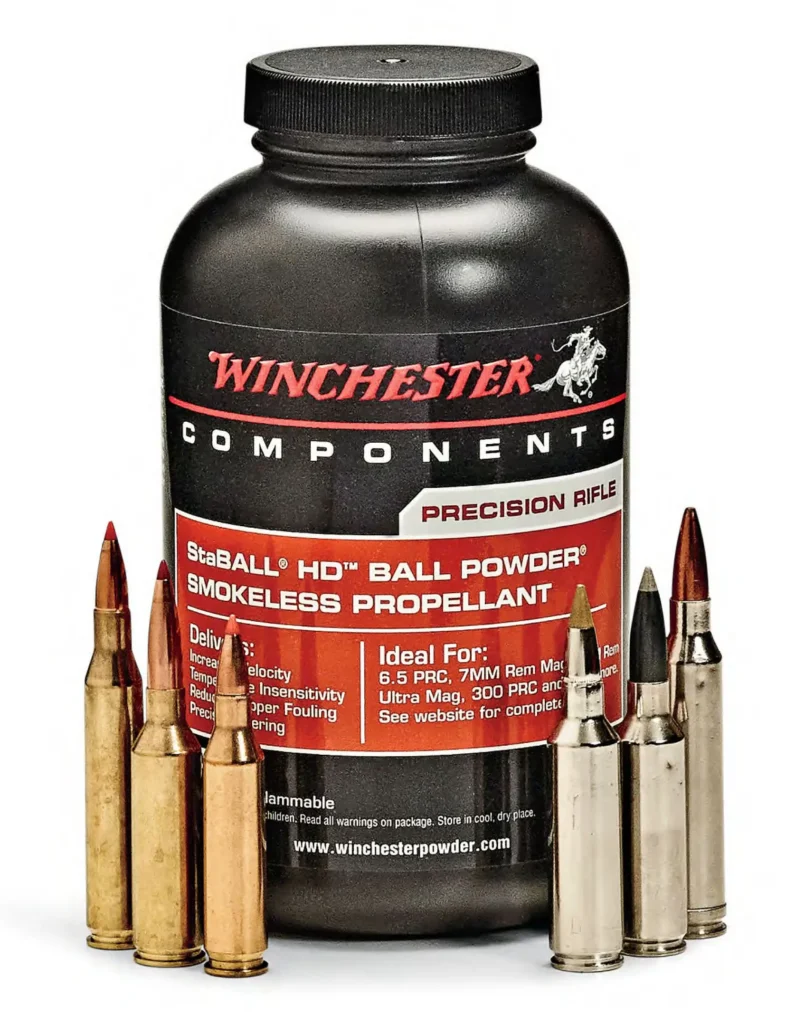
As for burn rate, StaBALL HD is only a couple of places from Retumbo in Hodgdon’s burn rate table (shown elsewhere in this manual). And the density of StaBALL HD is “just right” to fill the case almost to the neck but still allows plenty of room to seat long-for-caliber bullets.
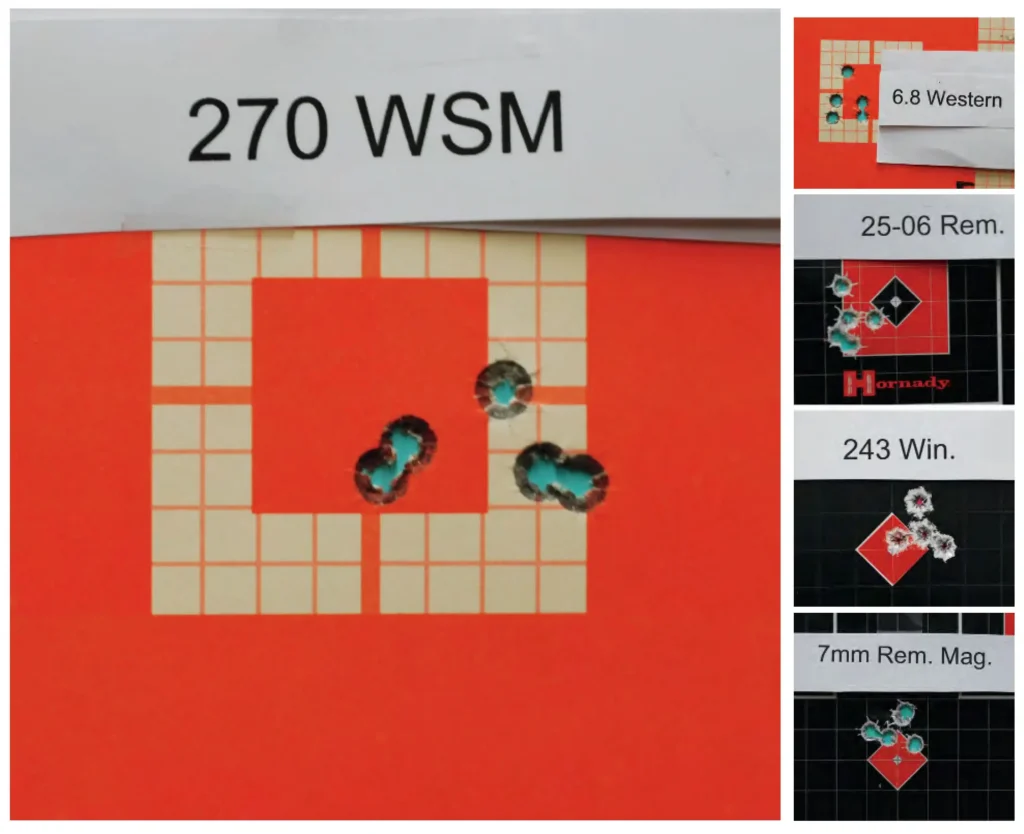
To get a handle on this exciting new powder, I tried it in several of the cartridges for which Hodgdon has data; I have no doubt that more chamberings will be added to the list soon. I loaded test rounds for the 243 Winchester, 25-06 Remington, 6.5 PRC, 270 Winchester Short Magnum (WSM), 6.8 Western, and 7mm Remington Magnum.
Okay, I know what you’re thinking. “Can I use StaBALL HD in my 6.5 Creedmoor and 270 Winchester?” No; it’s much too slow burning. Besides, the earlier StaBALL 6.5 has those rounds covered.
I want to pass along two things that could cause problems for reloaders if you don’t watch your p’s and q’s. First, when calling up data on the Hodgdon Data Load Center website, make sure it’s for StaBALL HD, not StaBALL 6.5. The two designations are quite similar, so there is a potential for error. A second potential problem is for shooters, like me, who have rifles chambered for the 270 WSM and the 6.8 Western. A 270 WSM cartridge will chamber in a 6.8 Western rifle, and I’ll just bet that it would fire. (I didn’t try it!) The 270 WSM has what amounts to about 0.080 inch of extra headspace in the 6.8 Western chamber, so the results would probably not be fun.
For my tests, all powder charges were thrown from an RCBS Uniflow Powder Measure and checked on an RCBS M-1500 electronic scale. The 270 WSM and 6.8 Western rounds were loaded on Redding dies; the 25-06, 6.5 PRC, and 7mm Rem. Mag. on Hornady dies; and the 243 Win. on RCBS dies—all in my Redding T-7 Turret or Ultramag presses.
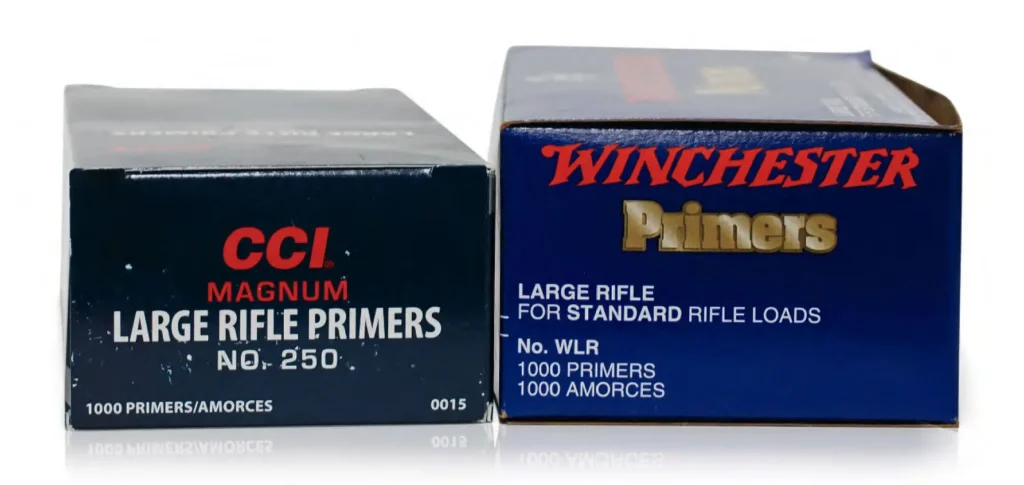
I used both standard and magnum primers in the handloads. I usually pooh-pooh ballistic differences due to primers, but I must confess there were differences between primers in this data set. For example, the average standard deviation for loads with magnum primers was only 40 percent of that for standard primers. In addition, the average group size for all loads with standard primers was 0.95 inch, but it was 0.78 inch for the magnum primers. Not a big difference, just reporting the results. Also, the powder charges used in the four “short fat” cartridges were large enough that I think magnum primers are appropriate.
I used the same test procedure for StaBALL HD as for previous projects. I loaded 16 rounds of each load for each rifle. Starting with a clean, cold barrel, one “fouler” round was fired, then three, five-shot groups were fired from a Caldwell Lead Sled DFT rest from inside my shooting building. I alternated rifles, and while shooting a group with one rifle, the other barrel was cooled in front of an air conditioner. This speeded up the testing considerably.
After each rifle had fired its requisite three groups, I ran a dry patch down the bore and examined the bore with my Hawkeye borescope. It was a revelation. There was little if any copper fouling—the bane of accuracy seekers! This result was universal in all the test rifles. That “pixie dust” that Hodgdon puts in this powder really does work. A modicum of brushing and a few patches wet with Butch’s Bore Shine and each rifle was ready for an oily patch and a trip back to the safe.
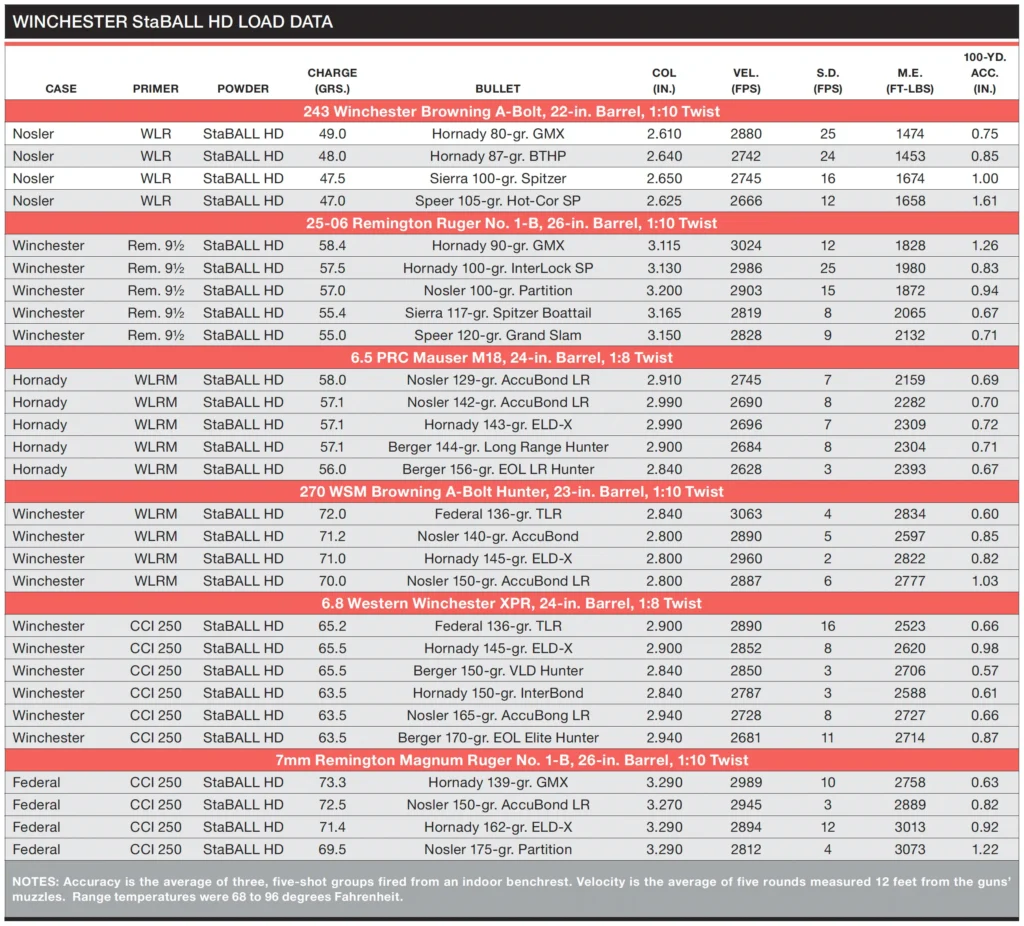
All the results of the test loads are shown in the accompanying chart. Overall, the new StaBALL HD performed very well in typical hunting rifles in several popular calibers. The group average of all loads fired was a tidy 0.84 inch. These loads were based on Hodgdon’s data sets. I tried some of their maximum charges in the test rifles, but they seemed a mite hot to me, so my test loads were backed down a grain or two, and they worked well. Also note that except for the 6.5 PRC and 6.8 Western, twist rates were slower than would be optimal for many of today’s new long-for-caliber bullets. I also did some powder measure tests with this new powder. Set at 50 grains, individual charges varied by a measly 0.1 grain higher or lower than 50.0. So its flow characteristics are superb.
Let’s look at some specific results.
243 Winchester
My Browning A-Bolt in 243 Win. dates from 2014 and wears a Simmons ProHunter 3-9X 40mm Wide Angle scope set at 7X. It has a 22-inch barrel with a 10-inch twist. My game-taking experience with it is limited to two whitetails in the south pasture of my property, but one shot each did the trick. The overall group average in the 243 with StaBALL HD test loads was 1.05 inches.
StaBALL HD did admirably with 49.0 grains under the 80-grain Hornady GMX. This load produced a velocity of 2,880 fps and a sub-MOA group average. Another winner was a charge of 47.5 grains with the 100-grain Sierra Spitzer at 2,745 fps; it averaged exactly one inch. Either would be perfectly acceptable for deer or antelope. Of course, there are many additional fine .24-caliber game bullets available, so this round is ripe for experimentation. The 87-grain Hornady BTHP should serve for punching paper or steel targets, as it was accurate with 48.0 grains of StaBALL HD and produced an average velocity of 2,742 fps.
While the 105-grain Speer Hot-Cor SP is an excellent game bullet, my 243 rifle just didn’t like it. I suspect this is a twist-rate issue, so give it a try because your results may vary.
6.5 PRC
My 6.5 PRC (Precision Rifle Cartridge) rifle is a Mauser M18. It has a 24-inch barrel and a 1:8-inch twist. Its scope is a Leupold VX 3-9X 40mm set at 6X.
If there’s a bullet diameter that has taken off in the past few years, it is .264 inch (6.5mm)—and for good reason. The start of this popularity was the 6.5 Creedmoor (CM), as its unique case and chamber design produces stellar accuracy and game-dropping power. These design criteria were applied to several later cartridges, and the 6.5 PRC is one of them. I consider it the 6.5 CM on steroids. The 6.5 PRC is a terrific cartridge, and StaBALL HD really brings out its stellar qualities.
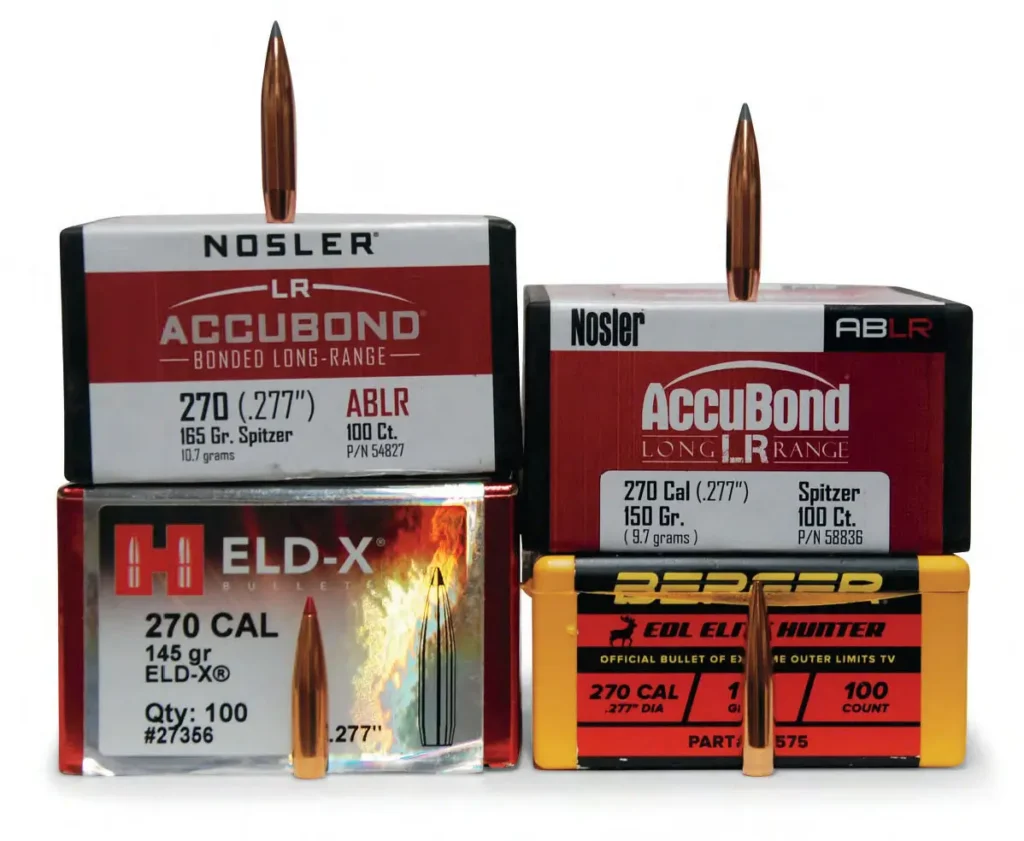
The Nosler AccuBond Long Range (ABLR) and Hornady ELD-X 6.5mm bullets took to StaBALL HD like, well, you know. A charge of 58.0 grains for the 129-grain ABLR and 57.1 grains for the 142- and 143-grain bullets all clocked around 2,700 fps, and they shot well within minute of critter. The long and sleek 156-grain Berger EOL LR Hunter over a charge of 56.0 grains was the accuracy champ at 0.67 inch with a velocity of 2,628 fps. The G1 ballistic coefficients of these bullets are sky high: .623 for the ELD-X, .561 and .719 for the ABLRs, and .679 for the EOL LR Hunter. The long-range potential is there.
270 Winchester Short Magnum
An early entrant in the short-magnum race was the 300 WSM, introduced in 2001. But it wasn’t long before the case spawned more WSMs, and the 270 and 7mm versions came along in 2002; an 8mm version (the 325 WSM) appeared in 2004. All have their ballistic virtues, and StaBALL HD paired with the 270 WSM makes it a fine performer.
My rifle for this round is a Browning A-Bolt Hunter that I got in 2002. The barrel is 23 inches in length and has a 1:10-inch twist. Its scope is a Burris Fullfield II 3-9X 40mm set at 6X. The only game I have harvested with it so far is a nice Wyoming pronghorn antelope, and it was just about perfect for that task.
The 1:10-inch twist of the 270 WSM limits bullet weights (lengths, really) to about 150 grains or less. Thus, the new long, high-BC bullets designed for the 6.8 Western will not stabilize in the 270 WSM. But not to worry. The combination of StaBALL HD with 140- to 150-grain bullets delivered game-getting velocities and excellent accuracy.
I loaded StaBALL HD with four big-game bullets suitable for the 270 WSM, and the results were rewarding. First up was Federal’s 136-grain TLR (Terminal Long Range) bullet, an outgrowth of Jack Carter’s Trophy Bonded Bear Claw bullet of the early 1980s. A dose of 72.0 grains gave this bullet a sizzling speed of 3,063 fps and a 0.60-inch group average. Not to be overlooked was the original 140-grain Nosler AccuBond. With 71.2 grains, velocity was 2,890 fps. This would be a fine deer load.
Another winner was the 145-grain Hornady ELD-X over 71.0 grains of powder. The velocity was 2,960 fps, and group average was 0.82 inch.
I just had to try the 150-grain Nosler ABLR, and I really thought it might not be spun fast enough to stabilize. That fear was allayed with a group average measuring slightly over an inch with a charge of 70.0 grains of StaBALL HD. This certainly gives the long-range hunter another option with his 270 WSM.
6.8 Western
I tested this new cartridge for last year’s Annual Manual and was so smitten that I bought the Winchester XPR test rifle. It has a 24-inch barrel with a fast 1:8-inch twist, characteristic of many of the new, long-range rounds. The scope is a Vortex Razor 4.5-22X 50mm set at 8X.
This fine cartridge was launched in 2021, and its name gives away its intended role in the hunting fields. Elk, moose, mule deer, and similar-sized game quake as a hunter climbs over the ridge carrying a 6.8 Western rifle. With the many new long-for-caliber bullets available these days, it has a leg up on older cartridge designs.
The careful case and chamber design criteria developed for the 6.5 CM have been applied to several new rounds, including the 6.8 Western, with good results. Here’s an example. The minimum S.A.A.M.I. throat diameter of the 6.8 Western is only 0.0011 inch over the diameter of a .270-caliber bullet, so the bullet starts out “lined up.” The short, fat case and sharp 35-degree shoulder help, too.
The same bullets I used in the 270 WSM also shot well in the 6.8 Western. Note that Hodgdon’s maximum loads and the loads I used for the 270 WSM are slightly greater than for the 6.8 Western, reflecting the slightly shorter case. The 6.8’s unique virtues lie in the tight throat and fast twist for long bullets.
A couple of good game loads would be the 145-grain Hornady ELD-X or the 150-grain Berger VLD Hunter over 65.5 grains. Velocity with the ELD-X was 2,852 fps and 2,850 fps for the Berger, with tidy groups. Alas, no 175-grain grain Sierra Tipped GameKing bullets were available, but they no doubt would be a good long-range bullet for the 6.8 Western.
7mm Remington Magnum
In 1962 Remington launched the first of the now-popular metric-designated cartridges in the equally new Remington Model 700 rifle. In 2018 I came into a nice Ruger No. 1-B in 7mm Rem. Mag. with a 26-inch barrel and a 1:9.5-inch twist. I mounted a Leupold VX-1 3-9X 40mm scope on it, but so far it has only “killed” paper. The 7mm Rem. Mag. belted case is passé these days, but as the data show, it is a terrific big-game cartridge.
StaBALL HD delivers some pretty impressive ballistics and accuracy from this round—and with a wide selection of bullets. The 139-grain Hornady GMX liked a charge of 73.3 grains and produced 2,989 fps with an impressive 0.63-inch group average. Not to be overlooked is the 150-grain Nosler ABLR with 72.5 grains and the sleek 162-grain Hornady ELD-X over 71.4 grains. The BCs of these two high-tech bullets are .652 and .631 respectively. At a velocity right at 2,900 fps, they shoot flat and hit hard. Also note the minuscule standard deviations of StaBALL HD with this round.
Lastly, I cannot leave the big-game category without noting that 69.5 grains of this super-powder gave the fine 175-grain Nosler Partition a velocity of 2,812 fps. This would make a terrific all-round load for just about any big game. And while you’re trudging through the snow at 10,000 feet tracking a 6×6 bull elk, remember the temperature insensitivity feature built into the powder.
After testing StaBALL HD in a variety of typical hunting rifles with a cross-section of big-game bullets, I think it’s safe to say that this new propellant has carved out a niche for hunters and target shooters alike. It is applicable to a host of popular rounds, new and old. The ease and uniformity of metering of this new spherical powder will be a boon to volume reloaders. Low standard deviations and tight groups were the norm. In what we might call the “non-magnum” cartridges, this new powder did very well, but I think the use of StaBALL HD in the larger “magnum” cartridges yields the most excellent results.
Overall, StaBALL HD is a welcome addition to the powder lineup, providing the combined benefits of many fine powders in one.